
The nights get cold, and a few days later you find small dark droppings in the back of a kitchen drawer. Or you hear scratching in the ceiling after the house goes quiet.
If you are trying to work out how to get rid of mice in the house, the answer has two halves. First you remove the mice already inside. Then you close the gaps they used, or new ones move in all winter. This guide covers both halves in the order that works: confirm it is mice, trap them the way the CDC recommends, seal the entry points, clean up safely and know when it is time to call a pest control pro.
Signs You Have Mice, Not Something Else
Mice are small and mostly active at night, so you usually see what they leave behind before you see them. Look for these signs:
What to look for
· Droppings about the size of a grain of rice, pointed at the ends, in drawers, cabinets or along walls
· Chewed food packages, especially cereal, rice, pet food and bird seed
· Shredded paper, fabric or insulation bunched into a nest
· Scratching or light running sounds in walls or ceilings at night
· Greasy smudges along baseboards where mice run the same path every night
· A stale, musty smell in a closed cabinet or closet
Much larger droppings or heavy thumping in the attic can mean rats, squirrels or another animal. That changes the plan, so tell the pro what you are finding.
How to Get Rid of Mice in the House: Trap First
The CDC's guide to trapping rodents recommends traditional snap traps. Here is how to use them well.
1. Use snap traps, and more than you think
One trap rarely does it. Set several where you found droppings or chew marks. The CDC advises against glue traps and live traps, because a scared mouse urinates and that raises your risk of getting sick.
2. Bait lightly
A small dab of chunky peanut butter on the bait pan works. Too much lets the mouse lick it off without setting off the trap.
3. Put traps against the wall
Mice run along walls, not across open floors. Set each trap on the floor with the baited end touching the wall so it forms a T. Good spots are behind the fridge and stove, under the sink, inside lower cabinets and in the basement, attic or crawl space.
4. Check every day
Wear gloves, throw out any caught mouse right away and reset the trap. Keep going until you go about a week with no catches and no new droppings.
5. Take away the food
Move cereal, pet food, grass seed and bird seed into hard plastic, glass or metal containers. Wipe up crumbs and do not leave pet bowls full overnight. Mice that have to work for food find the traps faster.
A word on poison
Poison is the riskiest choice in a home with children or pets, and a mouse that eats it can die inside a wall. The EPA's rules on rodent bait products limit what homeowners can buy to ready-to-use bait stations. If you use one, read the label and only place it where the label allows. For more on how rodents are controlled, see the EPA rodent control guidance.
How to Get Rid of Mice in the House for Good: Seal the Gaps
Trapping fixes today. Sealing fixes the season. The CDC's guide to sealing out rodents says mice can fit through a hole the width of a pencil, about 1/4 inch. So the job is to find every gap that size and close it with something a mouse cannot chew through.
Small holes
Pack the gap with steel wool, then hold it in place with caulk or spray foam. The steel wool is what stops the mouse. The caulk or foam just holds it in place.
Large holes
Use hardware cloth, lath screen, metal sheeting or cement, cut to fit around pipes and wires.
Where to look outside
· Where the foundation meets the ground and the bottom edge of the siding
· Where pipes, cables, the AC line and the dryer vent go through the wall
· Vents, soffits, eaves and gaps along the roof line
· The bottom of the garage door and any door without a tight sweep
Where to look inside
· Under sinks and behind the stove, fridge and washer, where pipes come through
· Corners of kitchen cabinets and closets
· Around the fireplace, windows and doors
· The attic, the basement and the crawl space, along pipes to the water heater and furnace
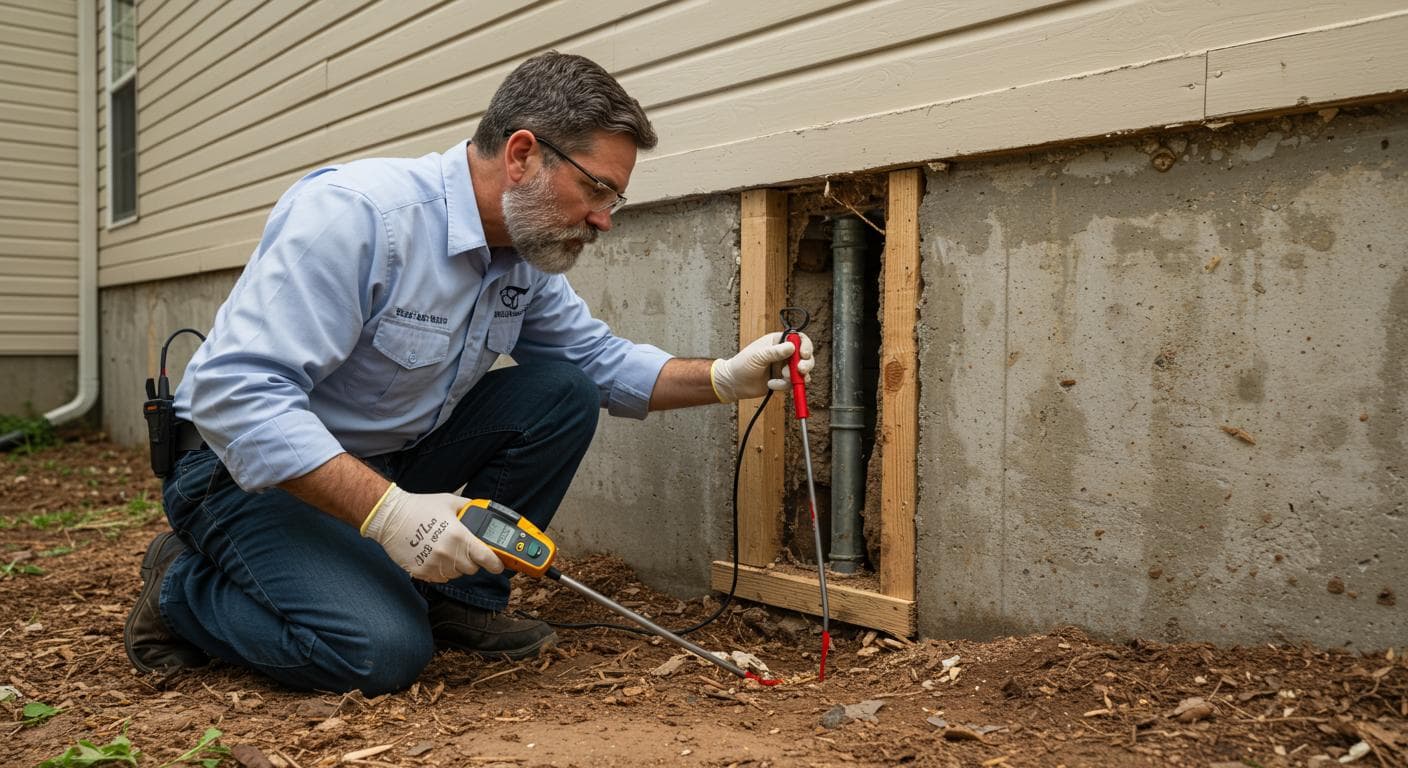
Some gaps are easy. Others sit high on the roof line or behind siding. A handyman can close most gaps around doors, vents and pipes in a single visit. Gaps along the roof line or under siding are often a job for a siding and exterior pro.
The Pencil Test: Check Your Walls This Weekend
The one thing you can check yourself
Take a pencil and a roll of painter's tape and walk around the outside of the house. Try to slide the pencil into every gap you find around pipes, wires, vents, the garage door and the bottom edge of the siding. If the pencil goes in, a mouse can too. Mark each one with a strip of tape. When you are done, you have a map of the work, whether you seal the gaps yourself or show them to a pro.
Droppings inside often sit close to the gap the mice use. If you found droppings under the kitchen sink, start your search where those pipes leave the house.
How to Clean Up After Mice Safely
Rodents can spread disease, including hantavirus, so the CDC asks people to clean up droppings, urine and nests with care. Its cleanup steps come down to this:
Do
· Open doors and windows to air out a closed space for 30 minutes before you start
· Wear rubber or plastic gloves
· Spray droppings and urine until very wet with a bleach solution (1 part bleach to 9 parts water) or an EPA-registered disinfectant
· Let it soak for 5 minutes, or as long as the disinfectant label says
· Wipe it up with paper towels and throw them out in a sealed bag
Do not
· Sweep or vacuum droppings or nests. It puts tiny particles into the air you breathe
· Touch droppings, nests or dead mice with bare hands
Mice often nest in attic and wall insulation. If you find a large soiled area up there, it usually needs to come out, not just get sprayed. An insulation contractor can remove soiled insulation and replace it once the gaps are sealed. You can see more on the CDC's hantavirus prevention page.
When to Call a Pest Control Pro
Doing it yourself works for a mouse or two in the kitchen. Call a pro when:
The catches do not stop
You are still catching mice or finding fresh droppings after a week or two of trapping.
You hear them in the walls or ceiling
Mice inside walls and ceilings are hard to reach with traps and harder to find the way in.
Droppings are in more than one room
That usually means more than a couple of mice, and more than one way in.
You cannot find the gap
A pro checks the whole outside of the house and knows the common spots for your type of home.
Pest control is a licensed trade in many states, including Ohio, Colorado and Florida. Ask the company for their state license and proof of insurance, and ask for the plan in writing: how many visits, what they will seal, what products they will use and where.
What it costs depends on how many mice there are, how many gaps need sealing, how high they sit on the house and how many follow-up visits the plan includes. Our pest control page explains what a visit covers and what to ask for in writing.
How to Get Rid of Mice in the House: Common Questions
What is the fastest way to get rid of mice in the house?
Set several snap traps at once along the walls where you see droppings, baited with a small dab of peanut butter. Check them every day. At the same time, start sealing the gaps where mice get in. Trapping without sealing only clears out the mice you have today, and new ones keep coming.
How small a hole can a mouse get through?
The CDC says mice can fit through a hole the width of a pencil, about 1/4 inch. That is why gaps around pipes, vents, garage doors and the bottom edge of siding matter so much. If a pencil fits, treat it as a way in.
Should I use glue traps or live traps?
The CDC advises against glue traps and live traps. Both can scare the mouse, which makes it urinate, and that raises your chance of getting sick. Traditional snap traps are what the CDC recommends for reducing mice around the home.
Is it safe to use mouse poison in the house?
Poison is the riskiest choice where children, pets or wildlife can reach it, and a poisoned mouse can die inside a wall where you cannot get to it. The EPA limits consumer rodent baits to ready-to-use bait stations. If you use one, read the label and only place it where the label allows.
How do I clean up mouse droppings safely?
Wear rubber or plastic gloves. Spray the droppings and urine with a bleach solution (1 part bleach to 9 parts water) or an EPA-registered disinfectant until very wet. Let it soak for 5 minutes, then wipe it up with paper towels. Never sweep or vacuum droppings, because that puts tiny particles into the air.
When should I call a pest control company for mice?
Call when you keep catching mice after a week or two, when you hear them in the walls or ceiling, when droppings show up in several rooms or when you cannot find where they get in. Pest control is licensed in many states, so ask the company for their state license and a written plan before they start.
Book a Pro Before the Cold Drives Them In
Start with our pest control services, or find a local pro in your city.
Contractor Palace
Close the door on mice before winter.
Tell us what you are finding and where. We match you with one independent local pro to trap, seal and clean up, with the scope and price in writing.