
Pest Control in Denver: Almost Everything Is an Entry Point Problem
Denver sits high and dry, which changes what actually costs you money.
The Front Range does not have the termite pressure Ohio or Texas has, so the expensive problems here are things getting IN: mice and voles hunting a warm gap before the first hard freeze, Miller moths in the spring migration, and yellowjackets in late summer.
All three are solved by finding the opening and closing it. That is why a Denver quote that is only a spray schedule is usually the wrong quote.
Four Problems, Only One of Them Is a Spray Job
Mice and voles are the big one.
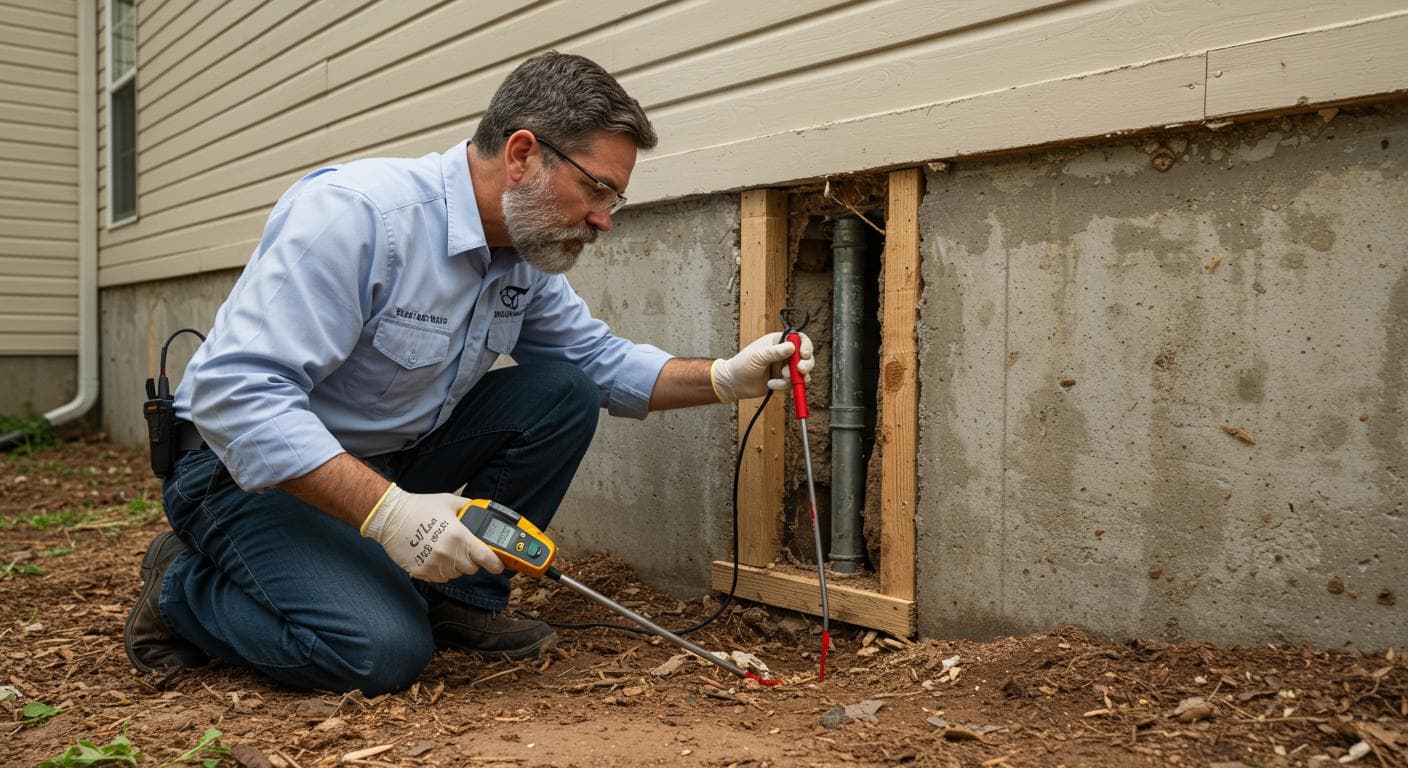
They are not looking for your kitchen, they are looking for somewhere above freezing, and a Denver house has more openings than most owners think: the gap where the gas line enters, the garage door corner seals, dryer vents with a broken flap, and the space behind the sill plate on older Wash Park and Baker bungalows.
Trapping alone in a house that is still open just resets the clock, so any rodent quote worth paying for includes exclusion, which is the sealing work.
Miller moths arrive in a wave in late spring on their way to the high country. They are harmless and they are maddening.
There is no treatment that stops a migration, so a company selling you a moth program is selling you weather.
What works is boring: fix the door sweeps, patch the screens, and cut the outdoor lighting near entries for a few weeks.
Yellowjackets peak in August and are the one that turns into an emergency.
Ground nests in a lawn and aerial nests under eaves both get worse fast, and both are genuinely worth paying a pro for rather than a can from the hardware store.
Bed bugs are the exception to the Denver climate story entirely. They travel with people, not weather, so a Denver flat has the same exposure as one anywhere else.
This is the treatment where the price spread is widest, so get the method in writing: heat, chemical or both, how many visits, and what the guarantee actually covers.
Be Careful With a Big Termite Contract in Denver
Subterranean termite pressure along the Front Range is low compared with the Midwest and the South.
That does not make it zero, and an inspection is still sensible when you are buying, but it does mean a large multi year termite plan pitched to a Denver homeowner deserves a second look and a read of the actual inspection findings.
Ask what was found, where, and whether there is live activity or only old evidence. A real inspection report names the location.
If the answer is general worry rather than a specific finding, you are being sold a subscription rather than a treatment.
The same test works for any pest plan: a good pro tells you the species and the entry point, and a salesperson tells you about peace of mind.
Pest Control Costs in Denver CO
Typical Denver ranges, here so you can sanity check a quote rather than replace one. Rodent work varies most, because the price follows how much sealing the house needs rather than how many traps get set.
Choosing an Exterminator in Denver
Anyone pricing a Denver job over the phone has not seen your gaps, and the gaps are the job.
House mouse behind the sill plate is an answer. Rodents is not.
Sealing is what makes it stop. Trapping an open house is a service contract, not a fix.
Low Front Range pressure means an unrequested multi year termite contract is a flag, not a service.
Common Questions About Pest Control in Denver CO
How do I keep mice out of a Denver house before winter?
Seal before late September, because that is when they start moving in.
The usual routes are the gas or electrical line entry, garage door corner seals, a dryer vent with a broken flap, and the sill plate gap on older bungalows. A quarter inch is enough for a house mouse.
Sealing beats trapping every time, and any exterminator who does not walk the outside of the house is guessing.
Can anything actually stop Miller moths?
No, and be careful with anyone who says otherwise. It is a migration that passes through Denver over a few weeks in late spring.
Door sweeps, intact screens and dimming outdoor lights near doors for that stretch is the whole realistic answer. Spraying for a moth migration is money for weather.
Do I need termite treatment in Denver?
Usually not, and this is worth knowing before you sign. Front Range termite pressure is low compared with the Midwest. An inspection when buying is sensible, but a big multi year plan pitched without a specific finding is a subscription.
Ask exactly what was found and where.
Do you treat the property yourselves?
No. Contractor Palace matches you with independent Colorado exterminators and the pro you book does the work. There is no charge to you.
Need an exterminator in Denver? Get matched free.
Tell us what you are seeing and roughly where in the house. We match you with an independent Denver exterminator who inspects first and quotes after. No charge to you.
Get my free Denver pest control quotearrow_forward