
HVAC contractors near you for furnace and AC work
Find a local HVAC company near you. Independent HVAC contractors for furnace repair, air conditioning installation, heating and cooling maintenance and ductless systems.
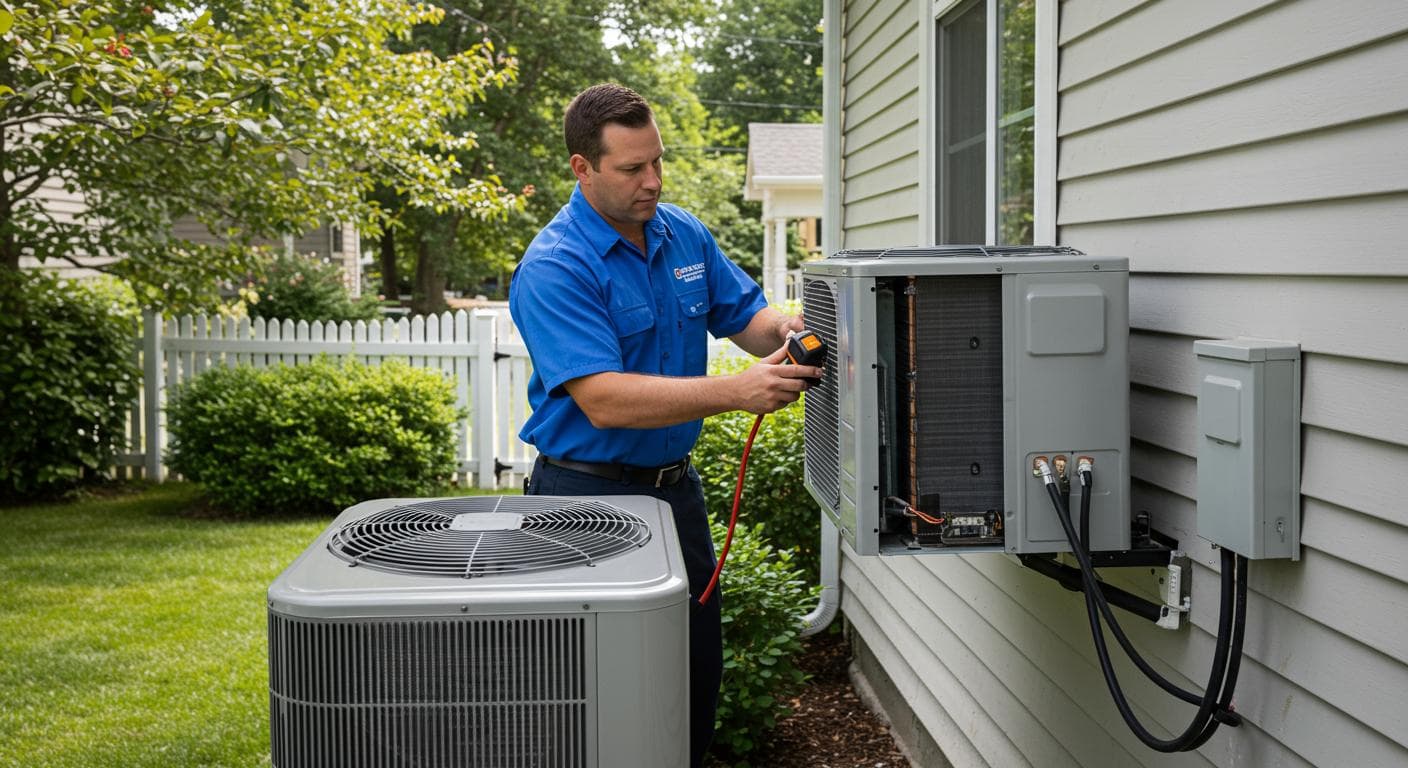
What is hvac?
HVAC, Heating, Ventilation and Air Conditioning, refers to the interconnected systems that control your home's temperature, humidity and air quality year-round. In Ohio, where January temperatures drop below 20°F and July humidity can feel oppressive, finding a reliable HVAC company near you isn't optional, it's a necessity for home comfort.
HVAC services include furnace repair and replacement, central air conditioning repair and installation, heat pump systems, ductless mini-split installation, ductwork installation and sealing, air handler service, thermostat installation, refrigerant recharge and indoor air quality solutions. Whether you need a local HVAC dealer for a new system or an expert technician for repair, the HVAC contractor you hire should be NATE-certified (North American Technician Excellence, the industry certification for heating and cooling expertise).
Ohio's climate demands HVAC systems that can handle extremes in both directions, extreme heating loads in Cleveland's lake-effect winters and significant cooling loads in Cincinnati's humid summers. Properly sized HVAC equipment matters enormously: an oversized heating and cooling system short-cycles and wastes energy, while an undersized system runs constantly and wears out prematurely. Certified dealers who perform Manual J load calculations ensure the right HVAC equipment is installed for your Ohio home.
Contractor Palace connects Ohio homeowners with independently owned and operated local HVAC contractors. Ask whether the technician is NATE-certified and ask for their license and proof of insurance.
What homeowners should know.
Find a Local HVAC Contractor in Ohio
The fastest way to find a local HVAC dealer is a dealer locator on Carrier, Lennox or Trane's website, which returns authorized dealers by zip code. Contractor Palace matches you with an independent local pro, so ask for their license, certifications and customer reviews. Authorized dealer relationships matter: factory-trained technicians get priority parts access and can register your equipment warranty at install.
Credentials: NATE Certification and Independent Local Reviews
Hiring a qualified HVAC technician means verifying credentials before anyone arrives. NATE certification (North American Technician Excellence) is the industry gold standard for heating and cooling systems. Alongside NATE, check Google reviews and the Ohio eLicense portal for any company you're considering.
Furnace and Ductless System Installation
Furnace replacement and ductless mini-split installation are two of the most common projects Ohio homeowners request each year. A furnace swap is straightforward in homes with existing ductwork: certified equipment goes in, the flue gets inspected and the system is commissioned in a single day. Ductless systems serve homes without ductwork, room additions, garages and basements. Each indoor head mounts on the wall and connects to an outdoor compressor via refrigerant lines, delivering targeted comfort without tearing open walls for duct runs.
Reliable Equipment Brands
Equipment from Carrier, Trane, Lennox, Rheem and Daikin performs consistently across Ohio's temperature extremes when properly sized and installed. Ask each independent HVAC contractor about their labor warranty in addition to the manufacturer's equipment warranty, and get both in writing. Customer reviews on Contractor Palace are independent local post-job, so ratings reflect real outcomes.
Get a Quote from Local Contractors
Getting a quote takes less than two minutes through Contractor Palace. Describe your system's age, whether you need repair or replacement and your zip code and we match you with independent local pros in your area. A written quote should specify the equipment brand and model, SEER or AFUE rating, warranty terms and permit inclusion.
HVAC Installation Cost Ranges in Ohio
Central AC replacement (2-3 ton unit, standard efficiency): $3,500 to $6,500 installed. High-efficiency unit (18+ SEER): $5,500 to $9,000. Gas furnace replacement (80% AFUE): $2,200 to $4,500. High-efficiency furnace (96% AFUE): $3,500 to $6,500. Full system replacement (AC + furnace together): $6,500 to $14,000. Ductless mini-split (single zone, installed): $3,000 to $5,500.
HVAC Maintenance: Why Annual Tune-Ups Matter
Ohio's climate demands both heating and cooling systems year-round. Skipping annual maintenance cuts equipment lifespan by 30 to 40 percent and voids most manufacturer warranties. Spring is the right time for AC tune-ups; fall for furnace checks. A good HVAC technician inspects heat exchangers, tests refrigerant charge, cleans coils and tests all safety controls during each visit.
When to Repair vs. Replace Your System
Repair is typically the right call when equipment is under 10 years old and the repair cost is less than 50 percent of replacement cost. Replace when the system is 15 or more years old, requires frequent repairs or cannot maintain comfort despite servicing. Ohio's summer humidity and winter cold punish aging equipment harder than milder climates. If your system is running constantly without reaching setpoint, that's a strong signal it's undersized or losing efficiency rapidly.
Signs Your HVAC System Needs Immediate Attention
Unusual sounds from the air handler or outdoor unit, weak airflow from vents, ice forming on the outdoor coil in summer, a burning smell from vents or a system that cycles on and off every few minutes all indicate problems that worsen if ignored. Call for service before a partial failure becomes a full system replacement in the middle of July or January.
What Drives HVAC Cost in Ohio
Ohio's climate is legitimately demanding on HVAC equipment. Heating loads from Cleveland's lake-effect winters, where temperatures stay below 20 degrees Fahrenheit for weeks and cooling loads from Cincinnati's humid July and August push systems harder than in more moderate climates. Understanding what drives cost here helps you evaluate quotes accurately.
Equipment efficiency rating: the SEER2 rating (Seasonal Energy Efficiency Ratio, revised 2023 federal standard) measures cooling efficiency. The minimum allowed in Ohio is now 14.3 SEER2. A 14.3 SEER2 unit costs roughly 400 to 800 dollars less upfront than a 18 to 20 SEER2 unit of the same tonnage. The higher-efficiency unit pays back through lower AEP or FirstEnergy bills over 5 to 8 years in most Ohio climates. For heating, AFUE (Annual Fuel Utilization Efficiency) applies to furnaces. The federal minimum for Ohio (northern climate zone) is 90 percent AFUE. High-efficiency two-stage furnaces run 96 to 98 percent AFUE and cost 600 to 1,200 dollars more than baseline.
Tonnage and Manual J calculation: an air conditioner is sized in tons, where one ton equals 12,000 BTU per hour of cooling capacity. The rule of thumb 'one ton per 400 square feet' is a starting point only and frequently wrong in Ohio homes. Proper sizing requires a Manual J load calculation that accounts for ceiling height, insulation levels, window area, orientation, local design temperatures and internal heat loads. An oversized unit short-cycles, meaning it satisfies the thermostat quickly and shuts off before it dehumidifies the air properly. This leaves Ohio homes feeling clammy at 73 degrees in August. An undersized unit runs constantly and still can't keep up on a 95-degree Cincinnati day. Demand a Manual J from any contractor sizing new equipment.
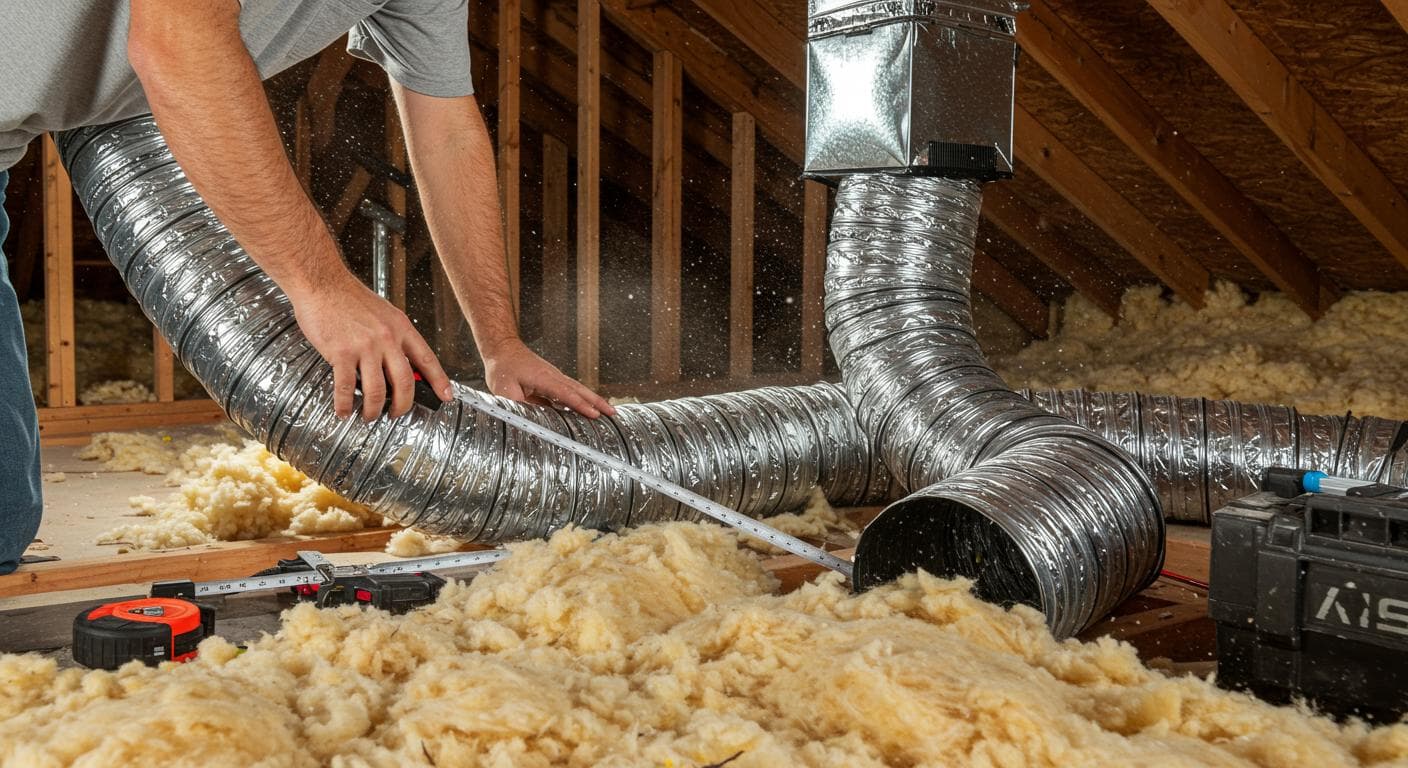
Ductwork condition: half the HVAC jobs in Ohio involve systems where the ductwork is the real problem. Leaky ducts in an unconditioned attic or crawlspace waste 20 to 30 percent of system output. A new furnace and AC on a leaky duct system still won't deliver consistent comfort. Duct sealing with mastic compound (not tape, which fails in 3 to 5 years) costs 500 to 1,500 dollars and often delivers more comfort improvement than upgrading equipment.
Furnace vs Heat Pump vs Dual Fuel: Choosing the Right System for Ohio
Standard gas furnace with central AC: the dominant setup in Ohio. Natural gas is widely available through Columbia Gas and Dominion Energy and historically provides lower heating cost per BTU than electric resistance. A 96 percent AFUE two-stage gas furnace paired with a 16 SEER2 central AC gives excellent efficiency. This is the right choice for most Ohio homeowners with existing gas service, particularly in Cleveland and Columbus where winters are consistently cold.
Heat pump (standard): a heat pump is a refrigeration cycle run in reverse for heating, moving heat from outside air into the house rather than generating it. Standard heat pumps lose efficiency dramatically below 35 to 40 degrees Fahrenheit, which is a real problem for Columbus winters where temperatures regularly drop below that for weeks at a time. A standard heat pump typically requires backup electric resistance heating strips for Ohio winters, which are expensive to run. Not the best standalone solution for Ohio unless paired with gas backup.
Cold-climate heat pump (variable refrigerant, inverter-driven): this is the category that has changed the conversation. Systems from Mitsubishi (Hyper Heat), Daikin (FIT) and Bosch maintain 80 to 100 percent rated heating capacity down to 5 degrees Fahrenheit and operate at meaningful efficiency down to negative 13 degrees. For Cleveland and Akron homeowners who are replacing older electric heat or who want to electrify their heating, these systems now make economic sense. Cost premium over standard heat pump: 1,500 to 3,000 dollars for the outdoor unit alone.
Dual-fuel heat pump: a cold-climate heat pump paired with a gas furnace backup. The system uses the heat pump for efficiency during mild Ohio winters (above 30 to 35 degrees) and switches to gas when temperatures drop where gas is more cost-effective. For Ohio homeowners who want both efficiency and reliable cold-weather performance, this is increasingly the preferred configuration. System cost: 8,000 to 16,000 dollars installed.
Mini-split ductless: zone control for specific rooms or additions without duct runs. Cost-effective for additions, sunrooms, garage conversions and historic homes in Cleveland and Cincinnati where duct installation is impractical. A single-zone mini-split runs 2,500 to 5,000 dollars installed. Multi-zone systems scale from there. Brands like Mitsubishi, Daikin and Carrier all have AHRI-certified systems in this category.
Step by Step: HVAC Replacement in an Ohio Home
The scope of a proper HVAC replacement includes work most homeowners don't see until they get a detailed quote.
Equipment removal: the old furnace, air handler or outdoor unit is disconnected, refrigerant recovered by an EPA-608 certified technician (federal law prohibits venting refrigerant) and equipment removed. Disposal fees run 50 to 150 dollars depending on equipment weight.
Gas line inspection: a technician checks that existing gas supply line sizing is adequate for the new furnace input BTU rating. High-efficiency furnaces draw similar BTU input to older units but may have different connection requirements. An undersized gas line causes pressure drop and inadequate heating.
Flue and venting: a new 90 plus percent efficiency furnace exhausts through PVC pipe to a sidewall or through an existing flue liner. The PVC venting cannot share a masonry chimney with an 80 percent AFUE furnace's metal exhaust. If you're upgrading from an 80 percent to a 96 percent AFUE furnace, the venting changes entirely. This is a cost item some installers quote separately.
Refrigerant line set inspection: the copper refrigerant lines connecting indoor and outdoor units should be inspected for insulation damage, crimps or oil contamination before reuse. In many Ohio HVAC replacements the lines can be reused; in others, particularly where line sets run through attics that hit 130 degrees in summer, replacement is the right call.
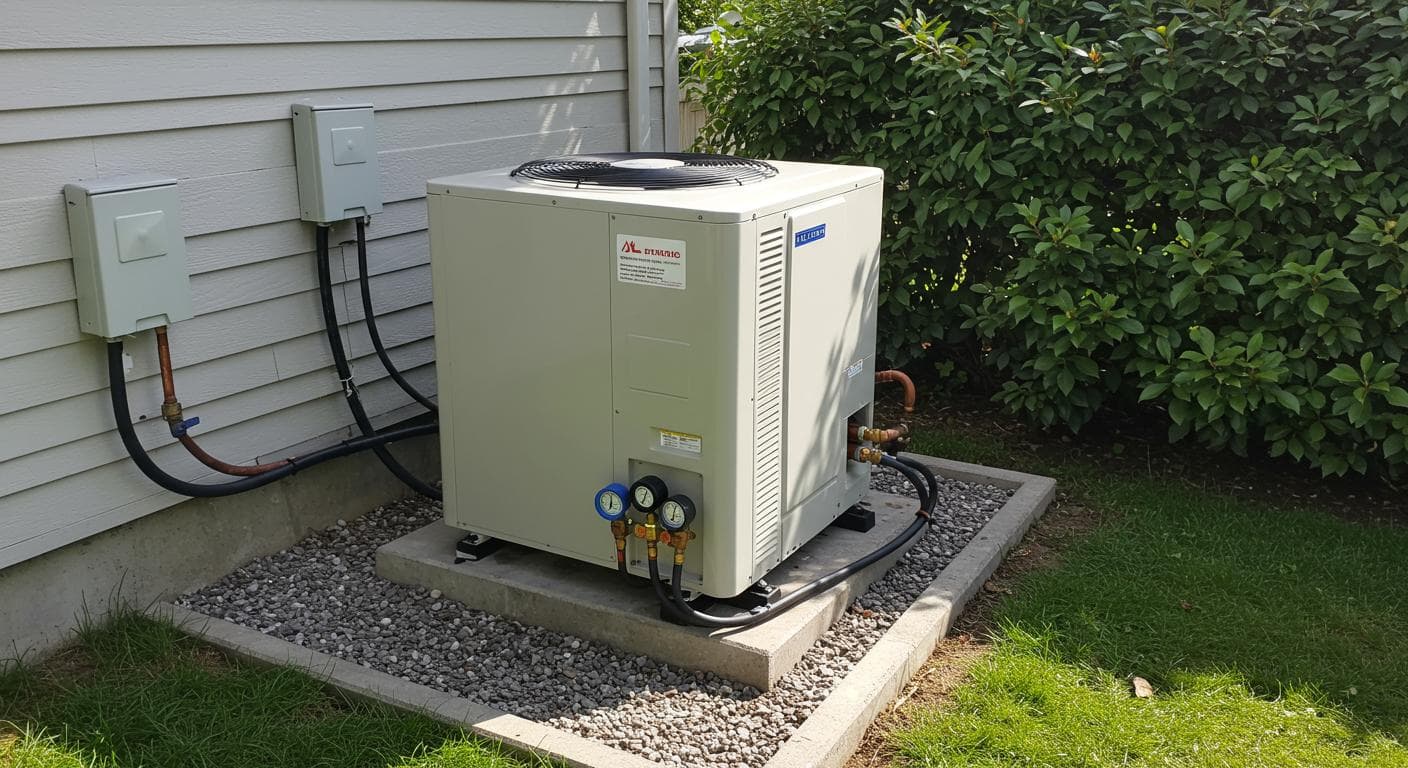
Installation, startup and commissioning: the outdoor unit is set on a new concrete pad (old pads are often unleveled after years of frost heave), refrigerant charged to manufacturer specification with gauges and weigh-in method, airflow independent local with an anemometer across the air handler coil, static pressure checked in the duct system and thermostat programmed.
Utility company rebates: AEP Ohio, Columbia Gas of Ohio and Dominion Energy all offer rebates for qualifying high-efficiency HVAC equipment. Rebates in 2024 to 2025 range from 75 to 500 dollars for qualifying systems. Your HVAC contractor should be familiar with current programs and help you apply.
Ohio's HVAC Permit Requirements
Ohio requires permits for HVAC replacement and installation in most jurisdictions. Columbus, Cleveland and Cincinnati all require mechanical permits for new equipment installation. The permit covers the installation inspection, which verifies proper gas connections, electrical connections, refrigerant charge documentation and flue venting.
Contractors must hold an Ohio HVAC contractor license to pull permits. Verify your contractor's license on the Ohio eLicense Center website before work starts. Unlicensed 'handyman HVAC' work is common in some Ohio markets and creates real risk: improperly charged systems fail prematurely, improperly vented furnaces create carbon monoxide risk and the installation is not inspected.
EPA 608 certification is federally required for any technician handling refrigerants. Ask your contractor to confirm certification before any refrigerant work.
Common Mistakes Ohio Homeowners Make
Replacing only the outdoor unit while keeping a mismatched indoor coil: a matched system means the outdoor condensing unit and indoor evaporator coil are designed to work together, certified under AHRI standards for the rated efficiency. Replacing only the outdoor unit creates a mismatched system that runs at lower efficiency than either component's rating and voids the manufacturer warranty on both pieces. Always replace indoor and outdoor units together.
Ignoring duct leakage: a new 18 SEER2 system on a leaky duct system will never achieve rated efficiency. Duct testing and sealing should be part of the conversation for any whole-system replacement.
Choosing the cheapest bid without verifying what's included: a 4,500-dollar AC replacement and a 7,500-dollar replacement may both be for a 3-ton 14 SEER2 unit. The difference is often in the coil brand, the lineset condition, whether the pad and disconnect are replaced and whether the contractor registers the equipment warranty with the manufacturer. A non-registered equipment warranty often reverts to a shorter baseline coverage.
Frequently Asked Questions
How often should I replace an HVAC system in Ohio? Average lifespan is 15 to 20 years for a furnace and 12 to 17 years for a central AC unit in Ohio's climate. Systems in coastal markets near Lake Erie tend to run toward the lower end due to humidity and salt exposure. If repair costs exceed 50 percent of replacement cost on a system older than 10 years, replacement is typically the better investment.
How do I know if my HVAC system is the right size? Short cycling (unit turns on and off rapidly), humidity problems in summer, rooms that won't reach setpoint and unusually high energy bills relative to neighbors with similar homes all suggest a sizing mismatch. A proper Manual J load calculation and duct evaluation by a NATE-certified technician will confirm.
What is a NATE certification? North American Technician Excellence is the industry standard certification for HVAC technicians. NATE-certified technicians have passed rigorous written exams on installation, troubleshooting and system performance. Ask whether the technician performing your work is NATE-certified, not just the company.
Colorado HVAC: Altitude, Dry Air and the Front Range
HVAC sizing on Colorado's Front Range starts from a different climate than Ohio's. Denver sits in IECC climate zone 5B and higher Front Range elevations push into zone 6 and 7, colder than anywhere in Ohio, while summers stay far drier. That dryness is the biggest practical difference for homeowners: evaporative coolers, commonly called swamp coolers, work well in Colorado's low humidity and are a common lower-cost alternative or supplement to central air conditioning across the Front Range. In Ohio's humid summers, evaporative cooling barely lowers the temperature and is rarely installed for that reason.
Elevation also changes how gas furnaces and gas ranges are set up. Denver sits around 5,280 feet, and standard-efficiency gas furnaces need to be de-rated for altitude, a commonly cited industry rule of thumb knocks roughly 4 percent off rated input BTU for every 1,000 feet of elevation above 2,000 feet, which is why a furnace sized correctly for an Ohio home at a few hundred feet of elevation is not automatically sized correctly for a Front Range home. Many modern condensing furnaces self-adjust for altitude electronically, but older standard-efficiency equipment usually needs a manual conversion kit or a different gas orifice, and a Colorado HVAC technician should confirm which applies before quoting a replacement.
Big daily temperature swings are also a Front Range fact of life, warm sunny afternoons followed by sharp overnight drops, which a proper Manual J load calculation needs to account for separately from Ohio's more consistent day-to-night pattern. Contractor Palace is building its HVAC contractor network in Colorado now. We book HVAC jobs across Colorado and Ohio today.
HVAC documented.
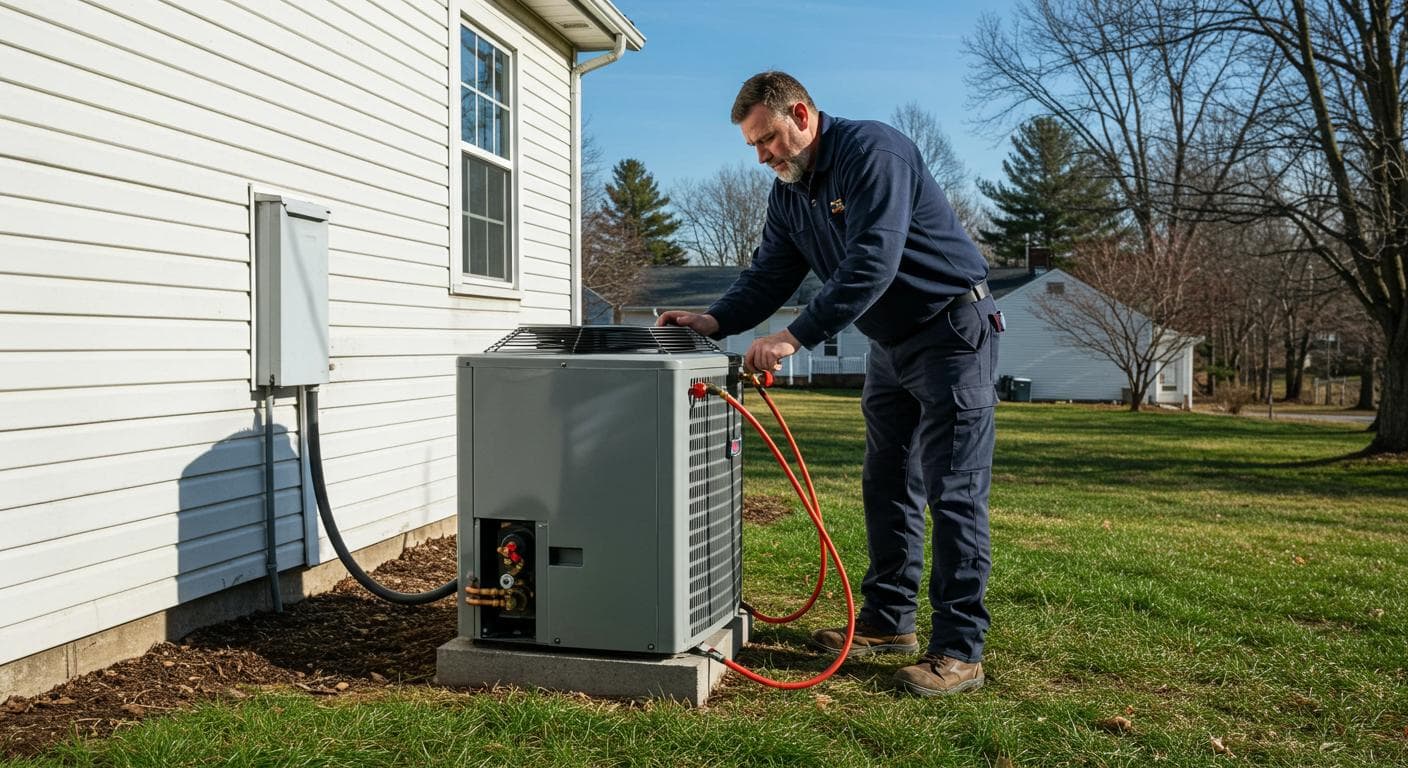
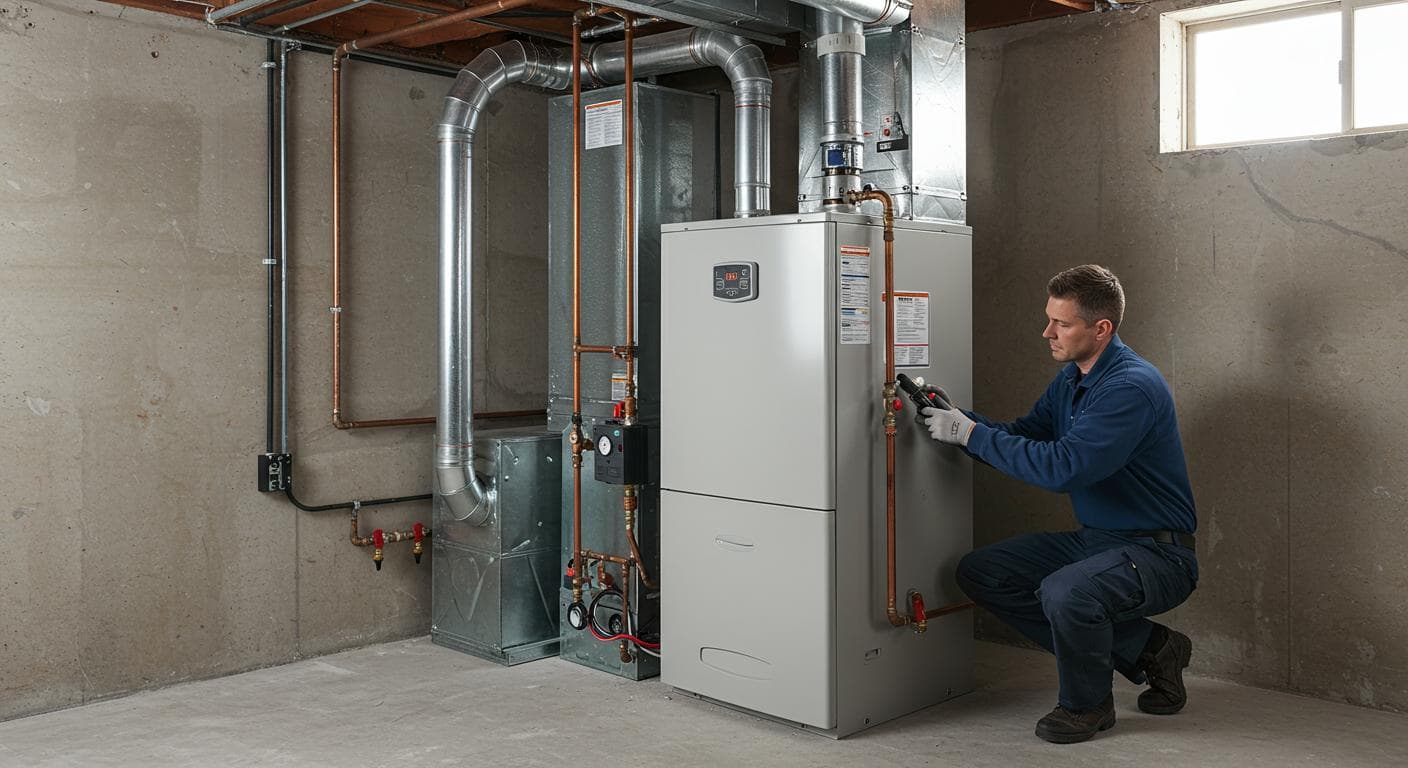
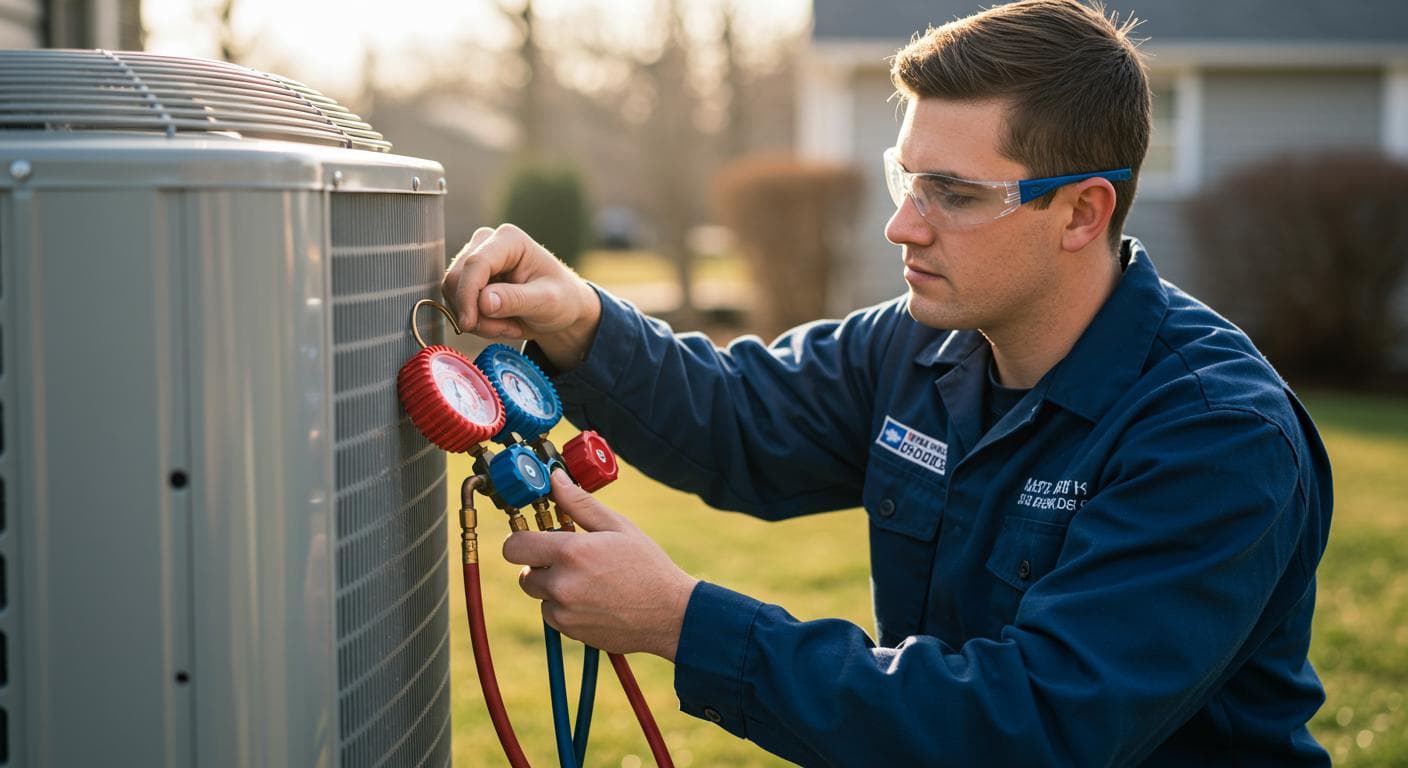
Everything a job covers.
How to hire a hvac company near you.
Describe your HVAC issue or need, emergency repair, furnace service, AC installation or new system replacement
We match you with an independent local HVAC contractor, ask about their license, certifications and reviews
HVAC technician arrives, performs thorough system diagnosis and presents repair or replacement options with a price in writing
Work completed by a local HVAC pro, refrigerant charged, filters replaced, system tested at multiple settings
Follow-up to confirm system performance, rate your HVAC contractor and get maintenance scheduling reminders
HVAC Company cost near you.
Prices vary by scope and city. You get a firm quote after describing the job, free, no obligation.
* US average estimates. Final pricing confirmed before any work begins.
Why hire a professional near you.
Find a local HVAC company near you, independent local pros across all Ohio cities
Ask about emergency service for furnace failures in Ohio winters and AC failures in summer heat
Ask for a written quote with no hidden fees that specifies that specify equipment brand, model, SEER rating and warranty
Some dealers offer financing with monthly payments for new HVAC systems, ask each contractor about terms
Year-round HVAC maintenance plans to prevent breakdowns and maintain heating and cooling system efficiency
Get matched instantly.
Describe the job
Tell us about your hvac project: scope, urgency and your zip code.
We match & dispatch
We find the best available independent local pro in your area. No bidding wars, no picking from a list.
Get your free quote
Your pro reviews the job and sends a quote. You only pay once you approve the work.
How to choose the best hvac company.
HVAC contractors in Ohio should carry a state HVAC license and EPA 608 certification for refrigerant handling. NATE certification, North American Technician Excellence, is the industry's professional credentialing standard and a strong signal of quality of work and expertise.
When selecting a local HVAC dealer or contractor, ask for upfront written estimates that include equipment brand (Carrier, Lennox, Trane, Rheem, Samsung and others are common in Ohio), model number, SEER rating and warranty terms. Get a Manual J load calculation for any new system installation, this engineering calculation determines the correct HVAC equipment size for your specific home. Any HVAC company that quotes a new system without measuring your home is guessing.
Check Google reviews and the Ohio eLicense portal for any HVAC company before hiring. Responsive, knowledgeable HVAC pros respond to quote requests promptly, arrive on time and explain their recommendations without high-pressure sales tactics. Reliable HVAC service means you're supported every step of the way, from the estimate through installation to future maintenance.
Skip the comparison shopping. Contractor Palace matches you with one independent local pro, no browsing directories, no bidding wars.
Signs you need this service.
Furnace not heating or AC not cooling, call a local HVAC company near you immediately, especially in extreme Ohio weather
Utility bills spiking with no change in usage, indicates HVAC system efficiency loss or refrigerant leak
Strange noises from HVAC equipment, banging, squealing, rattling from indoor or outdoor units
HVAC system short-cycling, turning on and off every few minutes instead of running full cycles
Ice forming on the outdoor AC unit or refrigerant lines, low refrigerant or airflow restriction
Uneven temperatures room to room, could be ductwork leaks, insulation issues or undersized HVAC system
Heating and cooling system is 15+ years old, average Ohio HVAC lifespan is 15 to 20 years before replacement makes sense
What to do first, how to tell if it can wait until morning, and how to get an independent technician matched. Emergency HVAC guide
Furnace, AC and full system prices and what drives them. See HVAC and furnace replacement cost
Read the guide: Furnace installation guide · How to hire an HVAC contractor
HVAC Services by City
Choose your city for local pricing, availability and independent local pros near you.
Related pages
Your privacy is protected
We never expose contractor names, business names or direct contact info on our platform. Communication runs through Contractor Palace until your pro is assigned and the work begins, at which point you get direct contact for your pro. It protects both you and the pro.
Why homeowners trust us.
HVAC Company FAQ.
How do I find a local HVAC company near me in Ohio?
Contractor Palace connects you with independent local HVAC contractors in your area. Ask whether the technician is NATE-certified.
How often should I service my HVAC system?
Once per year for both heating and cooling systems, ideally spring for AC and fall for heating. Year-round maintenance prevents breakdowns and extends HVAC equipment life significantly.
How long does HVAC installation take?
A standard AC or furnace system installation takes 4 to 8 hours. A full heating and cooling system replacement may take 1 to 2 days. Ductless mini-split installation typically runs 4 to 6 hours per zone.
Do you offer financing for a new HVAC system?
Many HVAC dealers offer financing options with monthly payments for new system installations. Ask your HVAC contractor about financing terms and any manufacturer warranty that applies.