
Siding Installer near me. Siding & Exterior, local.
Vinyl, fiber cement and wood siding installation for Ohio homes. Quality siding is your home's first line of defense against Ohio's wet winters and hot summers. Our certified installers deliver watertight, beautiful results, and we're building the same certified network across Colorado's hail-prone Front Range.
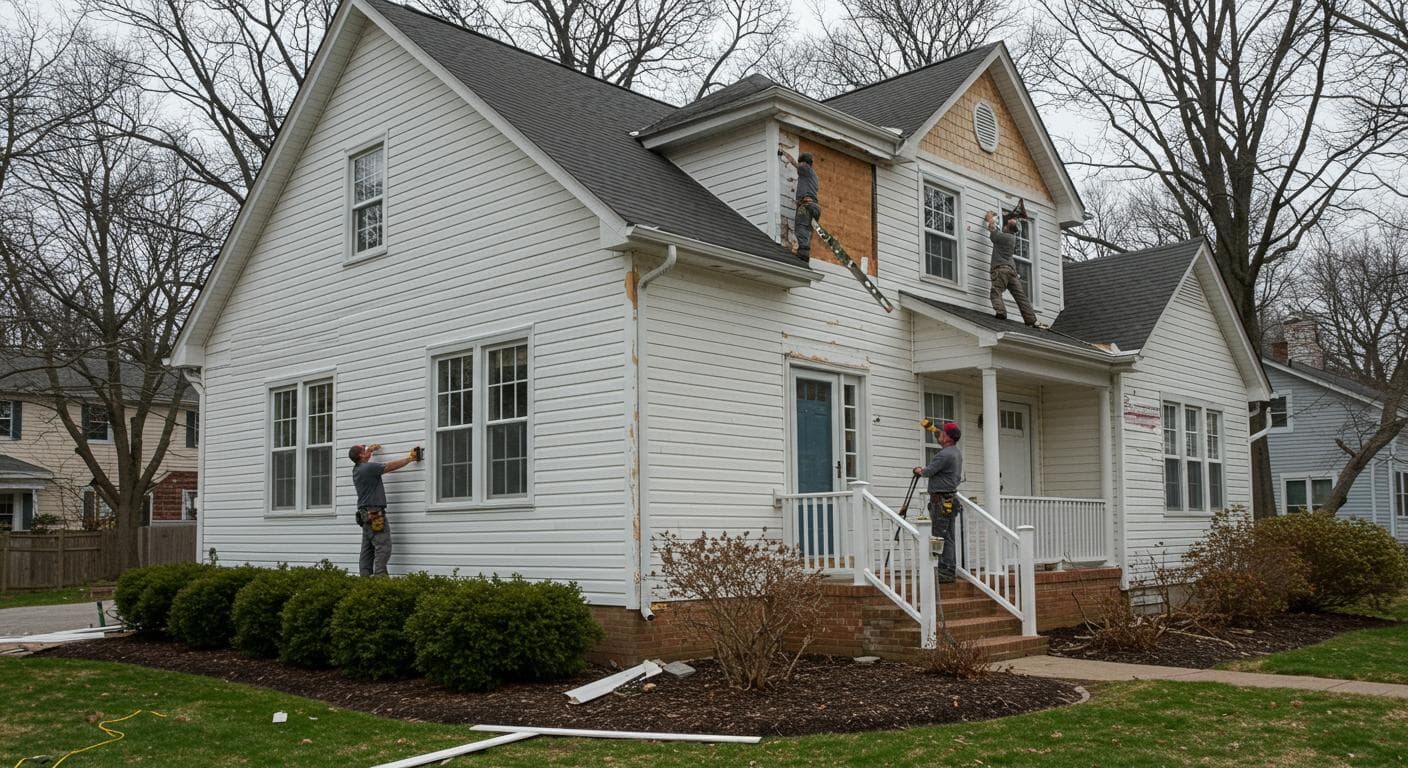
What is siding & exterior?
Siding is your home's primary weather barrier, the layer that keeps Ohio's rain, snow, ice and humidity from penetrating into the wall cavity and causing structural damage. Failing siding leads to rot, mold, elevated energy bills and eventually major structural repairs that cost far more than a timely siding replacement.
Siding services in Ohio include full siding removal and replacement, partial repair of damaged sections, soffit and fascia replacement, installation of new house wrap (moisture barrier) and trim and corner work.
Ohio's most popular siding material is vinyl, which holds up well against moisture, requires no painting and handles freeze-thaw expansion and contraction well when properly installed with appropriate expansion gaps. Fiber cement siding (James HardiePlank is the leading brand) costs more but offers superior durability, fire resistance and a more authentic wood appearance, it's increasingly popular in higher-value Ohio neighborhoods.
Wood siding, while beautiful, requires regular painting and caulking maintenance in Ohio's wet climate and is typically chosen for historic preservation or high-end custom builds. Proper installation with a drainage plane behind the siding is critical regardless of material, moisture trapped behind siding destroys sheathing and framing in Ohio's climate.
What homeowners should know.
Siding selection for Ohio homes comes down to three primary materials, each with distinct trade-offs that matter in the state's freeze-thaw climate.
Vinyl siding is the most common choice in Ohio. It's cost-effective at $3.50 to $7.00 per sq ft installed, requires no painting and handles moisture and temperature swings well when installed with adequate expansion gaps. Thicker vinyl (0.046 inch vs. 0.040 inch) holds up better under UV exposure and impact. Ply Gem and CertainTeed offer solid product lines with transferable warranties.
Fiber cement siding, primarily James HardiePlank, has grown substantially in Ohio market share over the past decade. At $5.00 to $10.00 per sq ft installed, it costs more than vinyl but offers superior fire resistance, dimensional stability and a more authentic appearance. James Hardie requires contractor certification (HardieZone training) specific to your climate zone. Contractors certified for HardieZone 5 understand Ohio's temperature extremes, including proper joint treatment and caulking for thermal movement.
Engineered wood siding from LP SmartSide is a third option gaining traction. It resists moisture, rot and insects better than traditional wood, costs between vinyl and fiber cement and accepts paint well for homeowners who want a painted wood appearance without the maintenance demands.
House wrap selection matters as much as siding. Tyvek HomeWrap is the industry standard in Ohio. The water-resistive barrier must be properly lapped, taped at seams and integrated with window and door flanges to create a continuous moisture management system. Drainage mat products between the house wrap and siding create a small air gap that dramatically improves drying performance.
What to Ask Before Signing
Ask for the specific siding product line, not just "vinyl" or "Hardie." A $5 per sq ft vinyl quote and a $7 per sq ft vinyl quote may be for products with substantially different warranties and gauges. Ask whether the warranty is a product warranty, a contractor workmanship warranty or both and for what duration.
Verify who installs the product. James Hardie certification belongs to the company, not just the individual installer. Ask to see the company's current certification documentation. Fiber cement installed without proper technique fails at joints and around fasteners, leading to moisture infiltration that voids the warranty.
Siding Replacement Cost in Ohio
Vinyl siding (full house, 1,500 sq ft): $6,000 to $14,000. Fiber cement (James HardiePlank, same size): $12,000 to $22,000. Engineered wood (LP SmartSide): $9,000 to $17,000. These ranges include removal of existing siding, house wrap replacement and installation. Projects requiring wood rot repair before installation add $500 to $3,000 depending on scope.
### What Drives Siding Cost in Ohio
Ohio homeowners replacing siding face a decision that is simultaneously aesthetic, functional and financial. The cost variables are significant and the right choice depends on your home's exposure, your budget timeline and the existing wall system condition.
Material cost per square foot (installed): vinyl siding runs 4 to 9 dollars per square foot installed, fiber cement runs 8 to 14 dollars, engineered wood (LP SmartSide) runs 7 to 12 dollars and natural wood clapboard runs 12 to 20 dollars. Brick veneer for new construction runs 18 to 35 dollars per square foot. Stone veneer runs 20 to 40 dollars per square foot. These ranges reflect Ohio labor rates across Columbus, Cleveland and Cincinnati.
Labor as a percentage of total: siding replacement is more labor-intensive than most homeowners expect. Tear-off and disposal of existing siding (vinyl, old aluminum, T-111 wood panels) adds 0.50 to 1.50 dollars per square foot. On a 2,000 square foot ranch in Akron, that tear-off alone adds 1,000 to 3,000 dollars before the first piece of new siding touches the wall.
Water-resistive barrier condition: behind the old siding is either building paper (older homes) or housewrap (newer homes). This layer must be intact and properly lapped to keep water out. If it's torn, missing or original felt paper from the 1950s, replacing it adds 0.50 to 1.00 dollar per square foot. Skipping this step is the most common contractor shortcut and the most expensive long-term mistake.
Trim complexity: a simple gable ranch has far less linear feet of trim around windows, doors, corners and soffits than a Victorian in Cleveland Heights with multiple bump-outs, decorative trim boards and complex roof lines. Trim complexity can double labor hours and represents 20 to 30 percent of material cost on a detailed home.
### Vinyl vs Fiber Cement vs Engineered Wood: Ohio's Three Dominant Choices
Vinyl siding is the most common exterior replacement material in Ohio. It requires zero painting, resists moisture intrinsically and comes in hundreds of profiles and colors. In Ohio's freeze-thaw climate, standard vinyl becomes brittle in temperatures below 20 degrees Fahrenheit. A panel hit by a falling branch in January can shatter rather than dent. Thicker 'premium' vinyl (0.046 inch or thicker) handles Ohio winters noticeably better than economy 0.040 inch panels. Insulated vinyl, which bonds a foam backer to the panel, adds R-2 to R-4 effective insulation and eliminates the hollow 'drum' sound of standard vinyl. Cost delta for insulated vinyl over standard: 1.50 to 3.00 dollars per square foot installed.
Fiber cement siding, primarily HardiePlank, has become the preferred upgrade from vinyl across Ohio's metro markets. It is cement and cellulose fiber, dimensionally stable, fire-resistant and won't rot or support mold growth. It requires painting initially and repainting every 10 to 15 years depending on color and exposure. James Hardie's factory-applied ColorPlus finish carries a 15-year finish warranty and eliminates the initial paint job but adds 0.75 to 1.50 dollars per square foot. Fiber cement does not shatter in cold Ohio winters. It is heavy (3 times the weight of vinyl), which increases installation time and requires stronger fastening into studs, not just sheathing.
Engineered wood, primarily LP SmartSide, is strand-oriented wood treated with a zinc-borate preservative process and coated with an overlay and primer. It looks closer to natural wood than fiber cement with less weight penalty. LP SmartSide carries a 50-year limited warranty against fungal decay and termites. Ohio's humidity and freeze-thaw cycles are its primary test and it has performed well in the Great Lakes region over 20 years of widespread use. Like fiber cement, it requires painting and periodic repainting.
Natural wood clapboard and shingles are still the right choice for historic homes in Cleveland, Columbus and Cincinnati where architectural character matters and where period-appropriate materials are required by historic district guidelines. The maintenance commitment is real, paint or stain every 5 to 8 years and immediate attention to any paint failure to prevent rot. Cedar performs best in Ohio's wet climate; pine is acceptable with rigorous maintenance. Engineered wood is approved as a substitute in most, but not all, Ohio historic districts.
### Ohio's Specific Climate Challenges for Exterior Siding
Freeze-thaw cycling is the primary durability challenge for Ohio homes. Water gets behind poorly sealed siding, soaks into sheathing or trim and the repeated freezing and thawing action drives the cycle of rot, mold and paint failure. Any material that relies on paint or caulk as its primary moisture barrier needs consistent maintenance in Ohio.
Lake-effect moisture along the Lake Erie shore from Cleveland through Lorain and Sandusky creates above-average humidity and wind-driven rain exposure. Homes within 20 miles of the lake benefit from higher-spec housewrap (Tyvek CommercialWrap or equivalent) rather than standard HomeWrap and fastener choices should specify stainless or hot-dipped galvanized to resist corrosion.
UV exposure on south and west-facing walls in Ohio bleaches and chalks paint finishes faster than shaded north exposures. Premium factory-applied finishes on fiber cement and engineered wood hold color better than field-applied latex paint on all exposures.
Carpenter bees and woodpeckers are active across Ohio and both attack wood and fiber cement siding looking for nesting sites. Natural wood requires preventive treatment and immediate repair of any compromise. Fiber cement and vinyl are effectively immune to both.
### Step by Step: Siding Replacement on an Ohio Home
Pre-installation: permit pull (most Ohio municipalities require a permit for full siding replacement), utility line marking around the perimeter and material delivery. Materials should acclimate on-site for 48 hours in Ohio temperature extremes.
Tear-off: old siding stripped in sections from top down. Disposal separated from any suspected lead paint materials. Ohio homes built before 1978 may have lead-based paint on original wood or hardboard siding. Ohio EPA and federal rules apply to disturbance and disposal of lead-containing materials. Any contractor doing full tear-off on a pre-1978 Ohio home should be EPA Lead-Safe certified.
Wall inspection: after tear-off, every inch of sheathing and framing is visible. This is when rot discoveries happen, particularly at corners, window sills, at grade and around any penetrations where caulk has failed. Sheathing replacement costs 2 to 4 dollars per square foot and is much cheaper done now than after new siding is installed. A reputable contractor walks through all discoveries with the homeowner before proceeding.
Water-resistive barrier installation: new housewrap installed from bottom to top with minimum 6-inch horizontal laps and 12-inch vertical laps, taped at seams. Window and door openings flashed with self-adhering flashing tape lapped under the housewrap on sides and over the housewrap at the top. This detail is where most installation shortcuts occur and where long-term moisture damage begins.
Siding installation: starter strip at the bottom course ensures proper profile, corners installed before field panels, J-channel or trim around windows and doors. For vinyl, proper nailing in slots (not through the panel body) allows thermal expansion, nail heads must not bind the panel. For fiber cement, ring-shank stainless nails into studs, not just sheathing. All butt joints staggered between courses.
Trim, caulk and paint: window surround trim, corner trim, frieze board and soffit transitions caulked with urethane sealant (not acrylic latex, which fails faster). Fiber cement and engineered wood require painting of all cut ends before installation, a step that shortcuts fail on.
### Ohio Permits and HOA Considerations
Ohio requires a building permit for full siding replacement in most municipalities. Columbus, Cleveland and Cincinnati all require permits; smaller municipalities vary. The permit primarily covers structural concerns (is the wall being modified?) and material compliance. Historic districts in Cleveland Heights, German Village in Columbus and Over-the-Rhine in Cincinnati have design review requirements for material and color selection before permit issuance.
HOAs in Ohio suburbs often specify approved siding materials and restrict color selections. Always verify HOA approval before signing a contract.
### Frequently Asked Questions
How long does siding installation take on an average Ohio home? A 2,000 square foot ranch with standard vinyl siding and no major rot repairs typically takes 3 to 5 days with an experienced 3-person crew. Fiber cement on a two-story colonial takes 6 to 10 days. Historic or complex homes take longer.
How do I maintain new siding in Ohio? Vinyl needs an annual wash with low-pressure water and mild soap. Fiber cement needs repainting every 10 to 15 years or sooner if finish shows cracking or chalking. Inspect all caulk around windows and penetrations annually and re-caulk any failure before water infiltration begins.
Does new siding increase home value in Ohio? A 2024 Remodeling Magazine report shows vinyl siding replacement returns approximately 80 percent of cost in resale value nationally, with fiber cement returning approximately 86 percent. In Ohio's competitive residential markets, new siding is one of the highest-return exterior improvements because it immediately addresses buyer concern about maintenance and curb appeal.
Colorado Siding: Hail, UV and the Front Range
Hail is the dominant durability threat to siding on Colorado's Front Range, more than freeze-thaw cycling ever is in Ohio. A single storm can dent vinyl, crack fiber cement and strip paint across a whole block, which is why impact-rated, Class 4 rated siding products come up in Front Range quotes far more often than they do in Ohio, where siding failure is usually a slower story of moisture behind the panel rather than a sudden impact event.
Intense high-altitude UV and the Front Range's big daily temperature swings also fade and stress siding faster than Ohio's more humid, lower-UV climate, particularly on unshaded south and west-facing walls. Vinyl and fiber cement finishes rated for Ohio conditions can show chalking and color fade sooner at Front Range elevation and sun exposure.
Colorado's dry climate cuts the other way for wood siding. Ohio's humidity is the bigger enemy of wood there, rot and mold behind poorly sealed panels. On the Front Range, the bigger risk to wood siding is moisture loss, boards can crack and check as they dry out faster than they would in Ohio, so proper acclimation before installation and attentive caulking at joints matter for a different reason than they do back east.
Contractor Palace is building its siding contractor network in Colorado now. We book siding jobs across Colorado and Ohio today.
Everything a job covers.
How to hire a siding installer near you.
Submit your siding project, full replacement, partial repair or new install, with your Ohio address and home size
Pro conducts exterior assessment: existing siding condition, sheathing inspection, moisture damage evaluation
Written quote specifying siding brand, thickness, color and house wrap type, no surprises
Old siding stripped, sheathing repaired as needed, new house wrap installed, then siding, trim and corners
Final walkthrough confirms watertight seams, proper expansion gaps and complete trim work
Siding Installer cost near you.
Prices vary by scope and city. You get a firm quote after describing the job, free, no obligation.
* US average estimates. Final pricing confirmed before any work begins.
Why hire a professional near you.
House wrap installation always included, the moisture barrier that protects your wall cavity
All siding types: vinyl, fiber cement (HardiePlank), engineered wood and wood siding
Sheathing inspection and repair before new siding, we don't cover up rot, we fix it
Soffit, fascia and trim work included in full siding quotes, complete exterior transformation
Color samples provided before ordering, no surprises when material arrives
Get matched instantly.
Describe the job
Tell us about your siding & exterior project: scope, urgency and your zip code.
We match & dispatch
We find the best available verified pro in your area. No bidding wars, no picking from a list.
Get your free quote
Your pro reviews the job and sends a quote. You only pay once you approve the work.
How to choose the best siding & exterior company.
Siding contractors in Ohio should carry Ohio contractor registration and manufacturer certification for the brands they install, James Hardie, for instance, has a preferred contractor program that requires specific training. Ask whether the quote includes house wrap replacement, it should.
Platforms like Angi list siding contractors, but quality varies. Contractor Palace verifies contractor licensing and manufacturer certifications. When comparing quotes, make sure each quote specifies the same siding product, vinyl thickness (0.044 in. vs 0.046 in.) and fiber cement thickness both affect quality and longevity.
Avoid contractors who want to side over existing siding without removing it, this traps moisture and voids most siding warranties.
Skip the comparison shopping. Contractor Palace pre-vets every pro and dispatches the best match, no browsing directories, no bidding wars.
Signs you need this service.
Bubbling, warping or buckling siding panels, moisture has infiltrated behind the siding
Cracks or gaps at seams or around windows and doors, water entry points that worsen each Ohio winter
Soft or spongy wall sheathing found when probing near siding edges, rot has begun in the wall cavity
Peeling interior paint on exterior walls, moisture moving through damaged siding and into the wall
Faded, chalky or severely discolored siding that no longer has aesthetic appeal
Multiple sections of siding damaged by hail, wind or impact, widespread damage warrants full replacement
Energy bills increasing despite no change in HVAC, failed siding and house wrap causing thermal loss
Siding & Exterior Services by City
Choose your city for local pricing, availability and verified pros near you.
Your privacy is protected
We never expose contractor names, business names or direct contact info on our platform. Communication runs through Contractor Palace until your pro is assigned and the work begins, at which point you get direct contact for your pro. It protects both you and the pro.
Why homeowners trust us.
Siding Installer FAQ.
What siding material is best for Ohio?
Vinyl is the most popular in Ohio, low maintenance, moisture-resistant and cost-effective. Fiber cement (HardiePlank) offers superior durability and fire resistance for premium installs.
How long does siding installation take?
A full home siding project typically takes 3-7 days depending on home size and material.
Will new siding improve my home's energy efficiency?
Yes, especially when combined with new house wrap and insulated backer board. Most homeowners see 5-15% reduction in heating costs.