
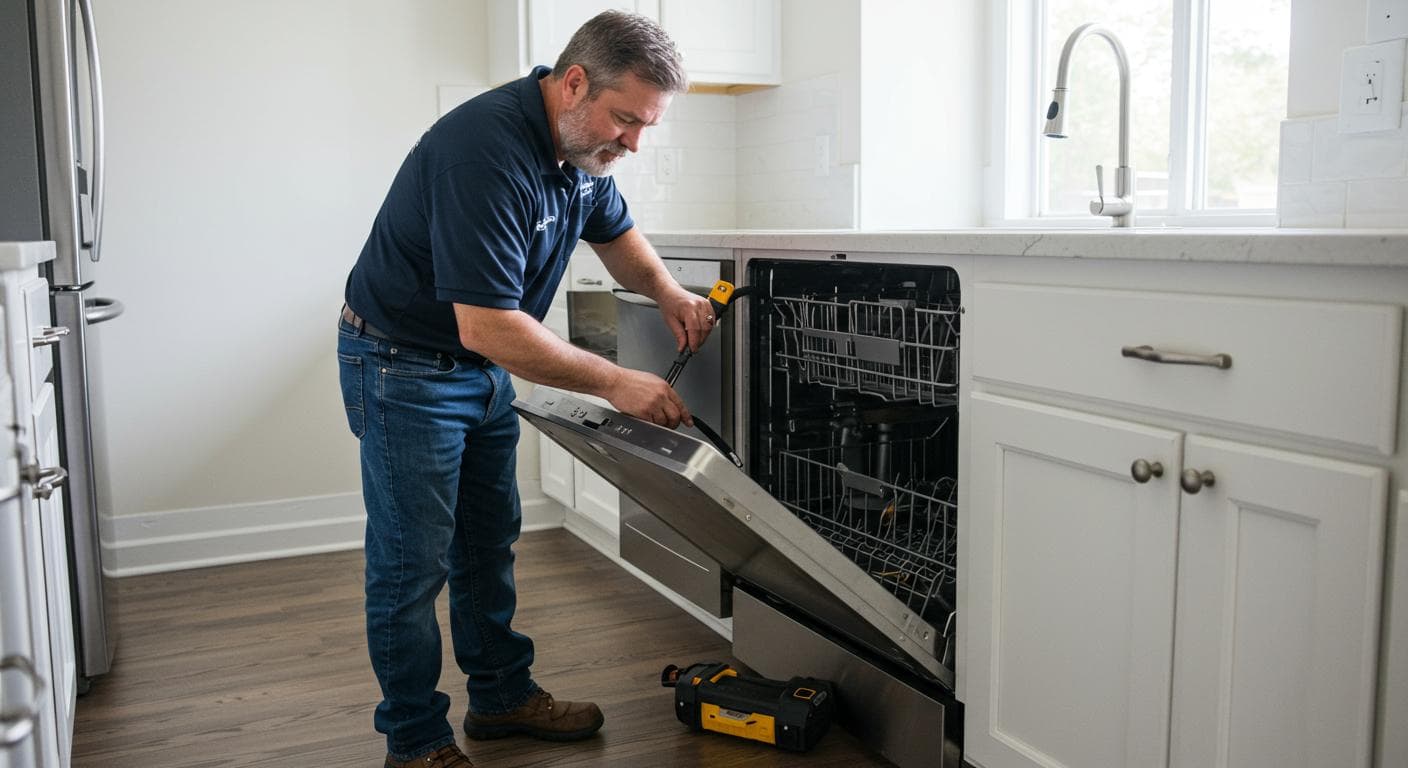
Installing a dishwasher is one of the more accessible appliance installation projects for a confident DIYer, but it involves plumbing, electrical work and careful sequencing that can cause real damage if done wrong. A leaking water line under your kitchen cabinet can ruin flooring and cabinetry before you notice it.
This guide walks through every step: from shutting off the water and power safely, to connecting the water supply line, drain hose and electrical connections, to leveling and testing the unit. We also cover the most common mistakes and help you decide when it makes more sense to call a licensed plumber or appliance installer.
Tools and Materials You Will Need
Gather everything before you start. Running to the hardware store mid-installation with the water off is frustrating and avoidable.
Tools
· Adjustable wrench and channel-lock pliers
· Screwdrivers (flathead and Phillips)
· Wire strippers and voltage tester
· Drill/driver and bits
· Level
· Pipe wrench
· Utility knife
· Bucket and towels
Materials
· Braided stainless steel water supply line (3/8")
· Dishwasher elbow fitting (usually supplied)
· Teflon tape (plumber's tape)
· Hose clamps (usually supplied)
· Wire nuts and electrical tape
· Zip ties for drain hose loop
· Drain air gap (if required by local code)
· New shut-off valve (if existing is old/corroded)
How to Remove Old Dishwasher and Install New: Step by Step
Step 1: Shut Off the Water and Power
Before touching anything, turn off the hot water supply to the dishwasher, this is typically a shut-off valve under the kitchen sink on the hot water line. Then go to your electrical panel and turn off the circuit breaker for the dishwasher. Use a non-contact voltage tester at the dishwasher junction box to confirm power is off before touching any wires. Do not skip this step, water and live electricity under a sink are a serious hazard. Place towels and a bucket under the sink to catch residual water when you disconnect the supply line.
Step 2: Disconnect and Remove the Old Unit
Open the dishwasher door and remove the bottom access panel (usually two screws). Disconnect the water supply line from the inlet valve, have your bucket ready for the water that drains. Loosen the drain hose clamp from the garbage disposal or sink tailpiece and slide the hose off. Disconnect the electrical wires in the junction box (noting or photographing the wiring before disconnecting). Remove the mounting screws or brackets securing the dishwasher to the underside of the counter. Gently slide the unit forward, tilting as needed to clear the flooring. Protect your floor with cardboard.
Step 3: Prepare the New Unit
Before sliding the new dishwasher into place, attach the 90-degree elbow fitting to the water inlet valve on the front bottom of the unit, wrap the threads with Teflon tape first and hand-tighten, then snug with a wrench (do not overtighten on plastic fittings). Connect the power supply wires to the junction box wires, typically black to black, white to white and ground (bare copper or green) to ground. Secure with wire nuts. Pull the drain hose through and have it ready to connect. Check that the dishwasher legs are roughly at the right height before sliding it under the counter.
Step 4: Connect the Water Supply Line
Thread the braided stainless steel supply line onto the elbow fitting on the dishwasher inlet. Tighten hand-tight plus a quarter turn with a wrench, do not overtighten. Run the other end to the hot water shut-off valve under the sink. Use Teflon tape on the shut-off valve threads and tighten the supply line connection firmly. The line should route neatly without kinking. If your shut-off valve is old, corroded or shows signs of leaking, replace it now before reconnecting, a failing valve is far more expensive to fix after everything is installed.
Step 5: Connect the Drain Hose
Route the drain hose to your garbage disposal or drain tailpiece. If connecting to a garbage disposal, knock out the dishwasher drain plug in the disposal inlet before attaching the hose. Secure the hose with a hose clamp and tighten until snug. Most importantly: create a high loop by securing the drain hose as high as possible under the counter with a zip tie or clip before it drops to the disposal. This prevents dirty water from back-flowing into the dishwasher. Some Ohio jurisdictions require a separate drain air gap device mounted on the counter or sink, check your local code.
Step 6: Wire the Electrical Connection
If you pre-connected the wires in Step 3, verify the connections are secure and no bare wire is exposed outside the wire nuts. The dishwasher must be on a dedicated 20-amp circuit. If you are hardwiring (no plug), the cable from the wall connects directly in the junction box. If the dishwasher has a cord and plug, plug it into the dedicated outlet. Tuck the wiring neatly into the junction box and replace the cover. Do not restore power yet, wait until the unit is fully positioned and connected.
Step 7: Secure, Level and Test
Slide the dishwasher carefully into the cabinet opening, routing the supply line, drain hose and electrical so nothing pinches. Adjust the front leveling legs until the dishwasher is level side-to-side and the door closes flush and even. Secure the mounting brackets to the underside of the counter with screws. Restore water by slowly opening the shut-off valve, watch for leaks at both the valve and the inlet fitting. Turn the circuit breaker back on. Run a short wash cycle (rinse only) and watch underneath for any drips. Check the drain hose connection during the drain cycle. If no leaks appear after a full cycle, reinstall the access panel.
Prepare the Space: Common Dishwasher Installation Mistakes
Most dishwasher installation problems come down to a handful of avoidable errors. Here are the ones that show up most often on service calls in Ohio homes:
Not knocking out the garbage disposal plug
Every garbage disposal has a drain inlet plug that must be removed before connecting a dishwasher drain hose. If you forget to knock it out, the dishwasher will not drain at all and you may blow out the drain hose under pressure. Remove the disposal and use a screwdriver and hammer to knock the plug inward, then fish it out.
Skipping the high loop on the drain hose
Without a high loop or air gap device, dirty water can siphon back into the dishwasher through the drain hose. The result is standing water or foul odors inside the dishwasher after each cycle. This is a code violation in many Ohio jurisdictions. High loop the drain hose as high as possible and secure it with a zip tie before it drops to the drain connection.
Over-tightening plastic inlet fittings
The water inlet valve and elbow fitting on most dishwashers are made of plastic or soft brass. Over-tightening with a wrench cracks the fitting and creates a slow leak that may not appear until days after installation. Tighten to hand-tight plus one quarter turn, no more.
Using the wrong supply line
Rubber or braided-nylon supply lines are not appropriate for dishwashers. Always use a braided stainless steel supply line designed for dishwashers. They resist the high water pressure and heat cycles that dishwashers create.
Not leveling the dishwasher
An unlevel dishwasher rocks during operation, wears out the door gasket unevenly and can cause the door to leak. Take five minutes to adjust the front legs and verify level before securing the mounting brackets.
When to Hire a Pro Instead
DIY dishwasher installation is reasonable for a direct replacement on existing connections. But several situations call for a licensed plumber or electrician:
No existing shut-off valve under the sink
If there is no dedicated shut-off valve for the dishwasher supply, a plumber needs to install one. This requires shutting off the main water supply and making a new connection on the hot water line.
No dedicated dishwasher circuit
If the dishwasher is currently on a shared kitchen circuit, a licensed electrician needs to run a dedicated 20-amp circuit from the panel. This is not a DIY job, it involves work in the electrical panel and running cable through walls or cabinets.
Corroded or leaking existing supply valve
If the existing shut-off valve is corroded, stuck or shows signs of a past slow leak, replace it before reconnecting. A plumber can install a new angle stop valve in under an hour.
Moving the dishwasher location
Installing a dishwasher in a new location requires routing new supply, drain and electrical, all of which likely require permits in Ohio. This is a job for a licensed plumber and electrician working together.
DIY vs. Professional Installation: Cost Comparison
Here is what you can expect to spend depending on how you handle the installation:
Ohio pro tip
If you bought your dishwasher at a local appliance store in Columbus, Cleveland or Cincinnati, ask about their haul-away and installation service. Many independent appliance dealers include installation in the purchase price or charge a flat $75 to $125, often less than big-box retailers and performed by technicians who install the same brand every day.
Need a Professional Appliance Installer in Ohio?
If the installation is more complex than a straight swap or you simply prefer a professional install, Contractor Palace matches you with independent local appliance installation professionals across Ohio. All pros are independent. Ask yours for their license where required and proof of liability insurance.
FAQ: Dishwasher Installation
How long does it take to install a dishwasher?
A straightforward replacement installation typically takes 1 to 2 hours for an experienced DIYer. First-time installers should budget 2 to 3 hours. If the existing plumbing or electrical needs modification, add another 1 to 2 hours or call a licensed plumber or electrician.
Do I need a permit to install a dishwasher in Ohio?
In most Ohio municipalities, replacing a dishwasher in the same location using existing connections does not require a permit. However, adding a new dishwasher circuit or moving the location typically requires an electrical and/or plumbing permit. Check with your local building department before starting any new circuit work.
Can I install a dishwasher without a garbage disposal?
Yes. If you do not have a garbage disposal, the dishwasher drain hose connects directly to a drain tailpiece under the sink fitted with a dishwasher knockout. High-loop the drain hose as high as possible under the counter before it drops to the tailpiece to prevent backflow.
What size water supply line do I need for a dishwasher?
Most dishwashers use a 3/8-inch compression fitting for the water supply connection. The supply line connects to the hot water shut-off valve under the sink. Use a braided stainless steel supply line, not a plastic line, for durability and leak resistance.
Does a dishwasher need its own circuit?
Yes. Most building codes and the National Electrical Code require dishwashers to be on a dedicated 20-amp, 120-volt circuit. Many older homes have dishwashers on a shared kitchen circuit, this is a code violation. If you are replacing an existing dishwasher on its own dedicated circuit, you are likely fine. If not, hire a licensed electrician.
Why is my new dishwasher leaking from the door?
A leaking door after installation is usually caused by an unlevel dishwasher. Use a level on the door and adjust the front leveling legs until the dishwasher is perfectly level and plumb. Also check that the door gasket is seated correctly and not pinched. Run a short cycle and inspect the door seal.
How much does it cost to hire someone to install a dishwasher in Ohio?
Professional dishwasher installation in Ohio typically costs $100 to $250 for labor if the connections are standard. If plumbing or electrical modifications are needed, new shut-off valve, dedicated circuit, drain air gap, expect $250 to $600+ depending on the scope. Retailers like Home Depot and Lowe's offer installation services ranging from $99 to $199.
What is a high loop on a dishwasher drain hose?
A high loop is when you route the drain hose as high as possible under the counter, typically secured with a zip tie or bracket near the top of the cabinet, before it drops down to connect to the drain. This creates a gravity barrier that prevents dirty drain water from back-siphoning into the dishwasher. Many codes require either a high loop or an air gap device.
Contractor Palace
Get your dishwasher installed right, first time.
Skip the hassle and get your dishwasher installed. Contractor Palace matches you with independent Ohio appliance professionals, no contractor-hunting, no guesswork.