
Walk into any paint aisle and you face the same question: latex paint or oil-based paint? The short answer is that latex wins for most modern interior and exterior painting projects. But the long answer depends on your surface, your finish goals and how long you want the job to last.
This guide covers every meaningful difference between latex and oil-based paint: drying time, durability, VOCs, cost and the exact situations where each one makes sense. If you are hiring a painter in Ohio, this knowledge will help you ask better questions and understand what your contractor recommends.
Latex Oil Based Paint: Quick Comparison Guide
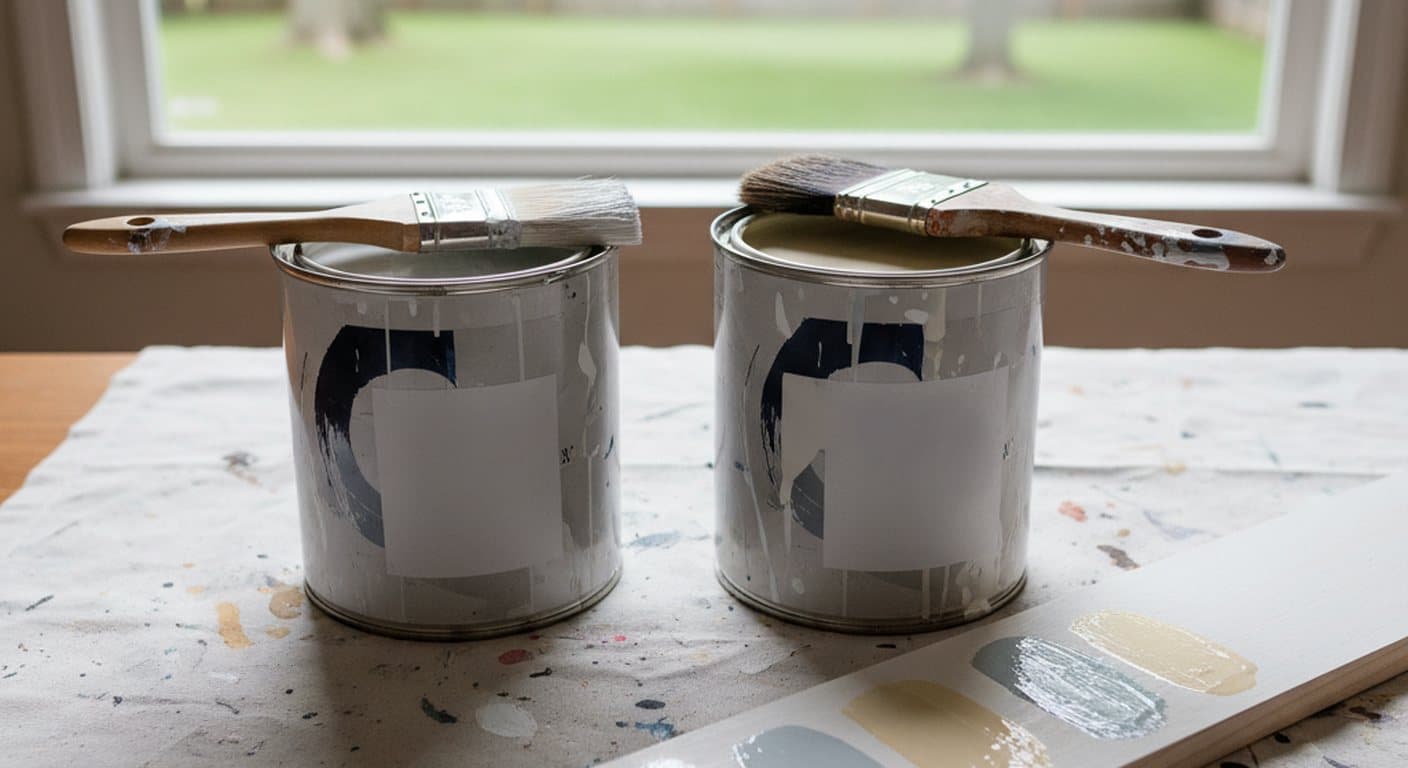
Latex (left) vs oil-based (right). Cost varies by brand and sheen.
What Is Latex Paint?
Despite the name, latex paint contains no natural latex rubber. The term refers to water-based paints that use synthetic acrylic or vinyl-acrylic polymers as the binder. When painters say "latex paint," they typically mean 100% acrylic latex: the premium version that offers the best durability, washability and adhesion.
Latex paint is the most widely used paint type in residential painting today. Brands like Sherwin-Williams, Benjamin Moore, Behr and Valspar all offer full latex product lines across multiple sheen levels: flat, eggshell, satin, semi-gloss and gloss.
The water-based formula is what makes latex paint dry faster, emit lower VOCs and clean up easily with water. As the water evaporates, the acrylic polymers fuse together to form a flexible, durable film that holds up well across temperature swings: a key advantage in Ohio's variable climate.
What Is Oil-Based Paint?
Oil-based paint (also called alkyd paint) uses a petroleum-derived oil or synthetic alkyd resin as the binder, suspended in a solvent carrier like mineral spirits or naphtha. As the solvent evaporates and the oil oxidizes, it forms a very hard, glass-like film on the surface.
Traditional oil-based paint is known for its smooth, self-leveling finish that hides brush marks beautifully: a property prized on wood trim, doors and cabinetry. It also penetrates bare wood more deeply than latex, creating a strong mechanical bond.
The downsides are well-known: long dry times, strong fumes, difficult clean-up with solvents and a tendency to yellow over time on white surfaces. Many states have also restricted high-VOC oil-based paints indoors. Modern waterborne alkyds from brands like Benjamin Moore and Sherwin-Williams offer a middle ground: they behave like oil-based paint but clean up with water.
How Latex Paint and Oil-Based Paint Differ
The differences go beyond drying time. Here is what actually matters for a real painting project:
How the film forms
Latex forms a film by evaporation: water leaves and the polymers bond. Oil-based paint forms a film by oxidation: the oil cross-links chemically with oxygen over days and weeks. This is why oil-based paint takes so much longer to fully cure and why it builds a harder but less flexible film.
Adhesion differences
Oil-based paint adhesion to bare, unprimed wood and metal is superior because the solvent carrier helps the resin penetrate deeper. On previously painted surfaces, latex adhesion is comparable provided the surface is clean and lightly scuffed.
Yellowing over time
This is one of the most important practical differences. Oil-based paints oxidize and yellow noticeably over time: especially in low-light areas. White oil-based trim in a closet or behind furniture can turn distinctly cream or yellow. High-quality latex does not yellow.
Finish smoothness
Oil-based paint self-levels as it dries, producing a glassy, smooth finish that hides brush marks. Latex paint requires more technique to achieve the same smoothness: though high-end products like Benjamin Moore Advance (waterborne alkyd) and Sherwin-Williams Emerald Urethane come close.
Pros and Cons of Latex Paint
Pros
+ Dries in 1 to 2 hours: multiple coats in a day
+ Low to zero VOC options available
+ Cleans up with water: no solvents
+ Flexible: resists cracking in freeze-thaw cycles
+ Does not yellow over time
+ Wide color selection from all major brands
+ Better for Ohio exteriors (expands/contracts with wood)
+ Easier to apply: more forgiving for DIY
Cons
− Less smooth self-leveling finish on trim
− Not ideal for bare, unprimed metal
− Lower-end latex can show brush marks
− Slightly less hard film than solvent-based alkyd
− Not compatible over oil paint without prep
− Very cheap latex lacks durability: quality matters
Advantages and Disadvantages of Oil Based Paint
Pros
+ Extremely hard, durable film when fully cured
+ Self-leveling: hides brush marks on trim
+ Superior adhesion to bare unprimed wood
+ Excellent penetration into wood grain
+ Classic choice for high-traffic wood trim and doors
+ Waterborne alkyd options now available (low VOC, water cleanup)
Cons
− 6 to 8 hours dry time, 24 hours between coats
− High VOCs: strong fumes during application
− Requires mineral spirits or paint thinner for cleanup
− Yellows over time: especially in low-light areas
− Brittle in cold: cracks on Ohio exteriors
− Many formulas restricted indoors by regulations
− More expensive: $45 to $100+ per gallon
When to Use Latex Paint
Latex paint is the right choice for most residential painting jobs. Use it in these situations:
Interior walls and ceilings
Latex is the industry standard for walls and ceilings. It covers quickly, dries fast (you can do two coats in a single day) and the low-VOC options keep indoor air quality safe. Brands like Sherwin-Williams SuperPaint and Benjamin Moore Regal Select are top picks for Ohio home interiors.
Exterior siding and trim (Ohio climate)
Ohio’s freeze-thaw cycles are brutal on rigid paint films. Latex acrylic paint flexes with wood siding as it expands and contracts through seasons. Oil-based paint cracks and peels under these conditions. For Ohio exteriors, 100% acrylic latex from Sherwin-Williams or Benjamin Moore is the professional recommendation.
Rooms where fumes are a concern
Nurseries, bedrooms and homes with elderly residents or people with respiratory sensitivities should always use low-VOC or zero-VOC latex paint. Valspar and Behr both offer zero-VOC options that perform well for interior walls.
Previously painted surfaces (most repaints)
If you are repainting a room that already has latex paint on it (which is the case in most homes built after 1990), use latex. Painting latex over existing latex requires no special prep beyond cleaning the surface.
Masonry, concrete and stucco
Latex paint bonds well to masonry surfaces and handles moisture vapor transmission better than oil-based. For concrete floors, an acrylic latex floor paint or epoxy floor coating is more appropriate.
When to Use Oil-Based Paint
Oil-based paint is not obsolete: it is still the right tool in specific situations, particularly where a hard, smooth finish on wood trim matters most.
Bare wood trim, doors and cabinets
When you are painting raw wood trim, doors or cabinets for the first time, especially high-traffic areas like kitchen cabinets and bathroom vanity doors, oil-based or waterborne alkyd paint delivers a harder, more chip-resistant finish. Benjamin Moore Advance and Sherwin-Williams Emerald Urethane Trim Enamel are popular waterborne alkyd choices that give you oil-like hardness with water cleanup.
Metal surfaces and railings
Oil-based paint has superior adhesion to bare metal and forms a more corrosion-resistant barrier. For iron railings, steel doors and metal window frames, a rust-inhibiting oil-based primer followed by an oil-based topcoat provides the most durable protection.
Stain-blocking applications
For sealing heavy stains (water damage, smoke, tannin bleed from wood knots), oil-based primers like Zinsser BIN (shellac-based) or Kilz Original outperform latex primers by a wide margin. After priming with oil-based, you can topcoat with latex.
High-gloss furniture and built-ins
When the goal is a high-gloss, furniture-quality finish on built-in shelving or decorative millwork, traditional oil-based enamel or a waterborne alkyd delivers a smoother, harder surface with fewer visible brush marks than most latex products.
Cost Comparison: Latex vs Oil-Based
Paint cost is one factor: but factor in the labor cost of longer dry times and solvent cleanup when comparing total project cost.
Pro tip: buy better paint, not more labor
The difference between a $35 can of Behr and an $80 can of Sherwin-Williams Emerald is roughly $45 per gallon. A professional painter covers about 400 square feet per gallon. That $45 difference adds up to about $0.11/sq ft: far less than the cost of a repaint in 5 years when cheap paint fades and washes out. Ohio painters consistently recommend buying one tier higher than you think you need.
Drying Time, VOCs and Environmental Impact
Drying vs. curing: what is the difference?
Drying means the surface is no longer wet to the touch. Curing means the paint film has reached full hardness and chemical resistance. Latex paint dries in hours but takes about 30 days to fully cure. Oil-based paint dries in 6 to 24 hours but also takes 7 to 30 days to fully cure. This matters for trim and cabinets: do not scrub or clean freshly painted surfaces for at least 2 to 4 weeks, even after they feel dry.
VOCs: what they are and why they matter
Volatile Organic Compounds (VOCs) are chemicals that off-gas from paint as it dries. High-VOC paints cause headaches, eye irritation and can affect air quality in enclosed spaces for days after application. Traditional oil-based paints contain 250 to 400+ grams per liter (g/L) of VOCs. Low-VOC latex paints contain 50 to 150 g/L. Zero-VOC latex paints (like Sherwin-Williams Harmony or Benjamin Moore Natura) contain less than 5 g/L. For Ohio homeowners painting bedrooms, nurseries or any room with limited ventilation, low- or zero-VOC latex is the responsible choice.
Disposal and environmental regulations
Leftover oil-based paint is classified as hazardous waste in Ohio and must be disposed of at designated collection sites: you cannot put it in the trash or pour it down the drain. Leftover latex paint can be dried out (leave the lid off in a ventilated area) and disposed of with regular trash once fully hardened. Ohio's EPA runs periodic household hazardous waste collection events: check your county's solid waste district for dates.
How to Choose the Right Paint for Your Project
Use this decision tree before buying or specifying paint:
Painting interior walls and ceilings
100% acrylic latex in your desired sheen (flat/matte for ceilings, eggshell or satin for walls). Sherwin-Williams SuperPaint or Benjamin Moore Regal Select are reliable mid-range choices.
Painting interior wood trim, baseboards and doors
Waterborne alkyd (Benjamin Moore Advance, Sherwin-Williams Emerald Urethane Trim) or high-quality acrylic latex trim paint. Avoid standard latex on bare wood trim: the film is too soft. Semi-gloss or gloss sheen is appropriate for trim.
Painting exterior siding in Ohio
100% acrylic latex exterior paint. Sherwin-Williams Duration or Benjamin Moore Aura Exterior are top performers for Ohio’s climate. Never use oil-based paint on Ohio wood siding.
Painting kitchen or bathroom cabinets
Waterborne alkyd for the hardest, most durable cabinet finish. Benjamin Moore Advance is the most popular professional choice for Ohio kitchen cabinet refinishing. Requires 2 to 3 thin coats and 30-day cure before heavy use.
Covering a dark color or major stain
Start with a tinted latex primer or an oil-based stain-blocking primer (Zinsser BIN or Kilz Original) for heavy stains, then topcoat with latex. Always prime when making a dramatic color change.
Painting metal railings, gates or steel doors
Oil-based rust-inhibiting primer followed by oil-based topcoat or a two-part epoxy system for maximum corrosion resistance. Behr and Rust-Oleum both have good direct-to-metal oil-based products.
Oil-Based Alkyd Paint: Advantages, Disadvantages and Modern Alternatives
Traditional oil-based alkyd paint is the original finish coat for wood trim and cabinets. Its advantages are well-established. Its disadvantages have driven the industry toward waterborne alternatives over the past decade. Here is an honest comparison:
Advantages of oil-based alkyd paint
+ Extremely hard, chip-resistant film when fully cured: ideal for kitchen cabinets and high-traffic trim
+ Excellent self-leveling: brush marks virtually disappear as the paint flows and levels during curing
+ Superior penetration into bare wood: the solvent carries the resin deep into the wood grain
+ More forgiving application: the long open time gives you more opportunity to correct mistakes
+ Hard gloss sheen holds up to repeated cleaning better than most latex gloss formulas
Disadvantages of oil-based alkyd paint
- High VOC content: 300-450 g/L for traditional formulas. Strong fumes require full ventilation
- 24-hour minimum dry time between coats: a 3-coat job takes 3 days minimum
- Solvent cleanup with mineral spirits or paint thinner: fumes, disposal costs, skin irritation
- Yellows significantly in low-light areas: white or off-white trim in closets and hallways turns yellow over years
- Brittle in cold: completely wrong for Ohio exterior applications where freeze-thaw cycling is constant
- Regulated or restricted in many applications: Ohio EPA rules limit VOC content in some product categories
The disadvantages of latex paint are mostly about performance ceilings: it is slightly less hard, slightly less self-leveling, less effective on bare unprimed metal. The disadvantages of oil-based paint are practical: slow, smelly, yellowing, environmentally restricted and the wrong choice for most Ohio exterior work.
Waterborne alkyd paint (like Benjamin Moore Advance or Sherwin-Williams Emerald Urethane Trim) largely eliminates the worst oil-based disadvantages while preserving most of the advantages. Water cleanup, lower VOCs, 4-6 hour recoat time: but you still get the hard film, the self-leveling and the durability that oil-based alkyd is known for. Most Ohio painters now default to waterborne alkyd for trim and cabinets rather than traditional solvent-based alkyd.
Primer, Paint and Sealer: How They Work Together in Ohio
Primer is not optional for most Ohio painting jobs. It is the foundation that determines whether the topcoat adheres properly, covers uniformly and lasts. Ohio painters who skip primer on bare wood or new drywall produce jobs that look fine for 6-12 months and then peel, crack or fade unevenly.
Latex drywall primer
Used on new drywall before painting. Seals the porous paper facing so the topcoat covers evenly. Skipping this step on new construction or repaired drywall causes uneven sheen and visible texture variation (called "flashing"). Cost: $20-$35/gallon. One coat typically sufficient.
Oil-based stain-blocking primer
Kilz Original and Zinsser BIN (shellac-based) are the Ohio painter's standard for water stains, smoke damage, tannin bleed and severe mold-stained surfaces. These block stains that latex primer cannot. Use one of these under latex topcoats when you have a problem surface. Zinsser BIN specifically is the best option for raw knots in pine trim.
Bonding primer
Required when painting latex over oil-based surfaces or when painting over glossy surfaces without sanding. Zinsser Bulls Eye 1-2-3 and Sherwin-Williams Extreme Bond are commonly used in Ohio renovation work. Bonding primer grabs where standard primer cannot.
Exterior latex primer (Ohio-specific)
For Ohio exterior wood painting, a quality acrylic latex primer is non-negotiable. Oil-based exterior primers are no longer recommended for Ohio's climate: they get brittle and crack with freeze-thaw cycling. Sherwin-Williams Exterior Latex Primer or Benjamin Moore Fresh Start seal bare wood and provide a flexible base that holds up through Ohio winters.
Sealer is used in specific situations: sealing raw concrete before epoxy floor coating, sealing porous masonry before painting or as a final protective coat over painted wood floors and furniture. For standard wall and trim painting, primer and topcoat are all you need: a sealer is not part of a typical Ohio interior paint job.
Advantages of Hiring a Professional Painter vs DIY in Ohio
The advantages and disadvantages of hiring versus DIY painting shift significantly depending on the project scope. For a single bedroom repaint, experienced DIYers can get good results. For whole-home repaints, exterior painting or cabinet refinishing, the gap between professional and DIY results is much wider than most homeowners expect.
Where professionals consistently outperform DIY
+ Cutting in at ceiling lines and trim: speed and precision come only with thousands of hours of practice
+ Spray-applying cabinets and doors: a brush-applied cabinet finish rarely matches a professional spray job
+ Exterior painting prep: power washing, scraping, caulking and priming correctly before a single drop of topcoat goes on
+ Color matching existing trim and trim color to wall color: experienced painters catch undertone mismatches before they buy
+ Knowing when a surface needs more prep vs more paint: a pro identifies the root cause rather than painting over the symptom
What a professional Ohio painter typically charges
· Interior walls, single room (12x12): $300 to $700 including paint
· Whole-home interior repaint (2,000 sq ft): $3,500 to $8,000
· Interior trim and doors (whole home): $1,500 to $3,500
· Kitchen cabinet refinishing: $1,800 to $5,000 depending on door count
· Exterior paint (1,500 sq ft house): $2,500 to $6,000
Schedule a free estimate with a local Ohio painter before deciding to DIY a larger project. Getting a professional quote takes 30 minutes and gives you a real number to compare against the cost of your time, materials and the risk of a result that needs to be redone. Contractor Palace can connect you with verified Ohio painters for a free estimate with no obligation.
Hiring a Painter in Ohio?
Understanding paint types helps you have a smarter conversation with your contractor. Whether you need interior painting or exterior painting done in Ohio, Contractor Palace matches you with verified local painters who use quality materials and stand behind their work.
FAQ: Latex Paint vs Oil-Based Paint
Is latex paint as durable as oil-based paint?
Modern latex paints have closed the gap significantly. High-quality acrylic latex from brands like Sherwin-Williams Emerald or Benjamin Moore Aura matches or exceeds oil-based durability on most interior surfaces. Oil-based still has an edge on bare wood trim and metal, where its harder film resists chips and dings better.
Can you paint oil-based paint over latex paint?
Yes, but you must prepare the surface correctly. Lightly sand the existing latex surface with 120-grit sandpaper and wipe clean before applying oil-based paint. This improves adhesion. Skipping this step can cause the oil-based layer to peel within months.
Can you paint latex paint over oil-based paint?
Yes, with proper prep. Sand the oil-based surface lightly, clean it thoroughly and apply a high-quality bonding primer before topcoating with latex. Without primer, latex over oil-based paint is prone to peeling. Zinsser BIN or Kilz Original are good primer options for this.
How long does oil-based paint take to dry vs latex?
Latex paint is touch-dry in 1-2 hours and ready for a second coat in 4-6 hours. Oil-based paint takes 6-8 hours to touch-dry and 24 hours between coats. Full cure for oil-based paint is 7-30 days. Latex paint fully cures in about 30 days as well, but it becomes washable much sooner.
Which paint is better for Ohio's climate?
For Ohio exteriors, 100% acrylic latex is the clear winner. Ohio's freeze-thaw cycles and humidity fluctuations cause oil-based paint to crack and peel faster on siding and trim. Latex expands and contracts with the substrate, making it far more resistant to weather-driven failure.
What is the best paint brand for interior walls in Ohio?
Sherwin-Williams, Benjamin Moore and Behr are the most widely recommended by Ohio painters. Sherwin-Williams Emerald and Benjamin Moore Aura are premium lines that offer the best coverage and washability. Behr Marquee is a solid mid-range option available at Home Depot.
Are oil-based paints being phased out?
Partially. Many states and the EPA have restricted high-VOC oil-based paints indoors. Alkyd (oil-based) formulas for consumer use are increasingly waterborne alkyds: they behave like oil-based paint (hard film, self-leveling) but clean up with water and have lower VOCs. Brands like Benjamin Moore Advance and Sherwin-Williams Emerald Urethane are popular waterborne alkyd options.
Contractor Palace
Get matched with a verified Ohio painter, no guesswork on materials.
Tell us what needs painting (interior walls, exterior siding, trim or cabinets) and we'll match you with a verified Ohio painter. No contractor-hunting, no guesswork on materials.