
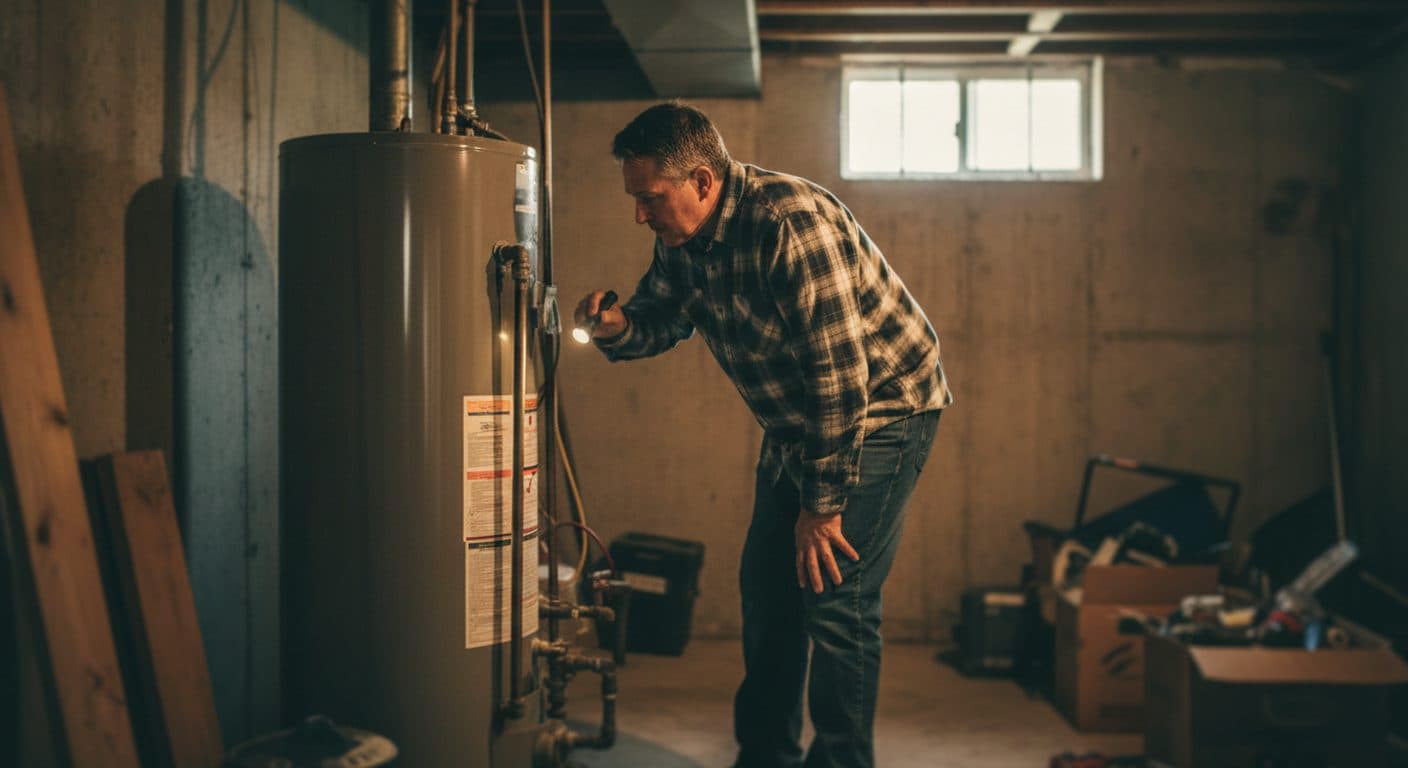
Most people find out how old their water heater is the morning it stops making hot water. You can find out today with a flashlight.
So how long does a water heater last? A standard tank usually gives you somewhere around 6 to 12 years, and the rest of this guide explains why yours might land at either end. You will learn the typical life span for tank and tankless heaters, the warning signs that one is wearing out, how to read the age off the label and how a plumber decides between repair and replacement.
How Long Does a Water Heater Last? Typical Life Spans
These ranges come from the InterNACHI home inspector life expectancy chart. Treat them as typical, not as a countdown. Two heaters of the same age can be in very different shape.
Typical ranges from InterNACHI. Actual life varies with water quality, use and maintenance.
What makes a water heater die early
Hard water
Minerals settle on the bottom of the tank as sediment. The heater has to work through that layer, which wears it out faster. InterNACHI calls out water mineral content as something that shortens water heater life.
No flushing
Many owner's manuals call for draining some water from the tank on a regular schedule to clear sediment. Most tanks never get it.
A used-up anode rod
Tanks have a metal rod inside that corrodes on purpose so the tank does not. Once the rod is gone, the tank itself starts to rust. A plumber can check and replace it.
High water pressure or heavy use
A big family or high pressure in the house lines puts more stress on the tank and its valves.
How to Read Your Water Heater's Age From the Label
The one thing to check today: the serial number
Find the sticker on the side of the tank, usually on the front near the gas control or the upper access panel. First look for a printed date such as "Mfg Date" or "Date of Manufacture." If there is none, take a photo of the serial number. On most brands the year it was made is hidden inside that number.
Here are the patterns you will see most often. Brands have changed formats over the years, so if the number does not fit, read it to the maker's customer service line and they can tell you the build date.
A. O. Smith and State
On newer tanks the serial number starts with four digits. The first two are the year and the next two are the week. A serial starting with 1612 points to the 12th week of 2016.
Rheem and Ruud
Skip the letter or letters at the start. The next four digits are usually the month and then the year. A serial with 0815 after the letters points to August 2015.
Bradford White
The serial starts with two letters. The first letter stands for the year and the second for the month, with A for January, B for February and so on. The year letters repeat every 20 years, so use the decoder chart on the Bradford White website and the look of the tank to pick the right decade.
Every other brand
Search the brand name plus "serial number date" on the maker's own website, or call their support line. Store brands are often built by one of the big makers, and the label usually names who made it.
Once you know the year, write it on a piece of tape on the tank. The next owner, or the next plumber, will thank you.
Warning Signs Your Water Heater Is Wearing Out
Rusty or brown hot water
If only the hot side is discolored, the inside of the tank may be rusting. Old galvanized pipes can do the same thing, so a plumber can tell you which it is.
Rumbling, popping or banging
Sediment on the bottom of the tank traps water that boils and pops. Early on, a flush can help. On an old tank it usually means the end is close.
Water pooling at the base
Check the fittings and the relief valve pipe first. If the water is coming from the tank body itself, the tank is failing and cannot be repaired.
Hot water runs out faster than it used to
Sediment takes up space and a failing element or burner heats less water. Either way the heater is losing ground.
A dripping relief valve
The pipe running down the side of the tank comes from a safety valve. If it drips or spits water, have a plumber check it. Do not cap or plug it.
Smell gas? Stop here.
If you smell rotten eggs near a gas water heater, do not flip switches or light anything. Leave the house and call your gas company or 911 from outside.
Repair or Replace: What a Plumber Will Look At
A good plumber will not decide on age alone. They weigh a few things together:
Usually worth repairing
· A heater well inside the typical age range
· One failed part, like an element, thermostat, igniter or gas control
· A worn anode rod caught before the tank rusts
· A leak at a fitting or valve, not the tank
Usually time to replace
· Water leaking from the tank body
· Rust inside the tank showing up in the hot water
· A heater at or past the top of its typical range that now needs a big repair
· Heavy sediment noise on an old tank, plus slow or short hot water
Questions to ask the plumber: How old do you think this tank is? Is the leak from the tank or a fitting? What would the repair cost next to a replacement? Ask them to put the scope and price in writing, and ask for their license number and proof of insurance before work starts. If you are in Ohio, our Ohio HVAC repair and replacement guide also covers water heater work that heating companies often handle.
How Long Does a Water Heater Last? Common Questions
How long does a water heater last on average?
The InterNACHI life expectancy chart lists 6 to 12 years for a conventional tank water heater and about 10 years for an on-demand (tankless) unit. Those are typical ranges, not promises. Hard water, skipped maintenance and the quality of the install can push a heater to either end.
How do I find out how old my water heater is?
Look at the sticker on the side of the tank. Some labels print the manufacture date outright. If not, the year is usually hidden in the serial number. The format depends on the brand, and the maker's customer service line can decode it for you if you read them the serial number.
Is it worth repairing a 10 year old water heater?
It depends on what failed. A worn heating element, thermostat or gas control part can be a reasonable repair on an older tank. A tank that is leaking from the body cannot be patched, so that one means a replacement at any age. Ask the plumber to tell you both prices so you can compare.
Why is my hot water rusty?
Rusty hot water can mean the inside of the tank is corroding, but old galvanized pipes can cause it too. If the cold water is clear and only the hot water is brown or orange, the water heater is the likely source. Have a plumber look before it starts leaking.
What does it mean when my water heater makes popping noises?
Popping or rumbling usually means sediment has built up on the bottom of the tank. Water trapped under the sediment boils and pops as the burner or element heats it. Flushing the tank can help if it is caught early. On an old tank, heavy sediment is a sign it is wearing out.
Does hard water shorten water heater life?
Yes. Minerals in hard water settle in the tank as sediment and coat heating parts, which makes the heater work harder. InterNACHI notes that the mineral content of water can shorten a water heater's life. Regular flushing and a water softener can help.
Book a Plumber for Your Water Heater
Not sure if yours is worth fixing? Have a local plumber look at it. If it is already leaking, start with our emergency plumber guide. Looking in central Ohio? Read our guide to finding a plumber in Columbus.
Contractor Palace
Find out if yours is worth fixing before it quits.
Tell us about your water heater, its age if you found it and what it is doing. We will match you with an independent local plumber for a repair or a replacement.