
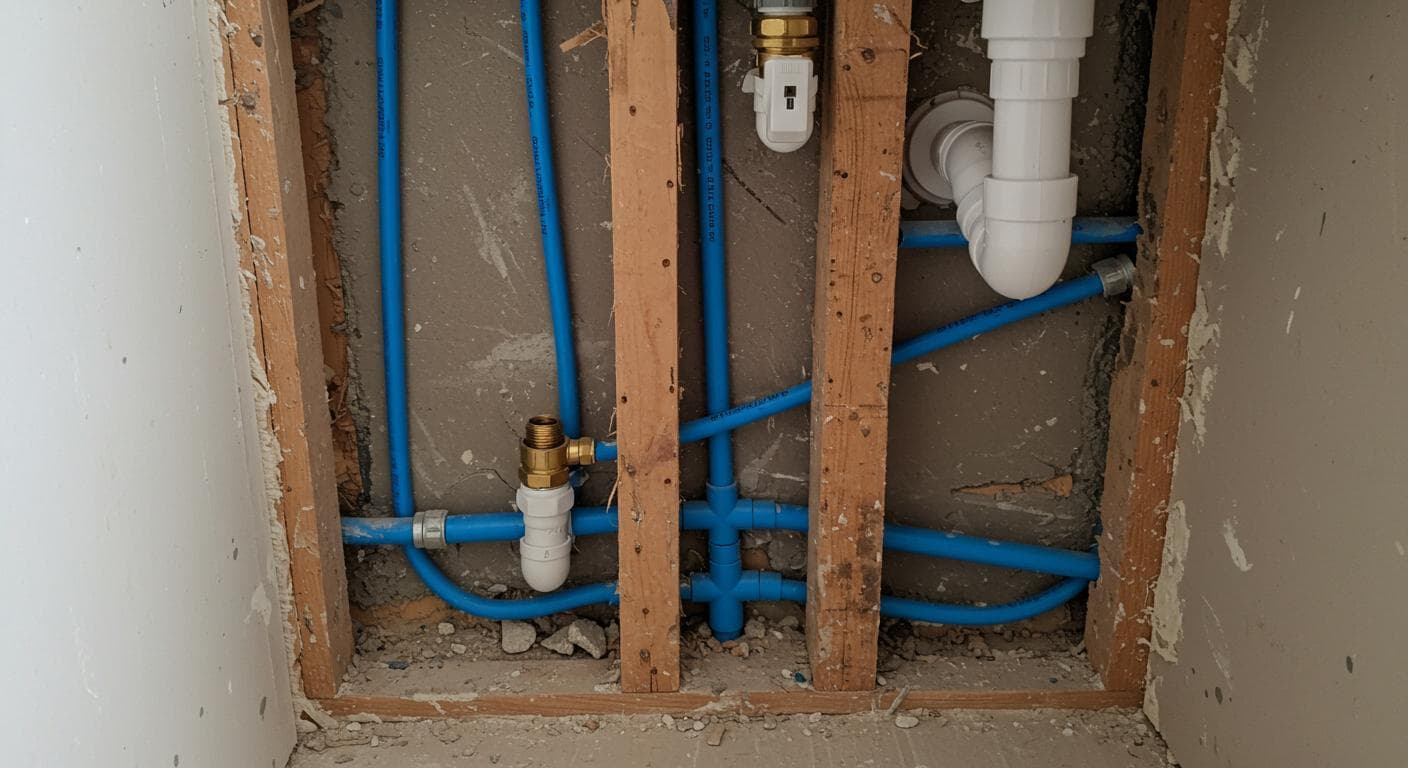
A frozen pipe is quiet until it splits. Then it can push water into a wall, a ceiling or a basement for hours before anyone notices.
The good news: learning how to keep pipes from freezing is mostly cheap fall chores. Foam sleeves, a drained hose spigot and a few sealed drafts cover most homes. This guide shows which pipes freeze first, what to fix before the cold sets in, what to do on the coldest nights and what to do if a pipe freezes anyway.
Which Pipes Freeze First
Pipes freeze where cold air reaches them and house heat does not. Walk your home with this list and note every spot you find.
Outdoor hose spigots
The faucet itself sits outside, and the short pipe behind it runs through the wall. Water left in that pipe is the most common freeze in many homes.
Pipes on outside walls
Kitchen and bathroom sinks on an outside wall are the classic problem. The pipes sit inside a cold cabinet with only a little insulation between them and the weather.
Crawl spaces
Vents, gaps around the foundation and thin or missing insulation can let a crawl space get nearly as cold as outside.
Garages
Water heaters, laundry lines and pipes to an upstairs bathroom often run through an attached garage. An open garage door on a cold night chills them fast.
Where the water line enters the house
The main line usually comes in through the foundation wall. Gaps around it let cold air blow right onto the pipe.
Attics and unheated additions
Any pipe above the insulation, or in a room that was added on without much of it, is exposed.
How to Keep Pipes From Freezing: Cheap Fixes for the Fall
Do these on a dry fall weekend. Most need only a hardware store run and a few hours.
1. Shut off and drain every outdoor spigot
Disconnect the hose first. A hose left on traps water in the faucet. Then find the indoor shutoff valve for each spigot, usually in the basement or crawl space right behind the faucet. Close it, go outside and open the spigot to let it drain. Leave the outside tap open for the winter.
2. Put foam sleeves on exposed pipes
Foam pipe insulation slips over the pipe and has a split down the side. Measure the pipe width before you buy. Cover every pipe you can reach in the crawl space, garage, unfinished basement and under sinks on outside walls. Tape the seams so cold air cannot slip in.
3. Seal the drafts near pipes
Look for daylight or feel for moving air around the spot where pipes and wires pass through outside walls and the rim joist. Caulk small cracks and fill bigger gaps with low-expansion spray foam. Close crawl space vent covers for the winter if your home has them.
4. Consider heat cable for the worst spots
Electric heat cable warms a pipe that cannot be kept warm any other way, such as a run in a cold crawl space. Buy one that is listed for use on pipes, follow the maker's instructions exactly and never wrap it over itself. If you are not comfortable with it, a plumber or electrician can install it.
5. Add insulation where it is thin
A cold crawl space or garage wall is often the real reason a pipe keeps freezing. Insulating the space protects every pipe in it at once and also helps your heating bill. Our insulation services page explains the options.
The one thing to check today: your main water shutoff
Find the main water shutoff valve. It is usually where the water line comes into the house, often in the basement, crawl space, garage or a utility closet near the water heater. Turn it off, check that a faucet stops running, then turn it back on. If a pipe bursts in January, this is the valve that saves your floors, and it is far better to learn now that it is stuck or hard to reach. If it will not move by hand, do not force it with a long wrench. Old valves can snap or start leaking. Have a plumber replace it while it is not an emergency.
What to Do on the Coldest Nights
When the forecast calls for a hard freeze, a few small habits protect the pipes you could not insulate. These steps match the advice from the American Red Cross guide to frozen pipes.
Drip the faucets on outside walls
Let cold water run at a thin, steady trickle from any faucet fed by a pipe in a cold spot. Moving water is much harder to freeze.
Open the cabinet doors under those sinks
This lets warm room air reach the pipes. Move cleaners and chemicals up out of reach of kids and pets first.
Keep the heat steady day and night
Skip the lower nighttime setting during a cold snap. The extra heating cost is small next to a burst pipe.
Keep the garage door closed
Especially if water lines or a water heater sit in the garage.
Going away? Leave the heat on
The Red Cross says set it no lower than 55°F. For a long trip, many homeowners also shut off the main water valve before they leave.
What to Do if a Pipe Freezes Anyway
The sign is simple. You turn on a faucet and nothing comes out, or just a trickle, while other faucets still work. Act fast, because ice in a pipe builds pressure that can split it.
If the pipe is frozen but not leaking
· Keep the faucet open so melting water has somewhere to go.
· Warm the pipe with a hair dryer, an electric heating pad or towels soaked in hot water. Start near the faucet and work back toward the cold spot.
· Never use a torch, propane heater or any open flame.
· Keep going until full water pressure comes back, then check every other faucet in the house.
If a pipe has burst or you cannot find the frozen spot
· Turn off the main water shutoff right away.
· If water is near outlets, lights or the electrical panel, stay out of the water and turn off power to that area only if you can reach the panel safely.
· Open a faucet on the lowest floor to drain what is left in the pipes.
· Call a plumber. A frozen pipe inside a wall or ceiling is not a DIY thaw.
If the water is already running into the house, our emergency plumber guide walks through what to do in the first hour.
When to Book a Plumber Instead
Most freeze prevention is homeowner work. These jobs are worth handing to a pro:
The same pipe freezes every winter
A plumber can reroute it to a warmer spot, insulate the wall cavity or add heat cable the right way.
Your outdoor spigot has no indoor shutoff
A frost-free spigot keeps the valve inside the warm part of the wall. It is a common, fairly quick plumbing job.
The main shutoff is stuck or leaks
Replacing it now costs far less than an emergency call during a burst pipe.
You found a bulge, crack or frost on a pipe
That pipe may already be damaged even if it has not leaked yet.
When you talk to a plumber, ask for their license number and proof of insurance, and ask them to put the scope and price in writing before work starts. You can see what a typical visit covers on our plumbing services page.
How to Keep Pipes From Freezing: Common Questions
At what temperature do pipes freeze?
Water freezes at 32°F, but a pipe inside a heated wall usually stays warmer than the air outside. The pipes at real risk are the ones in unheated spots like crawl spaces, garages, attics and outside walls. The longer the outside air stays well below freezing, and the windier it is, the more likely those pipes are to freeze.
Should I drip all my faucets when it is very cold?
No. Drip only the faucets fed by pipes that run through cold spots, such as a kitchen sink on an outside wall. A thin, steady trickle of cold water is enough. The American Red Cross recommends this because moving water is harder to freeze.
What temperature should I leave my house at when I travel in winter?
The American Red Cross says to leave the heat on and set no lower than 55°F while you are away. Also open the cabinet doors under sinks on outside walls before you go, and know where your main water shutoff is in case a neighbor has to turn it off.
How do I know if a pipe is frozen?
You turn on a faucet and nothing comes out, or only a trickle does, while other faucets work fine. You may also see frost on an exposed pipe or a bulge in it. Keep that faucet open and start warming the pipe from the faucet end back toward the cold spot.
Can I use a torch or a space heater to thaw a frozen pipe?
Never use a torch or any open flame. It can start a fire inside the wall. Use a hair dryer, an electric heating pad or towels soaked in hot water. A portable space heater is fine if it is kept well away from anything that can burn and you stay in the room.
Do I need to cover my outdoor faucets?
Shutting off and draining the outdoor faucet does more than a cover does. Close the indoor shutoff valve that feeds it, open the outside tap to let it drain and remove the hose. A foam faucet cover is a cheap extra layer on top of that. If your outdoor faucet has no indoor shutoff, ask a plumber about a frost-free model.
Find a Plumber Near You
Cold-weather cities see the most frozen pipe calls. Book an independent local plumber in your area:
Contractor Palace
Get your pipes ready before the first hard freeze.
Tell us what you need, like a frost-free spigot, a new shutoff valve or pipes rerouted out of a cold wall, and we will match you with an independent local plumber.