
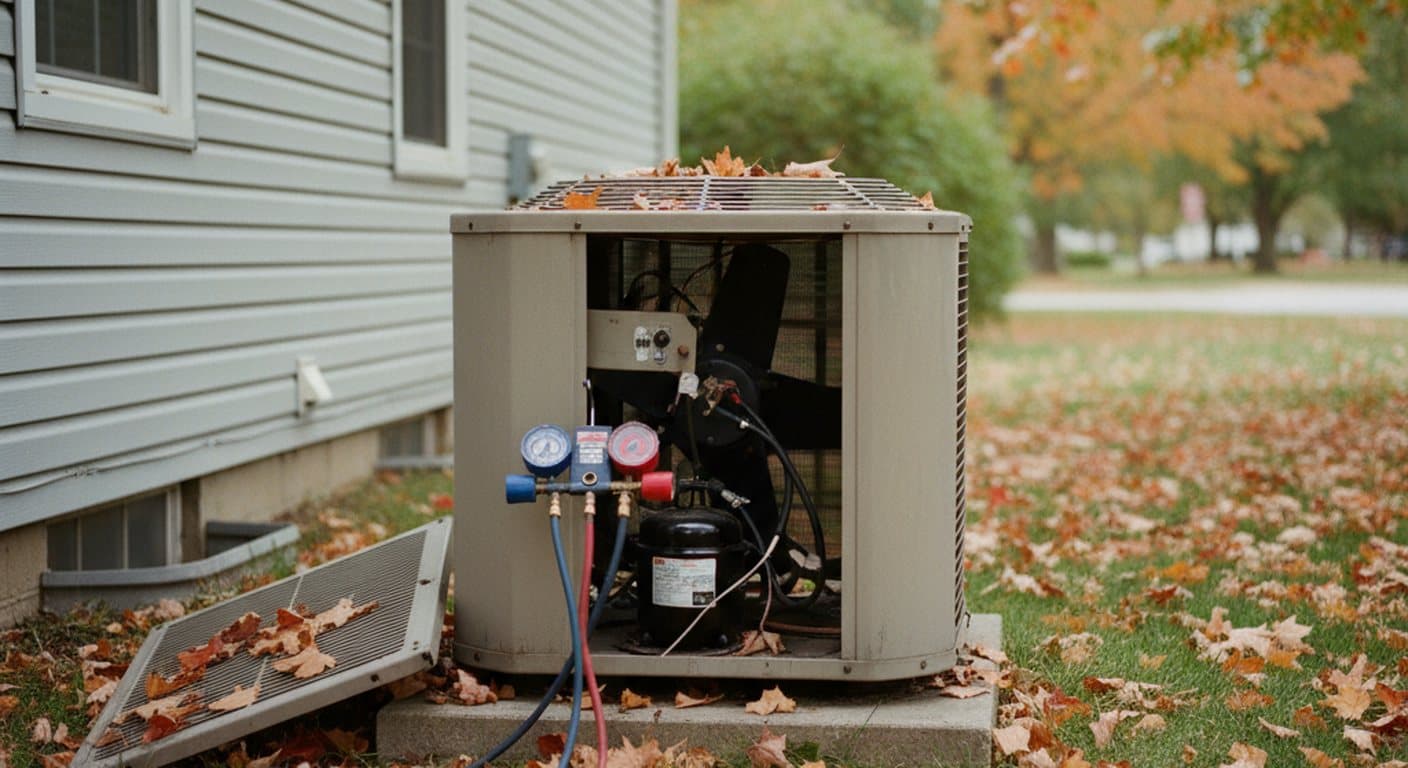
Ohio winters push furnaces hard and summers are more humid than most people expect. Your HVAC system works year-round. When it fails, it is rarely at a convenient time.
This guide covers what Ohio homeowners are actually paying for HVAC repair and replacement, how pricing differs across Columbus, Cleveland and Cincinnati and the key decision most homeowners get wrong: repair vs. replace.
Why Ohio Is Hard on HVAC Systems
Ohio sits in a climate zone that demands serious HVAC performance in both directions. Unlike the South (cooling-dominant) or the Mountain West (heating-dominant), Ohio HVAC systems must handle both extremes:
Ohio Winters
· Columbus avg. low: 21°F in January
· Cleveland: lake effect can push -10°F wind chills
· Furnaces run 4 to 6 months per year
· High-efficiency furnaces (96%+ AFUE) pay back fast here
Ohio Summers
· Columbus heat index regularly hits 95°F+
· Humidity frequently 70 to 80%: AC works harder
· Cincinnati summers rival Louisville for heat
· Multi-stage AC or heat pump handles humidity better
The year-round demand means Ohio HVAC systems accumulate operating hours faster than in single-season climates. A 15-year-old system in Ohio has likely experienced more stress than a 20-year-old system in Phoenix.
Repair vs. Replace: The Ohio Homeowner's Framework
The most common HVAC mistake is spending $800 on repairs on a system that needs replacement. Here is how to think about the decision:
The 50% Rule
If the repair cost exceeds 50% of the replacement cost and your system is more than 10 years old, replacement is almost always the better financial decision. Ohio's HVAC contractors widely use this rule as a practical guide.
Repair is the right call when...
· System is under 10 years old
· Single component failure (capacitor, igniter, thermostat)
· Repair cost is under 30% of replacement
· System is under warranty (manufacturers typically cover 5 to 10 years)
Replace is the right call when...
· System is 15+ years old
· Multiple components failing in the same season
· Refrigerant is R-22 (Freon): banned since 2020, now very expensive to source
· Energy bills have increased 20%+ in past 2 years
· System cannot maintain temperature on extreme weather days
R-22 Warning for Older Ohio Homes
Many Ohio AC systems installed before 2010 use R-22 refrigerant (Freon), which was phased out in 2020. If your system uses R-22 and develops a refrigerant leak, you are looking at $600 to $1,200 just to recharge it: plus the leak repair. At that point, replacement with a modern R-410A or R-32 system almost always makes more financial sense.
HVAC Repair Costs in Ohio
HVAC Replacement Costs: Columbus vs. Cleveland vs. Cincinnati
Full system replacement costs vary across Ohio's major metros, largely due to labor market differences and local contractor density:
Columbus
Furnace only: $2,800 to $5,500 · AC only: $3,200 to $6,000 · Full system: $5,500 to $10,500
Columbus has strong contractor competition, which helps keep prices moderate. Central Ohio's consistent growth means plenty of HVAC companies competing for business.
Cleveland
Furnace only: $3,000 to $6,000 · AC only: $3,000 to $5,800 · Full system: $5,800 to $11,000
Cleveland runs slightly higher than Columbus, partially due to the demands of high-efficiency heating required for Northeast Ohio winters. Lake effect weather also means more emergency calls.
Cincinnati
Furnace only: $2,600 to $5,200 · AC only: $3,400 to $6,500 · Full system: $5,500 to $10,500
Cincinnati's humidity and heat drive higher AC system demands. Cooling capacity is typically sized up vs. Columbus. Prices are comparable to Columbus overall.
estimates for standard residential (2,000 sq ft home). Includes equipment and installation labor. Permit fees vary.
HVAC and Indoor Air Quality in Ohio Homes
Most homeowners focus on heating and cooling performance. Indoor air quality is the quieter problem. Ohio homes are tightly insulated for cold winters, which means reduced natural air exchange. Combined with typical HVAC duct systems that circulate the same indoor air repeatedly, pollutant concentrations inside Ohio homes can run two to five times higher than outdoors.
Your HVAC system is the primary air handler in your home. If the equipment is dirty, the ducts are leaking or the filtration is inadequate, the system is actively redistributing dust, allergens and mold spores. A few practical fixes make a measurable difference:
Filter selection matters
A MERV 8 filter catches most dust and pollen. MERV 11-13 adds finer particles including mold spores and pet dander. Go above MERV 13 only if your system can handle the added static pressure: ask your HVAC tech to check airflow. Replace 1-inch filters monthly during peak heating and cooling seasons.
Humidity control is a heating-season issue
Ohio furnaces dry out indoor air significantly in winter. Air below 30% relative humidity causes dry skin, irritated sinuses and increased susceptibility to respiratory illness. A whole-home humidifier wired to your HVAC system maintains 35-45% humidity automatically. Repair cost for a neglected humidifier pad: $60-$120 at annual service.
Duct leakage is a hidden problem
The Department of Energy estimates that 20-30% of conditioned air in a typical home escapes through duct leaks before reaching the living space. In Northeast Ohio homes with older duct systems, that number runs higher. Duct sealing ($300-$1,000 depending on system size) can noticeably cut energy bills and even out hot and cold spots between rooms.
When you schedule service with an Ohio HVAC company, ask them to evaluate indoor air quality as part of the visit. Most licensed heating and cooling contractors can assess duct integrity, recommend filtration upgrades and identify whether your system is contributing to air quality problems.
Commercial HVAC vs Residential HVAC: What Ohio Business Owners Should Know
Residential and commercial HVAC share the same basic refrigeration principles but diverge sharply in equipment size, system design and service requirements. Ohio small business owners often discover this distinction the hard way when a residential HVAC company accepts a commercial job outside their actual competency.
Commercial HVAC systems typically handle much higher square footage, require zoning to serve multiple areas independently and use rooftop units (RTUs) or split systems designed for continuous operation. A warm store or office when the system fails does not just inconvenience customers: it can force a closure. Downtime has a direct dollar cost.
Rooftop Units (RTUs)
Standard in Ohio commercial buildings. Typically 3-25 tons of cooling capacity. Service access requires roof-safe protocols and commercial HVAC certification. Repair and maintenance costs run $200-$800 per service call for a typical Ohio small business.
Split commercial systems
Used in mid-size Ohio retail and office buildings. Separate indoor air handling units and outdoor condensers. More efficient than RTUs for multi-zone buildings but require more complex service.
Variable refrigerant flow (VRF)
Increasingly common in Ohio commercial renovations. Highly efficient but requires specialized training to service. Not all HVAC companies in Columbus, Cleveland or Cincinnati have VRF-certified technicians: verify before signing a service contract.
If you run a business in Ohio and need HVAC service, verify that the company specifically handles commercial HVAC and has experience with your system type. A residential-only company that takes the work may fix the immediate problem but miss issues that are specific to commercial equipment design.
Water Heaters and Other Services Ohio HVAC Companies Handle
Most licensed HVAC contractors in Ohio also service water heaters, which makes sense: both involve gas lines, venting and combustion appliances. This is worth knowing because bundling service calls can reduce your overall cost.
An aging water heater is one of the most overlooked maintenance items in Ohio homes. If your furnace or AC is being replaced after 15+ years, the water heater installed at the same time is likely due for replacement soon. Asking your HVAC contractor to assess both during the same visit saves a service call fee and can catch problems before they become emergencies.
How to Schedule HVAC Service in Ohio Without Getting Burned
Ohio HVAC demand spikes hard at two points each year: the first cold snap (typically October-November) and the first heat wave (typically June). If you wait until then to schedule service, you are looking at a week-plus wait for non-emergency appointments and emergency rates for urgent calls. Here is a smarter approach:
Schedule tune-ups in the off-season
Book furnace tune-ups in September and AC tune-ups in April. HVAC companies have more availability and some offer lower rates during slow periods. You also get problems identified before the system is under heavy load.
Ask about maintenance agreements
Many Ohio HVAC companies offer annual maintenance plans covering one furnace tune-up and one AC tune-up per year for $150-$300. Plans typically include priority scheduling, which puts you ahead of the line during peak demand. For older systems, this is often worth the cost in repair prevention alone.
Keep customers warm and cool with a service area check
Not every HVAC company serves every Ohio suburb. Before booking, confirm the company actively serves your area. Companies based in Columbus may not regularly serve Middleburg Heights or Mayfield Heights. A company with genuine local presence in your area will respond faster and know local permit requirements.
Contractor Palace matches you with Ohio HVAC companies that have verified service areas. You are not gambling on whether they actually cover your zip code.
Ohio HVAC Seasonal Tips
Before Winter (October, November)
· Schedule a furnace tune-up before demand peaks: wait until December and you may wait 2 weeks for an appointment
· Replace air filters (1-inch filters should be replaced monthly in winter)
· Test your thermostat and carbon monoxide detectors
· Check and clear furnace vents and air intakes if you have a high-efficiency unit
Before Summer (April, May)
· AC tune-up before heat arrives: technicians are fully booked by June
· Clear debris from outdoor condenser unit
· Check refrigerant level: low charge is the most common cooling problem in Ohio
· Consider a smart thermostat if you do not have one: saves 10 to 15% on cooling costs
Find HVAC Contractors Near You
Book a verified, licensed HVAC contractor in your Ohio city. All pros are OCILB-licensed for heating and cooling work.
Contractor Palace
Get matched with a verified Ohio HVAC contractor, fast dispatch.
Get matched with a verified, licensed HVAC contractor in your Ohio city. Fast dispatch, especially useful when your heat or AC fails at the worst time.