
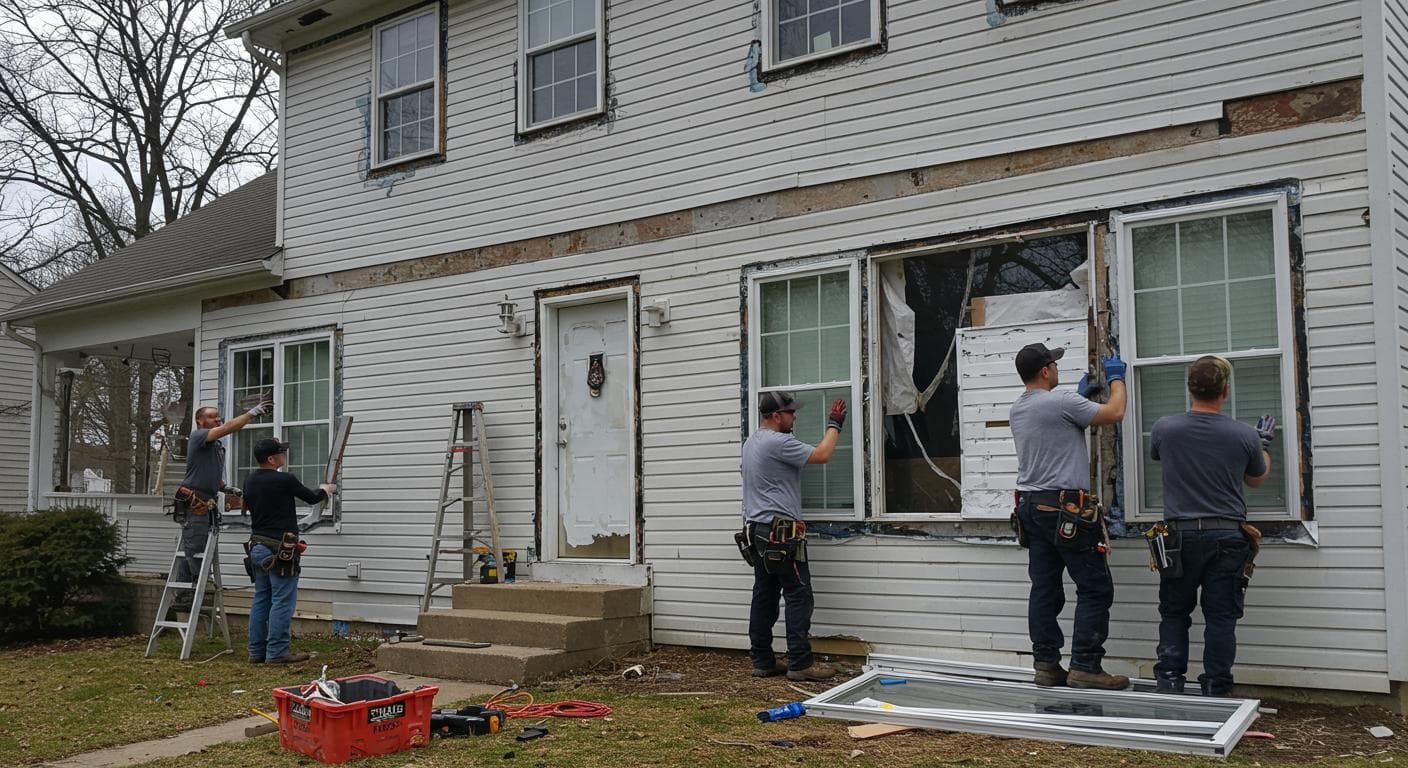
Window Replacement Denver: Glass Built for a Mile Up
Windows are one of the few products where Denver genuinely gets a different version than the coasts. A sealed double pane unit is a fixed volume of gas between two panes, and manufacturing it at sea level then shipping it to five thousand feet leaves the outside pressure lower than the inside. Manufacturers solve that for high altitude orders, and a contractor who does not order correctly leaves you with bowed glass and early seal failure. Contractor Palace matches you with one independent local window and door contractor in the Denver metro.
What Window Replacement Costs in Denver
Replacement windows in Denver commonly run from around six hundred dollars per window for a standard vinyl unit installed to well over fifteen hundred for large fiberglass or wood clad units, so a whole house typically lands between eight and thirty thousand dollars. The Denver specific part is the glass itself. Insulated units are sealed at the factory, and one built at low elevation and installed at a mile up carries a pressure difference across the panes, so manufacturers build high altitude versions for Colorado orders, often using a small capillary tube that lets the unit equalize. Beyond that, the sun at altitude makes a low E coating worth more here than a milder market, and hail makes glass a real consideration rather than a theoretical one. Most whole house replacements install in two to five days.
What a Denver Window Job Actually Involves
There are two ways to replace a window. An insert replacement keeps the existing frame and fits a new unit inside it, which is faster, cheaper and fine when the frame and the surrounding wall are sound. A full frame replacement takes everything back to the rough opening, which costs more but is the only option when there is rot, water damage or you are changing the window size. On an older Denver home the honest answer often only appears once the trim comes off.
The install matters as much as the unit. Most window leaks are flashing failures, not product failures, and water that gets behind a window ends up in the wall and eventually in the basement. If a window job uncovers water damage, our Denver general contractors handle the repair, and persistent water at the foundation is a Denver foundation repair conversation rather than a window one.
Planning ranges for the Denver metro, not a quote. Window count, size, frame material and whether any opening needs structural work move the number most.
Three Things That Make Denver Windows Different
Sealed glass has to be ordered for this altitude
An insulated glass unit is sealed at the factory with the air or argon inside it at whatever pressure the factory sits at. Install that at five thousand feet and the outside pressure is lower, so the panes bow outward and the seal works harder for the rest of its life. Manufacturers handle it for Colorado orders, commonly with a capillary tube that lets the unit breathe during transport. It is not exotic and any real Denver window company does it routinely, which is exactly why it is a useful question to ask a company you have not used before.
Sun at altitude makes coatings earn their keep
UV is more intense here than at sea level, and a south or west facing room takes it all day. A low E coating cuts the heat gain and slows the fading of floors, rugs and furniture behind the glass. It is one of the few upgrades in this trade where the benefit is obvious within a season rather than showing up on a spreadsheet.
Hail is a glass problem too, not only a roof one
Front Range hail damages windows, screens and skylights alongside the roof and siding. If a storm has been through, the windows are worth including in the inspection rather than assuming glass either breaks or is fine.
The gas between the panes was trapped at sea-level pressure. At 5,280 feet the outside air pushes back less, so the panes bow outward from day one. The glass reads faintly wavy in reflected light, and the edge seal is under constant stress instead of resting.
A small capillary tube lets the unit vent during transport, then gets sealed once it reaches installation altitude. Inside and outside pressure end up equal, so the panes stay flat and the seal is never fighting the glass.
Why Use Contractor Palace for Windows in Denver
No in home sales pitch
This trade is known for four hour presentations and today only pricing. We match a contractor who measures and quotes, and you decide on your own time.
One matched contractor
Describe the job once. We match a single window and door contractor whose service area and availability fit, rather than selling your number on.
Independent local pros
Every pro we match is an independent local business. Ask to see their license and insurance before work starts, and get the scope and price in writing.
Ask about the warranty
Ask the pro what warranty comes with the work and get it in writing before work starts.
Windows and doors are one of thirty trades we cover here. See the rest on our Denver contractors hub, or read the national windows and doors service page.
Common Questions About Windows in Denver
Do I need special windows for Denver altitude?
You need units ordered for high altitude, which is standard practice for Colorado rather than a custom product. The manufacturer either builds the unit for this elevation or fits a capillary tube so it can equalize in transit. Any established Denver window company handles this automatically. It is worth confirming with a company that mostly works at lower elevation.
Are triple pane windows worth it in Colorado?
Sometimes. They help most on exposed north elevations, in rooms that stay cold, and for noise near a busy road. For a lot of Denver homes a good double pane with a proper low E coating and a solid install captures most of the benefit for less money. Spend on the install and the coating before spending on a third pane.
Does my window seal failure mean the whole window is bad?
Not necessarily. Foggy glass between the panes means the sealed unit has failed, and on many windows the glass unit alone can be replaced while the frame and sash stay. That is far cheaper than a full replacement. Whether it is possible depends on the window, so it is worth asking specifically rather than accepting a whole house quote.
How long does window replacement take in Denver?
Two to five days on site for a typical whole house, though the wait for manufactured units is usually the longer part and can run several weeks. Full frame replacements take longer than inserts, and any opening that turns out to have water damage adds a repair step before the new window goes in.
Ready to replace your Denver windows? Let’s get you matched.
Post the project free. Get matched with one independent Denver window and door contractor who orders for altitude and flashes the install properly.
Get my free Denver window quotearrow_forward