
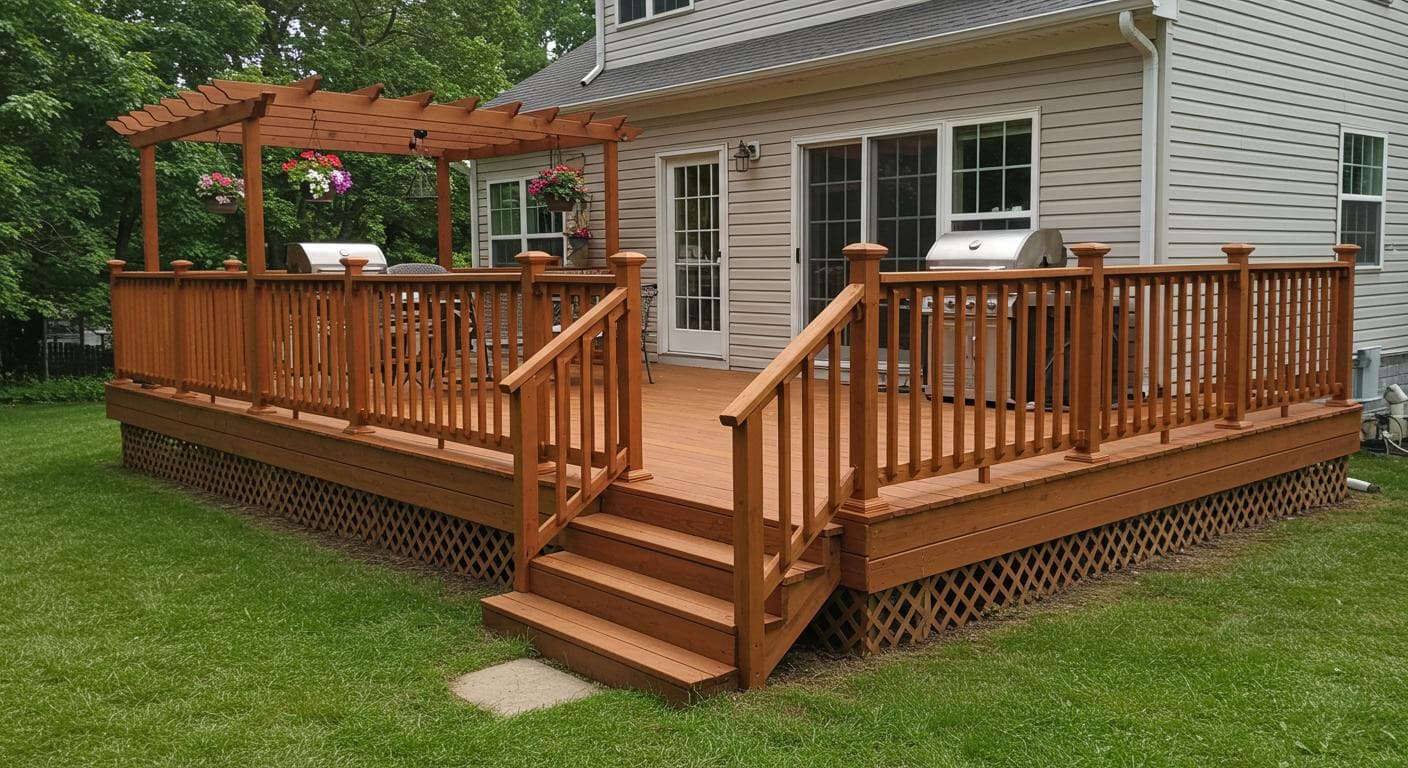
Deck and Patio Contractors Denver: Built for Ground That Moves
Denver has the sunshine to make a back deck the most used room in the house for half the year. It also has expansive clay, a real frost line and sun at altitude that is harder on wood than most of the country. A deck built without respecting those three is a deck that racks, heaves and greys out early. Contractor Palace matches you with one independent local deck and patio contractor in the Denver metro, not a call list.
What a Deck or Patio Costs in Denver
A new deck in Denver commonly runs from the low teens for a simple pressure treated build to the high tens of thousands for a large composite deck with railings, stairs and a cover. A concrete or paver patio usually costs less per square foot than an elevated deck because there is no framing or footing structure holding it in the air. Three local conditions drive the real number. Footings have to reach below the frost line, which in the Denver area means digging roughly three feet rather than the shallow pier a milder climate allows. Much of the metro sits on expansive clay that lifts shallow footings, so depth and pier design matter more here than material choice. And Denver typically requires a permit once a deck sits more than thirty inches above grade. Most residential decks take one to three weeks on site once permitted.
Choosing Between a Deck and a Patio in Denver
A deck is framed and elevated, which suits a back door well above grade or a sloping lot where a patio would need heavy fill. A patio sits on the ground, costs less to build at the same size, needs no railing and never needs restaining. On a walkout basement lot, plenty of Denver homes end up with both: a deck off the main floor and a patio underneath it.
Material changes the maintenance more than the look. Pressure treated wood is the cheapest to build and the most work to keep, cedar sits in the middle, and composite costs most up front and asks for almost nothing after. At this altitude that trade tilts further toward composite than it would at sea level, because UV strips finishes off real wood faster here. Patio work overlaps with Denver concrete contractors and with hardscaping when retaining walls or pavers are involved.
Planning ranges for the Denver metro, not a quote. Height above grade, stair count, railing type and how far equipment has to reach the back yard move the number most.
Three Things That Make a Denver Deck Different
Footings go below frost depth, and that is not optional
Denver has a real frost line, and a footing that stops above it gets lifted every time the ground below freezes and expands. In the Denver area that means digging down around three feet rather than the shallow pier that passes in a mild climate. A deck on shallow footings does not fail in its first winter, which is exactly why it is a tempting corner to cut. It shows up two or three seasons later as a deck that has pulled away from the ledger and stairs that no longer meet the landing.
Expansive clay lifts things that are not anchored deep
The same Front Range clay that forces floating walls into Denver basements works on deck piers too. It swells with moisture and shrinks as it dries, and a pier without enough depth or the right design rides that movement. Ask how the contractor sizes and sets piers for local soil. A builder who works here has a clear answer and a builder who does not will talk about the deck surface instead.
Sun at altitude ages a finish years early
At over five thousand feet UV is more intense than most of the country, and a south or west facing deck takes it all day. Stain that would last four seasons somewhere lower can look tired in two here. That is why composite is more popular in Denver than the raw price difference suggests, and why a real wood deck here needs a maintenance plan rather than good intentions.
The concrete stops inside the layer that freezes. Every freeze expands that soil and lifts the footing with it. It survives the first winter, which is exactly why this corner gets cut, and shows up two or three seasons later as a deck pulling away from the house and stairs that no longer meet the landing.
The footing reaches past the depth that freezes, so seasonal freezing has nothing to push against. In the Denver area that generally means digging around three feet, and expansive clay can push a project deeper still.
Why Use Contractor Palace for a Denver Deck or Patio
One matched builder, not five cold calls
Describe the project once. We match a single deck and patio contractor whose scope, service area and availability fit. Your number does not get resold.
Independent local pros
Every pro we match is an independent local business. Ask to see their license and insurance before work starts, and get the scope and price in writing.
Permit handled before the first hole
Denver generally requires a permit once a deck is more than thirty inches above grade. An unpermitted attached deck becomes your problem at resale and at claim time.
Ask about the warranty
Ask the pro what warranty comes with the work and get it in writing before work starts.
Decks and patios are one of thirty trades we cover here. See the rest on our Denver contractors hub, or read the national deck and patio service page.
Common Questions About Decks and Patios in Denver
Do I need a permit to build a deck in Denver?
Generally yes once the deck surface is more than thirty inches above grade, and anything attached to the house brings the ledger connection into inspection scope. Ground level patios usually do not need a building permit, though drainage changes and work in the right of way can. Surrounding cities such as Aurora, Lakewood and Arvada set their own thresholds, so the rule follows the address.
How deep do deck footings need to be in Denver?
Below the frost line, which in the Denver area is commonly taken as about three feet. Local building departments set the figure they enforce, and expansive soil can push a project toward a deeper or differently designed pier. This is the single detail most worth confirming in writing before work starts, because it is invisible once the deck is on top of it.
Is composite worth it in Colorado?
More than in most places. The case for composite is avoided maintenance, and altitude UV plus big temperature swings mean real wood here needs cleaning and refinishing on a shorter cycle than the same deck at sea level. If you want a wood deck, budget the upkeep honestly rather than assuming a stain will last as long as the tin claims.
What is the best time of year to build a deck in Denver?
Late spring through autumn is the bulk of the season, and good crews book out through it. The quieter window is early spring, before demand spikes, as long as the ground is workable for footings. Concrete patios have a narrower window than decks because a hard freeze during the cure is a real problem.
Ready to build your Denver deck? Let’s get you matched.
Post the project free. Get matched with one independent local deck and patio contractor in the Denver metro, with footings, permits and Front Range soil handled properly.
Get my free Denver deck quotearrow_forward