
Siding Denver: Exteriors Built for Hail Country
Colorado sits in the middle of the country’s worst hail belt, and the Front Range takes more damaging storms than almost anywhere else in the United States. That single fact shapes the siding trade here. Contractor Palace matches you with one independent local siding contractor, not a storm chaser list.
What Siding Costs and Involves in Denver
Re-siding a Denver home commonly runs from the mid teens for vinyl on an average sized house to the high tens of thousands for fiber cement with trim and paint. Two things make Denver different from a milder market. First, hail. Second, the sun and the temperature swings. At altitude, UV is harder on color and on any painted surface, and a forty degree day to night swing works expansion joints constantly.
What a Denver Siding Job Actually Covers
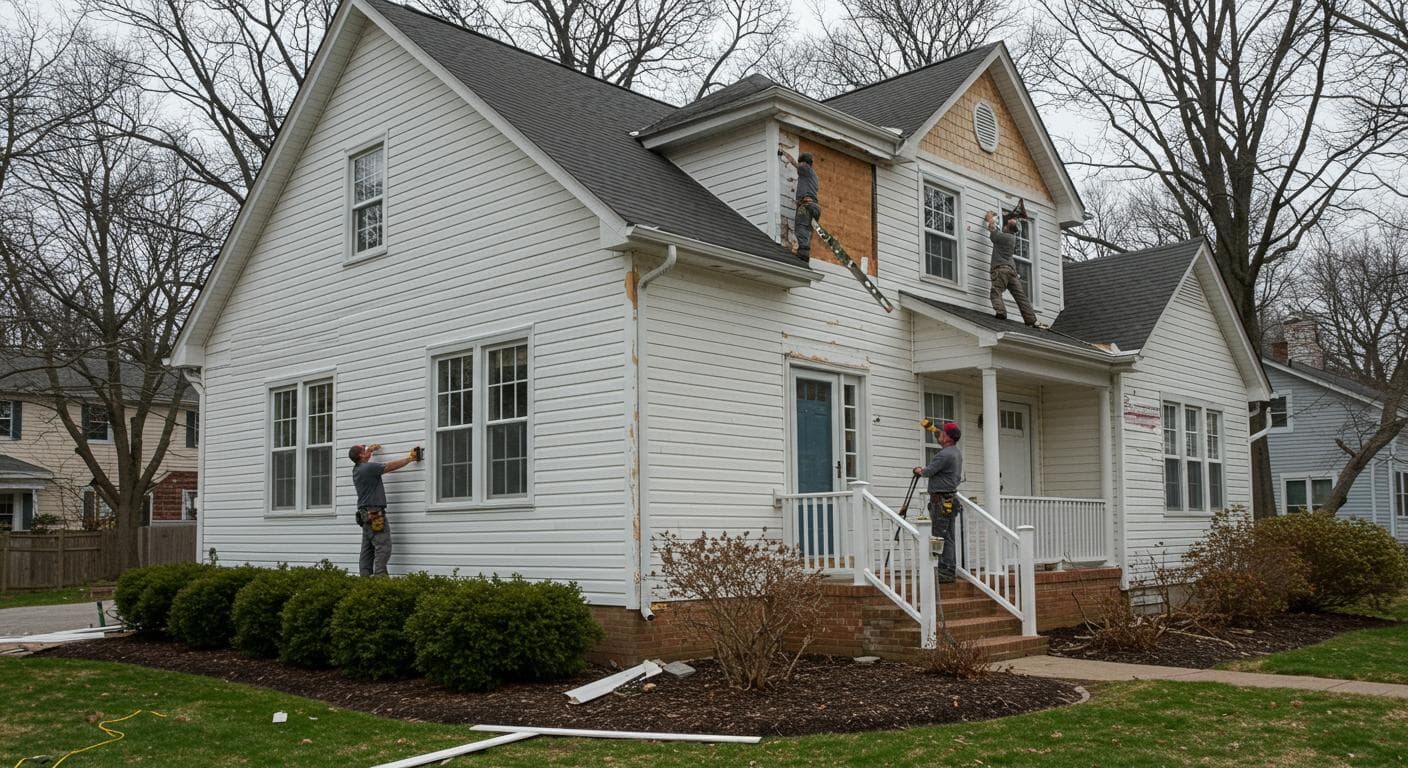
Siding work runs from a targeted repair after a storm to a full exterior replacement. A repair replaces damaged panels and matches the existing profile and color, which gets harder as siding ages and fades. A full re-side strips to the sheathing, which is the point at which any hidden water damage or missing house wrap becomes visible and fixable. Many Denver homeowners fold in new trim, soffit and fascia at the same time because the labor to reach them is already paid for.
Storms rarely hit one surface. Our Denver roofing contractors handle that side, and gutter work usually follows.
Planning ranges for the Denver metro, not a quote. Two story access, how much sheathing has to be replaced and whether the job goes through insurance all move the number.
Three Things That Make Denver Siding Different
Hail is the main event, and it brings storm chasers with it
After a big Front Range storm, out of state crews arrive within days, knock doors, offer to cover your deductible and are gone before the workmanship warranty means anything. Colorado has specific rules about roofing and storm contracts for exactly this reason, including a homeowner’s right to cancel after an insurance decision. The practical filter is simple: a contractor with a local address, a local track record and no urgency about your signature. That is the filter to apply before you sign.
Impact resistant material pays for itself here
In most of the country an impact rated siding or roofing product is a nice to have. In the Front Range hail belt it changes how often you are back on a ladder, and some insurers offer discounts for certain roof features, so ask your insurer. Ask your contractor about class rated products before choosing on price alone, because the cheaper panel can cost more across ten years here than it saves on install day.
Altitude sun fades color faster than the brochure assumes
UV at over five thousand feet is more punishing than at sea level, and a south or west elevation takes it all day. Darker siding colors and painted fiber cement both show it first. It is worth asking specifically what the finish warranty says about fade, and whether the manufacturer rates that product for high UV exposure, rather than assuming a national warranty was written with Denver in mind.
Why Use Contractor Palace for Siding in Denver
No storm chasers
Look for a local contractor with a track record, not a crew that follows hail across state lines. That is the single biggest risk in this trade in Colorado.
One matched contractor
Describe the damage once. We match a single siding contractor whose scope and availability fit. Your number does not get resold to a call center.
Ask for proof of insurance
Siding work is ladder and lift work on the side of your house. Ask the pro for their license and proof of insurance before work starts.
Ask about the warranty
Ask the pro what warranty comes with the work and get it in writing before work starts.
Siding is one of thirty trades we cover here. See the rest on our Denver contractors hub, or read the national siding service page.
Common Questions About Siding in Denver
What is the best siding for Colorado weather?
Fiber cement and engineered wood both hold up well against hail and handle temperature swings without the brittleness cheaper vinyl can develop in a cold snap. Vinyl is still a reasonable budget choice, but choose a thicker impact rated grade rather than the entry product. Whatever the material, ask about the impact rating and the fade warranty rather than choosing on appearance alone.
How do I spot hail damage on siding?
Look for dents, cracks or chipped paint on the north and west elevations first, since Front Range storms usually drive from those directions. Vinyl tends to crack or hole, fiber cement chips, and metal dents. Damage is often clearer on soft metal like gutters and window wraps, so if those are pocked it is worth a proper inspection of the siding even when it looks intact from the driveway.
How long does re-siding a Denver house take?
One to three weeks on site for most homes, driven by size, story count and how much sheathing has to be replaced once the old siding comes off.
- 1Roofbruised or cracked shingles, granule loss in the gutters
- 2Gutters & wrapscheck firstdents show here first, soft metal is the giveaway
- 3Sidingcracks, holes and chipped paint, worst on north and west
- 4Windows & screenstorn screens, pocked frames, cracked glass
Hail damage or ready to re-side? Let’s get you matched.
Post the project free. Get matched with one independent Denver siding contractor who is local and still here next season.
Get my free Denver siding quotearrow_forward