
Gutter Cleaning in Denver: A Gutter Is a Foundation Tool Here
Most of the Denver metro sits on expansive clay. That clay shrinks when it dries out, which in a semi-arid city is most of the year, and it swells hard when it finally gets soaked.
A blocked gutter overflows at one point and pours an entire roof of water into one narrow strip of that clay right against your wall. In Denver that is a soil movement problem before it is ever a peeling paint problem, which is why a hundred dollar job here protects something that costs tens of thousands.
Bone Dry Soil, Then a Wet April Snow: Why an Overflow Does Real Damage Here
The ground under most of this city changes volume with moisture. Colorado has lived with it long enough that buyers of new homes here are normally handed a soils report at closing, and the Colorado Geological Survey publishes a free homeowner guide to swelling soils that almost nobody reads twice.
Here is the part that matters for your gutters. Dry clay is shrunk and cracked open. When a clogged gutter sends the whole roof over one corner, that water goes down the cracks fast and swells a narrow band of soil while the rest of your perimeter stays shrunk. Uneven swelling is what pushes a basement wall and lifts a slab, and it is a very different failure from the slow rot you get in a wet climate.
Denver water also does not arrive gently. A March or April snow is wet and heavy, and it loads a gutter with slush and meltwater at the same moment. Summer afternoon storms can empty a lot of sky in twenty minutes. Both are burst events, and a burst is the worst possible way to deliver concentrated runoff to soil that has been dry since last fall.
Go look at this yourself after the next melt or storm. Stand at the bottom of every downspout. A scooped out dish in the soil, a fan of mud across the driveway or a dark stripe on the brick above the discharge all mean water is going into the clay at the wall. Pace out how far the water lands, heel to toe is close to a foot for most adults. You want four to five feet. A splash block sitting flat under the elbow is not four feet, and it never was.
The second thing you can do today costs nothing either. Take a flashlight to the basement, hold it flat against the wall so the beam skims the surface, and walk each side. Skimming light shows cracks that straight-on light hides. Note which wall, and whether you see a hairline vertical, a horizontal line partway up or a stair step through the block joints. Match that wall to the nearest downspout, and you will know whether your gutter problem and your basement problem are one problem.
Denver's older blocks sharpen all of this. Baker, Congress Park, Park Hill, Berkeley and the streets around Washington Park are full of pre-war brick bungalows and Denver Squares with finished basements people sleep in, and downspouts that spill straight at the wall because in 1925 nobody had put a bedroom down there. Behind those same blocks the alley garage has its own gutters, and those are the ones nobody has touched in a decade.
Elm Seed, Locust Leaflets and a Winter of Shingle Grit
Denver's tree canopy is planted, not native, so choices made decades ago decide what lands on your roof. Standard advice about fall leaves fits this city badly.
Siberian elm is all over the older streets and it throws an enormous flush of papery seed in late spring. It is light, it mats into a felt in the bottom of a gutter and it slips through the mesh on a lot of guards. Honey locust got planted everywhere here because it shrugs off heat and dry air, and its tiny leaflets plus its long pods are a specialty at plugging a downspout elbow. Along the Platte and Cherry Creek corridors the cottonwoods throw cotton in early summer, which turns to paste the first time it gets wet.
Then there is hail, which fills gutters in a way trees never do. The Front Range takes a beating most summers, and hail knocks the mineral granules off asphalt shingles. Those granules wash into the gutter and settle as a heavy dark grit that will not float out with a hose and has to be scooped. If you took a hail hit, there is grit in your gutters whether or not a single tree overhangs your roof.
Make the hail visit do double duty
Someone is already up there with a view of your roof, so ask them to photograph the shingle field and not just the gutter, and ask straight out whether they saw bare spots where granules have come off.
That is the cheapest roof look you will ever get, and having your own photos before a storm chaser knocks on the door changes the whole conversation.
Which brings up the thing you are allowed to refuse. If a crew quotes a gutter guard on the same visit as the cleaning, ask them to name the trees feeding your gutters, and make them say the actual name. Someone who just spent an hour with their hands in your gutter knows what came out. A shrug followed by a price per foot is a product sale, and you can say no.
One more Denver detail worth knowing. Residential rain barrels only became legal in Colorado fairly recently and the rule is two barrels holding no more than 110 gallons between them. If you have one hanging off a downspout, that inlet screen is the first place fine debris collects, so check it the same day you check the gutter and count your barrels while you are there.
Six Steps of a Job Done Properly in Denver
You describe the house, not just the address
Stories, whether there is a rear addition with its own lower roof line, whether the garage sits off the alley, and whether hail has hit since the last clean. Those four answers set the crew size and the price more than square footage does, and a Denver bungalow with a cut up back roof is a slower job than a bigger ranch.
Ask to see the insurance paperwork before the ladder goes up
Colorado licenses electricians and plumbers at the state level and issues nothing for gutter work, so insurance is the credential that exists. Ask for a certificate showing general liability and workers comp, and ask for it to arrive from the agent's email instead of as a photo on a phone. Anyone on a ladder against your brick is your exposure if they are not covered.
They walk the perimeter with you before anyone climbs
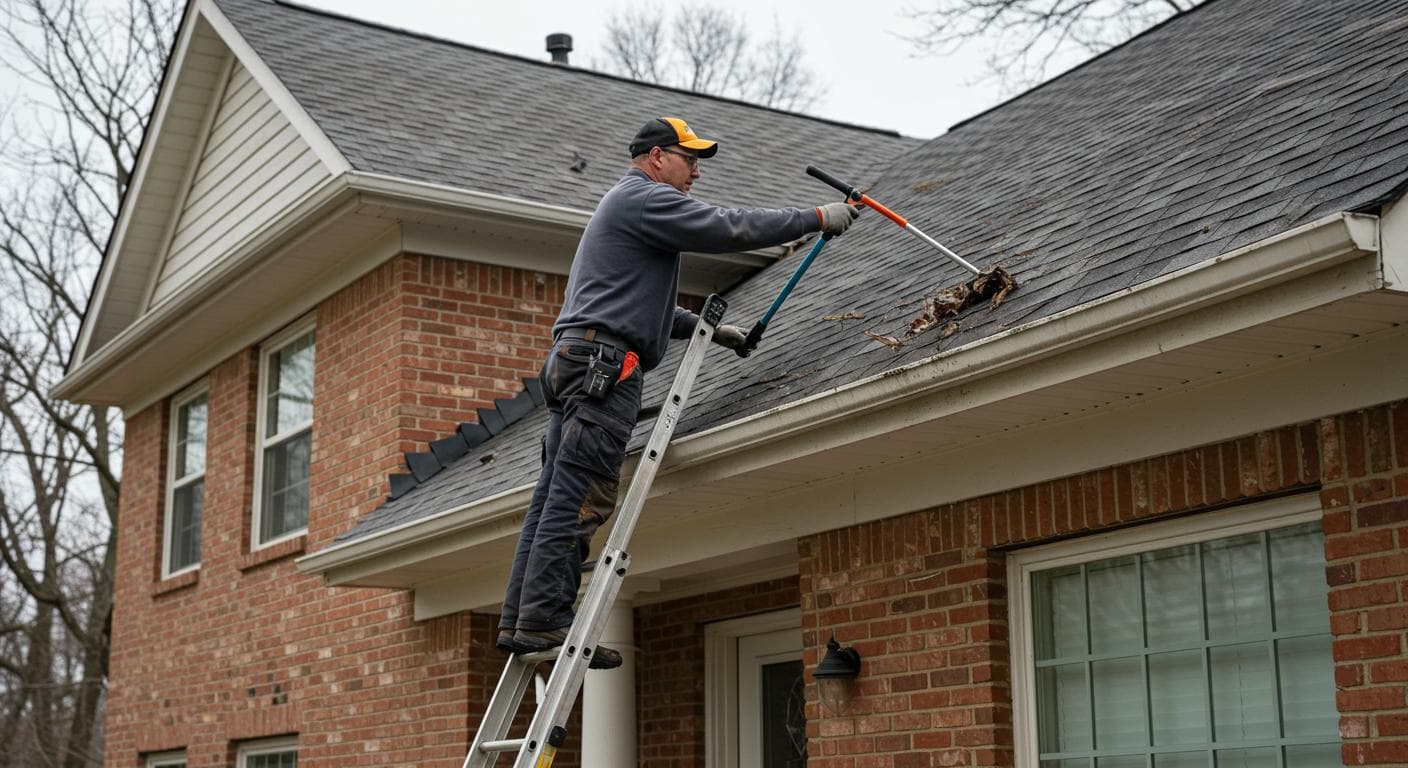
Five minutes on the ground pointing out the downspout that fans across the driveway and the corner above the basement bedroom. Ladder feet land level, a stabilizer goes on the top, and nobody stands on the gutter itself. A gutter is hung to carry water, not a person, and a bent hanger is how a clean turns into a leak.
Debris comes out by hand and into a bucket
Scooped and bagged, not blown across the roof for the wind to move around and not left in your yard. It also does not get flushed down the downspout, which is the shortcut that turns a fifteen minute gutter clog into a buried drain clog you cannot see or reach.
Water goes down every downspout and someone watches the bottom
An empty gutter is not the test. The test is full volume leaving at the far end. If it trickles or backs up at the elbow, the blockage is below the gutter and that is a separate job with a separate price, which you should hear about before they pack up rather than in a phone call next spring.
You get photos and a straight answer on pitch and discharge
Before and after shots, plus where each downspout ends and how far from the wall it lets out. Under four feet on Denver clay and extensions are the cheapest structural money you will spend. Add a note on any sag, rusted spike or separated seam, priced so you can think about it instead of deciding on the driveway.
Gutter Cleaning Costs in Denver CO
Typical Denver ranges, here so you can sanity check a quote instead of replacing one. Two things push a job toward the top: a steep or broken up roof line on an old bungalow with a rear addition, and a summer of hail grit, which is heavy and comes down the ladder a bucket at a time.
Common Questions About Gutter Cleaning in Denver CO
How often do gutters need cleaning in Denver?
Twice a year for most of the metro, but the timing is not the textbook spring and fall. Late June, once the elm seed and cottonwood have finished dropping, then late October or early November after the ash and locust come down and before the first heavy wet snow parks in there.
A house with nothing overhanging it can often manage once a year in the fall. Hail is the exception that ignores your tree situation, so add a check after any storm that put dents in the car.
Is there such a thing as a licensed gutter cleaner in Colorado?
No. Colorado licenses electricians and plumbers at the state level and does not issue a trade license for gutter work, so anyone advertising as a licensed gutter cleaner here is borrowing a word that does not apply.
Insurance is the real check. Ask for a certificate showing general liability and workers comp, sent by their insurance agent, and read the dates on it.
Are gutter guards worth it in Denver?
It depends on what is falling, and that is a street by street answer. Against big fall leaves a decent guard earns its keep. Against Siberian elm seed, cottonwood fluff and honey locust leaflets, which is what the older Denver blocks actually shed, the fine stuff packs on top of the screen or works through it and you are back up the ladder anyway.
Before you buy any guard, make the person selling it name the trees over your roof. If they cannot, they have not looked.
The gutters look clean but water still runs down the wall. What is that?
Usually pitch or a buried blockage instead of debris in the trough. Gutters shift over the years, especially where an old bungalow was re-roofed and the hangers got reused, and a run sloping the wrong way holds standing water that spills over the front lip in a downpour.
Run a hose in at the high end and watch where it stops moving. That tells a crew where to start and keeps you from paying for a clean that was never going to fix it.
Do you clean the gutters yourselves?
No. Contractor Palace matches you with independent local Denver gutter cleaning crews and the pro you book does the work. There is no charge to you.
Related Pages You May Want Next
Need gutters cleaned in Denver? Get matched free.
Tell us the number of stories, whether there is an alley garage and whether hail has hit since the last clean. We match you with an independent local Denver crew who scoops by hand, flushes every downspout and tells you how far your water is landing from the wall. No charge to you.
Get my free Denver gutter cleaning quotearrow_forward