
A sump pump can sit silent for months. Then it has one job on the worst night of the year, and that is when a lot of them fail.
Learning how to test a sump pump takes one bucket of water and about five minutes. This guide covers what the pump does, the bucket test step by step, why the float switch is the part that usually sticks and the signs it is time to call a plumber. If you just bought a house with a pump you have never touched, start here.
What a Sump Pump Does and Why It Fails in Storms
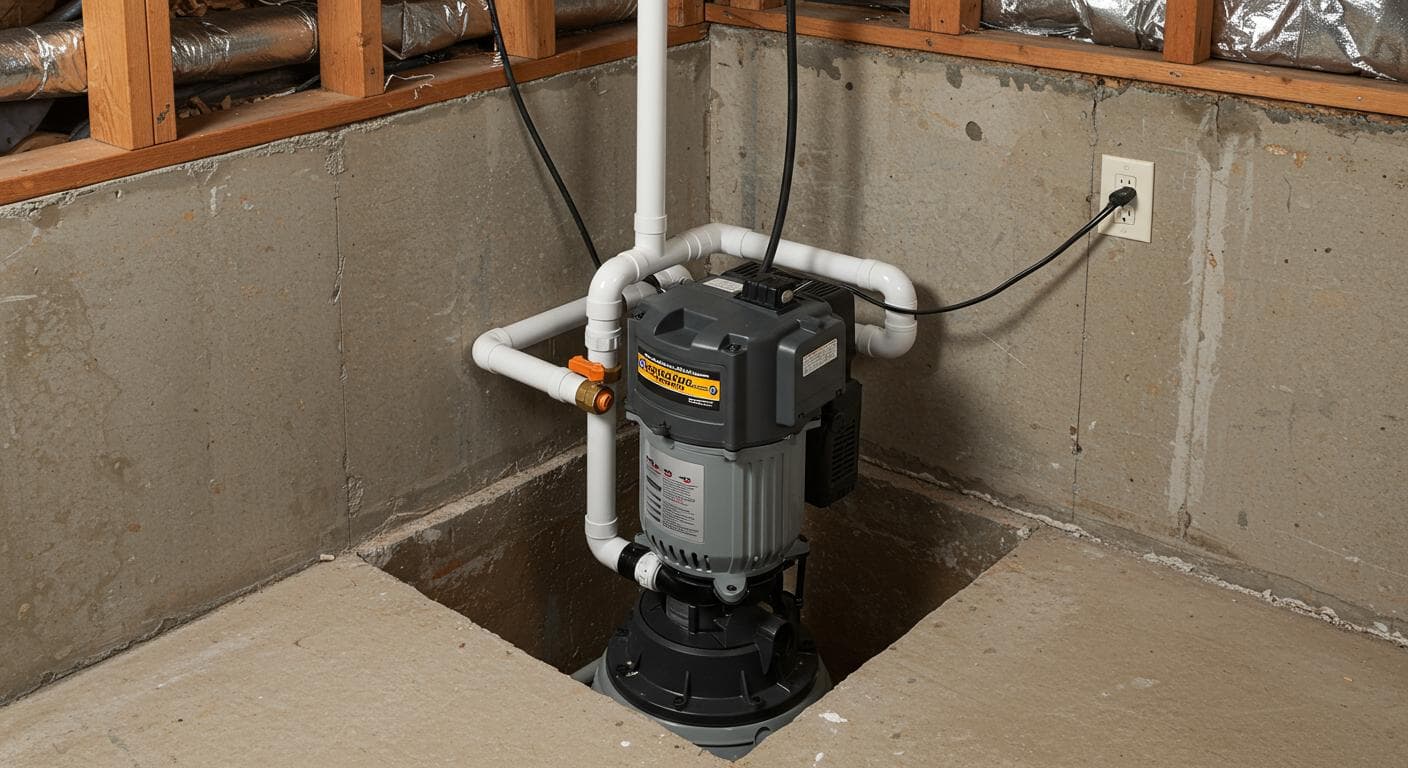
The pit in your basement floor, called the sump, collects ground water that drains toward it from around the foundation. When the water rises, a float lifts and switches the pump on. The pump pushes the water up a pipe and out of the house, then shuts off when the pit is low again.
The trouble is timing. The pump does its hardest work during heavy rain or fast snow melt. That is also when power outages happen, when the outside pipe can be frozen or buried and when a float that has not moved since last spring finally gets its test. A pump that fails then can let water rise over the edge of the pit in a short time.
Submersible pump
Sits down inside the pit, under the water. Quieter, and the most common type in finished basements.
Pedestal pump
The motor sits on a post above the pit and only the base goes in the water. Easier to reach and often louder.
How to Test a Sump Pump: The Bucket Test
The one thing to check today
Pour a bucket of water into the sump pit. The pump should kick on, empty the pit and shut itself off. If it does not, you found the problem before the rain did.
Step 1: Look before you pour
Lift the pit cover. Check that the pump is plugged in, the cord is not damaged and nothing is floating in the pit or leaning on the float. Do not reach into the water while the pump is plugged in.
Step 2: Fill a 5 gallon bucket
Plain water from a hose or tub is fine. For a large pit you may need a second bucket.
Step 3: Pour slowly and watch the float
As the water rises, the float should rise with it. The pump should start before the water gets near the top of the pit.
Step 4: Listen while it runs
A steady hum and the sound of water moving is normal. Grinding, rattling or screeching points to a worn motor or debris in the impeller.
Step 5: Watch it shut off
The pump should lower the water and then stop on its own. You may hear a soft clunk from the pipe as the check valve closes. That valve keeps water in the pipe from falling back into the pit.
Step 6: Go outside
Find where the discharge pipe ends. Water should have come out there. The end should be clear of leaves, snow and ice and should point away from the house, not back toward the foundation.
If your home has a battery backup pump, test it too. Unplug the main pump, pour water again and make sure the backup starts. Plug the main pump back in when you are done.
The Float Switch: Why It Sticks
The float is the part that tells the pump to turn on. It is the most common reason a working motor never starts.
Tethered float
A ball or bulb on a short cord that swings up as water rises. It needs room. If the pump has shifted, the float can catch on the side of the pit and never lift.
Vertical float
A float that rides up and down a rod on the pump. Dirt, gravel or mineral buildup on the rod can stop it from sliding.
If the float did not lift during your test, unplug the pump first. Then see whether it is caught on the wall, the pipe or debris. Freeing it and testing again may be all it needs. If the float moves freely and the pump still does not start, the switch itself has likely failed.
Signs It Is Time to Call a Plumber
It hums but does not pump
Power is reaching the motor but no water is moving. The impeller may be jammed or the motor may be failing.
It runs nonstop
A stuck float, a failed check valve or a pump too small for the water coming in can all cause it. Constant running burns out the motor.
It turns on and off every few seconds
This often points to a bad check valve or a float set wrong. It wears the switch and motor fast.
It is old and you do not know how old
The InterNACHI life expectancy chart lists about 7 years as typical for a sump pump. If yours has rust on the housing and no date you can find, have it looked at.
There is no backup
If the power goes out in a storm, a pump with no battery or water-powered backup cannot help you.
When you book, ask the plumber to test the pump, check valve and discharge line together, and to put the scope and price in writing. Ask for their license number and proof of insurance before work starts. Our plumbing services page shows the kind of work local plumbers handle.
If Water Keeps Coming In
A pump that works fine but runs constantly, or a basement that still gets damp along the walls, can mean the real problem is outside the pit. Start with the simple things: clogged gutters and short downspouts dump roof water right next to the foundation. Our gutter cleaning page covers that. If walls or the floor still seep, read about foundation waterproofing.
Planning to finish your basement? Test the sump pump and add a backup before any drywall or carpet goes down. Our basement finishing page explains what to sort out first. If water is already rising, go straight to our emergency plumber guide.
How to Test a Sump Pump: Common Questions
How often should I test my sump pump?
A good habit is a few times a year, and always before your area's rainy season and before snow starts to melt. Test it again after a long dry spell, because a pump that has not run for months is the one most likely to stick.
How much water do I need to test a sump pump?
Enough to lift the float until the pump turns on. For most home pits, one 5 gallon bucket is plenty. Pour slowly so you can watch the float rise and see the exact point where the pump kicks on.
Why does my sump pump hum but not pump water?
Humming with no water moving usually means the motor is getting power but the impeller is jammed with debris, or the motor is failing. A frozen or blocked discharge line outside can cause it too. Unplug the pump before you look, and call a plumber if clearing the outside line does not fix it.
Why does my sump pump run all the time?
A float stuck in the up position, a broken check valve that lets water fall back into the pit or a lot of ground water after heavy rain can all keep a pump running. If it runs nonstop on a dry week, something is wrong and the motor is wearing itself out.
How long does a sump pump last?
The InterNACHI life expectancy chart lists about 7 years for a sump pump. That is a typical figure, not a deadline. A pump that runs often will wear faster than one that rarely sees water.
Do I need a backup sump pump?
Your main pump is most likely to be needed during a big storm, which is also when the power tends to go out. A battery backup pump or a water-powered backup keeps working when the main pump cannot. A plumber can tell you which type fits your home.
Find a Plumber Near You
Contractor Palace
Pump failed the bucket test? Fix it before the storm.
Tell us what you saw during the test and we will match you with an independent local plumber to repair it, replace it or add a backup.