
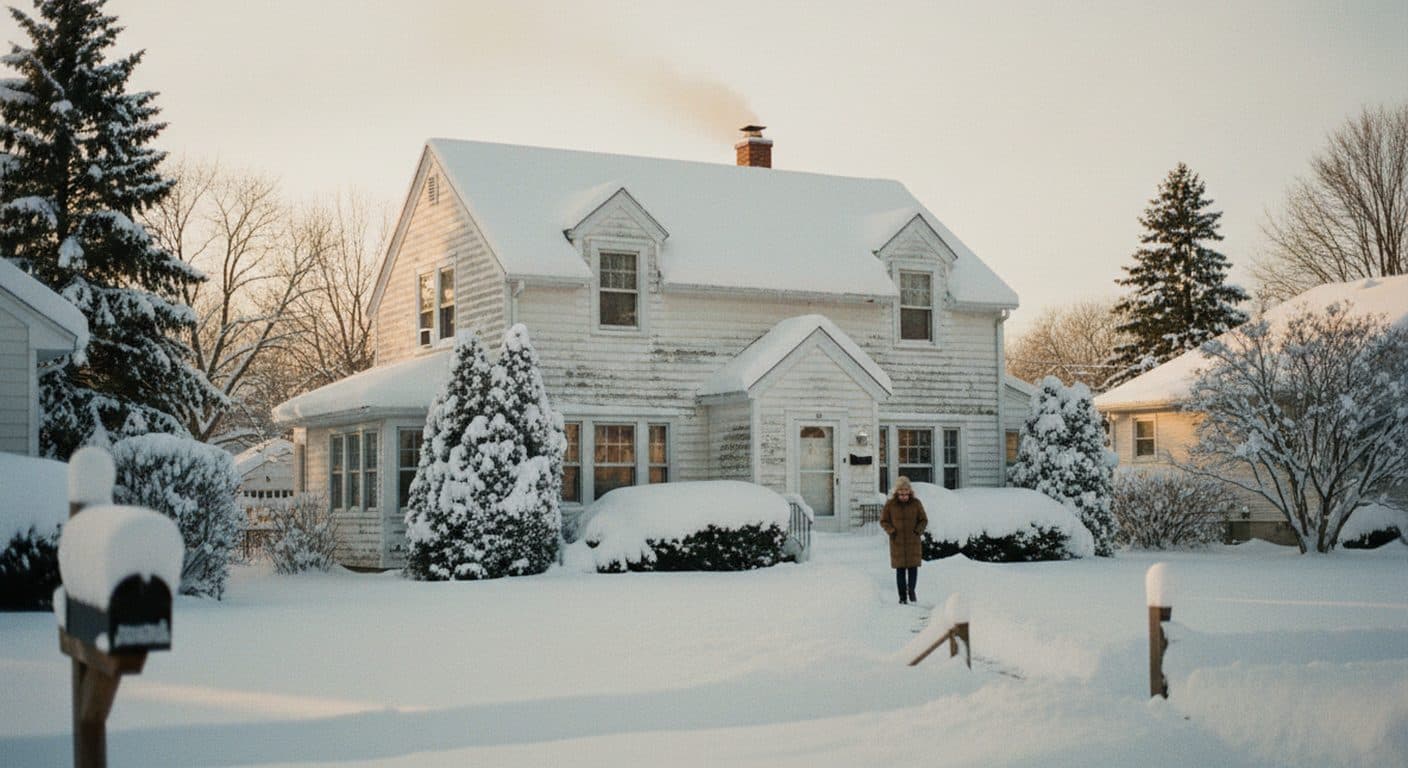
Last winter you had a row of thick icicles on the gutters and a water stain on the ceiling by an outside wall. This year you want to stop it before it starts.
Learning how to prevent ice dams comes down to one idea: keep the heat in your house out of your attic. Ice dams are rarely a roofing problem at heart. They are an attic problem that shows up on the roof. This guide explains what an ice dam is, what really causes it, what to fix this fall while the weather is still mild and what not to do once the ice is already there.
What an Ice Dam Is and Why It Leaks
An ice dam is a ridge of ice that forms along the lower edge of a roof. It starts when heat from the house warms the upper part of the roof. Snow up there melts, even when it is below freezing outside. The water runs down the roof until it reaches the edge that hangs past the walls, called the eave. The eave has no warm house under it, so it stays as cold as the air. The water freezes there.
Each day the ridge of ice gets a little taller. Melting snow from above now hits the ice and pools behind it. Shingles are made to shed water running downhill, not to hold back a puddle. The pooled water backs up under the shingles, through the roof decking and into the attic, the walls and your ceiling.
The short version
Warm roof up high plus cold roof at the edge equals an ice dam. Prevention means making the whole roof the same cold temperature, so snow stays snow until the sun melts it evenly.
The Real Causes of Ice Dams
Snow and cold weather set the stage. These are the things inside your house that let it happen.
Warm air leaking into the attic
This is the biggest cause in most homes. Warm air rises through gaps in the ceiling and floats into the attic, where it warms the underside of the roof. Common leak points:
· The attic hatch or pull-down stairs
· Recessed ceiling lights
· Gaps around plumbing vent pipes, wires and the chimney
· Bathroom fans that vent into the attic instead of outside
· Tops of interior walls and dropped soffits over kitchen cabinets
Thin or uneven insulation
Insulation slows heat moving up through the ceiling. If it is thin, packed down or missing in spots, heat reaches the roof. Older homes often have far less than is recommended today.
Blocked soffit vents
Many roofs are built to pull cold outside air in through vents under the eaves (soffit vents) and let it out near the peak. That airflow keeps the roof deck cold. Insulation pushed into the eaves, or vents painted over, cuts it off.
Heat sources in the attic
Furnaces, air handlers and ductwork in the attic give off heat. Leaky or uninsulated ducts up there can warm the roof all winter.
Roof shape
Valleys, low-slope sections and spots where a dormer meets the main roof collect snow and melt water. They tend to dam first, even on a well-sealed house.
How to Prevent Ice Dams: What to Fix This Fall
Do these before the first big snow. They are listed in the order that usually makes the most difference.
1. Seal attic air leaks first
Seal the gaps listed above with caulk, foam or covers made for recessed lights and attic hatches. This is the step most people skip, and it matters most. Adding insulation on top of open gaps lets warm air keep flowing through.
2. Add insulation to the recommended level
Once leaks are sealed, top up the insulation so it is even across the whole attic floor. How much you need depends on where you live. The U.S. Department of Energy lists recommended insulation levels by region.
3. Open up the soffit vents
Make sure insulation is not stuffed into the eaves. Foam or cardboard baffles between the rafters hold insulation back and keep a channel open for cold air.
4. Send bathroom fans and dryer vents outside
A fan that dumps warm, wet air into the attic adds heat and moisture right where you do not want it. The duct should run all the way outside.
5. Clean the gutters
Leaves left in the gutters fill with ice and make dams bigger and heavier. Clear them after the leaves come down.
6. Plan for the next roof
When the roof is eventually replaced, ask the roofer about a waterproof membrane along the eaves, often called ice and water shield. It does not stop ice dams, but it helps keep backed-up water out of the house.
Air sealing and insulation are the big ones. An insulation contractor can find and seal the leaks and bring the attic up to the right level in one visit. For leaves and clogs, book a gutter cleaning pro before the first freeze.
What Not to Do Once the Ice Shows Up
When an ice dam has already formed, the urge is to break it up. Most of the quick fixes do more harm than the ice.
Do not
· Chip at the ice with a hammer, shovel or ice pick. It cracks shingles and tears gutters
· Climb a ladder onto an icy roof
· Use a torch or open flame on the roof
· Throw rock salt on the roof. It can damage shingles, metal and the plants below
Safer moves
· Use a roof rake from the ground to pull the bottom few feet of snow off the roof, staying clear of power lines
· Put buckets and towels under any drip inside and take photos
· If water is near a light fixture, turn off that circuit at the breaker
· Book a roofer to remove the ice safely and check for damage
If an ice dam already pushed water into the house, our roof leak repair page explains what a roofer will look for once the ice melts.
Check This After the Next Snowfall
The one thing you can check
A day or two after the next snowfall, stand in the street and look at your roof. Snow should melt evenly across the whole roof. Bare patches where the snow melted early show you where heat is escaping from the house. Thick icicles along the gutter edge point to the same problem. Take a photo and compare it with your neighbors' roofs. Show it to the insulation or roofing pro so they know where to look first.
Bare spots right above a bathroom, the attic hatch or a row of recessed lights are common. They tell you exactly which leaks to seal first.
When to Call a Pro and Which One
Insulation pro or energy auditor
For finding and sealing attic air leaks and adding insulation. This is the fix for the cause.
Roofer
For removing ice safely, repairing shingles or flashing that leaked and adding ice and water shield when the roof is replaced.
Gutter pro
For clearing clogged gutters and downspouts, and checking that gutters are not pulling away from the house under ice weight.
Whoever you hire, ask for the scope and price in writing and ask to see their license and proof of insurance where your state or city requires one.
Ice Dam Prevention: Common Questions
What is the best way to prevent ice dams?
Keep the roof deck cold so snow does not melt high up and refreeze at the edge. In most homes that means sealing the gaps where warm air leaks into the attic, then adding insulation and making sure soffit vents are open so cold air can move under the roof. Air sealing usually comes first, because insulation does not stop air from moving through gaps.
Do heat cables prevent ice dams?
Heat cables, sometimes called heat tape, melt channels in the ice so water can drain. They can help on a trouble spot, but they treat the symptom, not the cause. They use electricity all winter, have to be installed to the maker's instructions and only protect the area they cover. Fixing the attic is the longer-lasting answer.
Should I remove snow from my roof?
Pulling the bottom few feet of snow off the roof with a long-handled roof rake from the ground can reduce ice dams on a problem section. Do not climb onto a snowy or icy roof, and keep clear of power lines when using a long pole. Heavy snow loads on an older or flat roof are a job for a pro.
Are icicles a sign of ice dams?
A few small icicles are normal. Thick icicles hanging along the whole gutter line, or ice building up on the roof edge itself, usually mean snow is melting higher on the roof and refreezing at the cold edge. That is the same process that builds an ice dam, and it points to heat escaping from the house.
Do clogged gutters cause ice dams?
Clogged gutters do not cause ice dams on their own, because the ice forms at the cold roof edge either way. But gutters packed with leaves fill with ice faster and can make the dam bigger and heavier. Cleaning gutters in the fall is worth doing, alongside fixing the attic.
How much attic insulation do I need to stop ice dams?
It depends on your climate zone and what you already have. The U.S. Department of Energy publishes recommended insulation levels by region. Colder areas need more. An insulation pro or energy auditor can measure what is in your attic now and tell you how much to add, and should seal air leaks before adding any.
Book a Pro Before the Snow
Start with our roofing services, or find a roofer in a snow city near you.
Contractor Palace
Stop next winter's ice dam this fall.
Tell us what you saw last winter. We match you with one independent local pro for air sealing, insulation or roof work, with the scope and price in writing.