
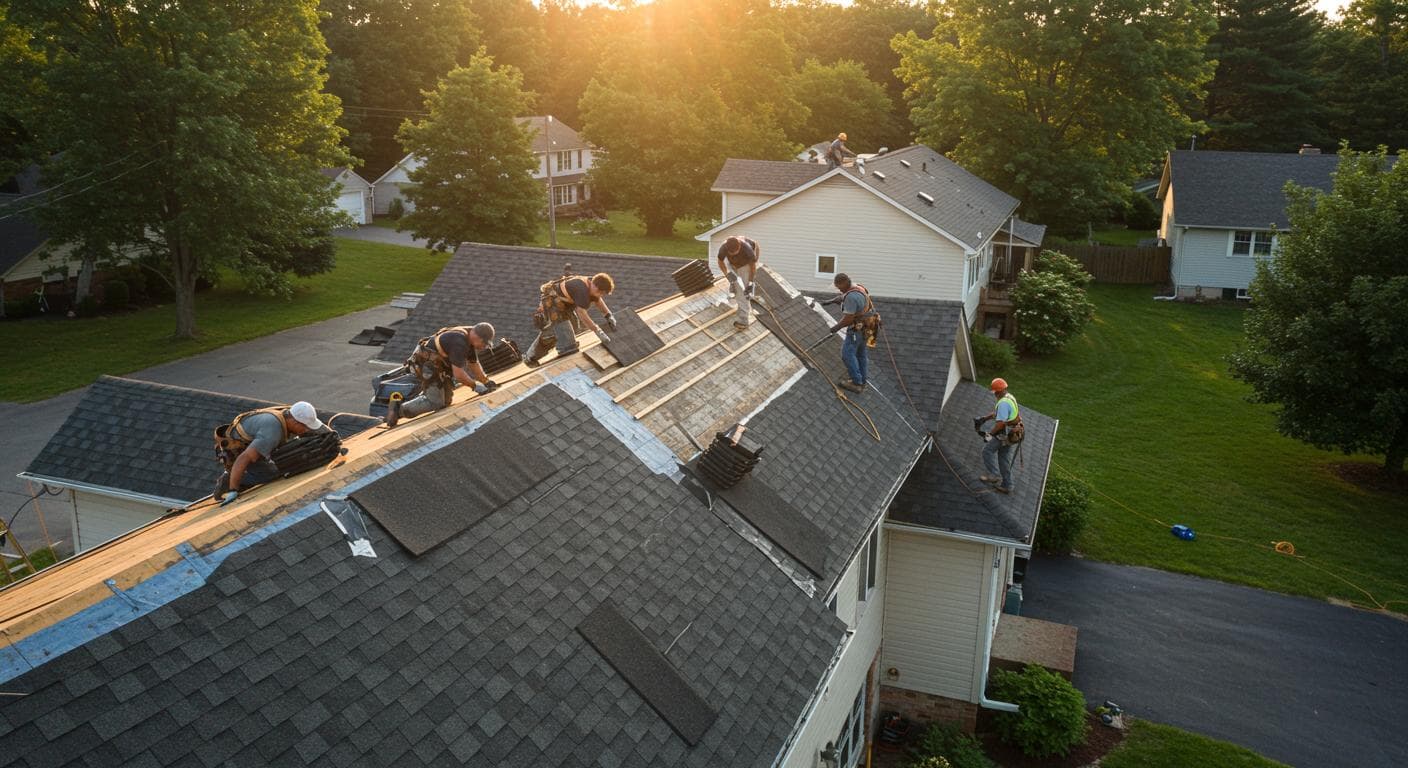
A new roof is one of the largest single home improvement investments an Ohio homeowner will make and one of the most confusing to price. Roofing quotes vary wildly between contractors for the same job and material choices can swing the total by tens of thousands of dollars. Understanding what drives the cost gives you the leverage to evaluate quotes fairly and avoid overpaying.
This guide breaks down the average cost to replace a roof in Ohio in 2025, by material type and per square foot, with separate data for Columbus, Cleveland and Cincinnati markets. We also cover the factors that most affect your final price, how to recognize a fair quote versus a padded one and financing options for a project of this size.
Average Roof Replacement Cost in Ohio (2025)
For a typical Ohio home with 1,500 to 2,500 square feet of living area (which translates to roughly 20 to 30 squares of roof area, a roofing square equals 100 square feet), here is what homeowners are paying in 2025:
How roofers measure
Roofers price jobs by the square (100 square feet of roof surface, not floor area). A 2,000 square foot ranch house with a simple gable roof typically has 22 to 26 squares of actual roof surface due to the slope. A steep or complex roof can have 35 to 40+ squares on the same footprint. Ask your contractor for the square count in their quote.
Roofing Cost Per Square Foot by Material
Material is the biggest variable in roofing cost. Here is what each roofing type costs installed (material + labor + tear-off) per square foot in Ohio:
3-Tab Asphalt Shingles, $3.50 to $5.50 / sq ft · 15 to 20 years
3-tab shingles are the most affordable roofing option. They lie flat (no dimensional texture), have a simpler profile and are the lightest asphalt shingle type. They are rated for 60 to 70 mph winds, below average for Ohio. Most roofing professionals now recommend stepping up to architectural shingles for the marginal cost difference.
Architectural (Dimensional) Asphalt Shingles, $5 to $8 / sq ft · 25 to 30 years
Architectural shingles are the most common choice for Ohio homes. They have a layered, dimensional appearance that mimics cedar shake, carry better wind ratings (100 to 130 mph depending on brand) and typically cost only $1,000 to $2,500 more than 3-tab on a standard home. Brands like GAF Timberline HDZ, Owens Corning Duration and CertainTeed Landmark are widely used by Ohio contractors.
Premium / Designer Asphalt Shingles, $8 to $12 / sq ft · 30 to 50 years
Premium lines like GAF Timberline UHDZ, Owens Corning Woodcrest and CertainTeed Grand Manor mimic slate and cedar with thicker, heavier construction. They carry 50-year warranties and Class 4 impact resistance, a meaningful advantage in Ohio's hail-prone markets (Columbus, Cleveland, Dayton).
Standing Seam Metal Roofing, $10 to $20 / sq ft · 40 to 70 years
Standing seam metal is the premium metal roofing standard for Ohio residential homes. Panels run vertically from ridge to eave with concealed fasteners, no exposed screws to back out and leak. It handles Ohio ice and snow better than any shingle product, is Class A fire rated and may qualify for federal energy efficiency credits. Popular for new construction and high-end renovations.
Metal Shingles / Stone-Coated Steel, $8 to $15 / sq ft · 40 to 50 years
Metal shingles and stone-coated steel panels look more like traditional shingles while offering metal's durability. They are lighter than slate, more impact resistant than asphalt and less expensive than standing seam. Brands like Decra, EDCO and Gerard are installed by specialty Ohio roofing contractors.
Concrete or Clay Tile, $15 to $30 / sq ft · 50+ years
Tile roofing is popular in Mediterranean-style architecture. It is extremely durable but heavy, many Ohio homes require structural reinforcement before tile installation. Concrete tile is more affordable than clay and performs well in freeze-thaw conditions. Less common in Ohio than in southern states.
Natural Slate, $25 to $50+ / sq ft · 75 to 150 years
Genuine slate is the most durable roofing material available. Historic Ohio homes in areas like Shaker Heights and German Village often have original slate roofs from the 1920s still in service. Slate requires specialized installation skills, structural support for its weight and a contractor experienced with slate specifically. Fewer Ohio contractors work with it, expect a longer lead time.
Cedar Wood Shake, $12 to $20 / sq ft · 20 to 30 years
Cedar shake adds a distinctive rustic appearance. It requires chemical treatment to be fire resistant and regular maintenance (cleaning, sealing, replacing damaged shakes) to reach its potential lifespan. In Ohio's humid climate, wood shake is prone to mold and rot if not properly maintained. Some HOAs and municipalities restrict or prohibit wood roofing for fire code reasons.
Labor Costs and Permit Fees in Ohio
Factors That Affect Your Roof Replacement Cost
Two homes the same size can have dramatically different roofing costs. These are the factors that most influence your final quote:
Roof pitch (slope)
A steeper roof is harder and more dangerous to work on, crews move slower and need more safety equipment. Steep roofs (above 7:12 pitch) carry a labor surcharge of 10 to 25%. Very steep or walk-off roofs add 25 to 50% or more to labor.
Roof complexity
Every valley, dormer, skylight, chimney, pipe penetration and hip requires additional cuts, flashing and labor time. A simple gable roof costs less than a complex hip-and-valley design on the same footprint. Ask your contractor how complexity factors into their quote.
Decking condition
If the contractor finds rotted or damaged roof decking (plywood or OSB sheathing) after tear-off, it must be replaced before new shingles go on. Decking repair is typically priced at $2 to $5 per square foot extra. A transparent contractor will tell you upfront that they inspect decking and provide a per-sheet cost for any replacement needed.
Number of existing shingle layers
Tearing off two existing shingle layers takes longer and generates more waste. Ohio building codes typically cap roofs at two layers before tear-off is required. Double-layer tear-off adds $0.50 to $1.50 per square foot to the cost.
Flashings and accessories
Flashing around chimneys, valleys, skylights and walls adds to material and labor costs. Step flashing, chimney flashing and counter-flashing are frequently underestimated line items in cheap quotes. Verify that all flashings are included and whether they will be replaced or reused.
Season and demand
Ohio roofing prices spike after major hail or wind events as contractors' schedules fill. Spring (May, June) and fall (September, October) are peak demand seasons. You may find better pricing in mid-summer or winter, when demand drops, though winter roofing has its own limitations in Ohio's climate.
Signs You Need a New Roof (Not Just Repairs)
Knowing when to repair versus replace is one of the most important questions Ohio homeowners face. Repair makes sense when damage is isolated. Replacement makes sense when:
The roof is over 20 years old (asphalt shingles)
Shingles are curling, cupping or missing granules broadly
Multiple areas of active leak or water staining
Sagging roof deck visible from the yard
Shingles are cracked across large sections
You are selling the home (inspection will flag a worn roof)
Hail damage covers more than 25% of the roof surface
You have had repeated repairs that have not held
ROI of a New Roof in Ohio
According to Remodeling Magazine's annual Cost vs. Value report, a new asphalt shingle roof recoups approximately 60 to 70% of its cost at resale in the Midwest, one of the higher ROI home improvements available. In competitive Ohio markets like Columbus suburbs (Dublin, Westerville, Powell) and Cleveland suburbs (Westlake, Rocky River, Chagrin Falls), a new roof can be the difference between an offer and a pass.
Beyond resale value, a new roof eliminates the "deferred maintenance" flag that buyers' agents use to negotiate price down. If your roof has 3 to 5 years of useful life remaining and you are selling, buyers will typically discount your asking price by 1.5 to 2× the estimated replacement cost. Installing the roof before listing often pays for itself.
Energy savings note
Reflective or "cool roof" shingles (like GAF Timberline Cool Series) and metal roofing can reduce summer cooling loads by 15 to 25% in Ohio homes, particularly south-facing and flat-pitch roofs. Metal roofing may also qualify for the federal Residential Clean Energy Credit, consult your tax advisor.
Financing Options for a New Roof
A $10,000 to $20,000 roofing project is a significant out-of-pocket expense. Common financing paths for Ohio homeowners:
Homeowner's Insurance (storm damage)
If the damage was caused by a covered event (hail, wind, storm), your insurance pays for replacement minus your deductible. Get a contractor inspection before filing a claim and avoid assignment-of-benefits schemes where a contractor takes over your claim.
Contractor financing
Most large Ohio roofing contractors offer in-house financing, often through third-party lenders like GreenSky or Hearth. Rates vary widely, compare APR carefully. Promo periods with deferred interest can be valuable if you can pay the balance in time.
Home equity loan or HELOC
If you have equity, a home equity loan or line of credit typically offers lower interest rates than contractor financing. HELOCs in Ohio are generally straightforward to obtain if you have 20%+ equity. Interest may be tax-deductible, consult a tax advisor.
Personal loan
Personal loans through credit unions or online lenders (LightStream, SoFi) can fund a roofing project with no collateral. Rates depend on credit score, creditworthy borrowers with scores above 720 often find competitive rates of 8 to 12% APR.
Ohio energy programs
Ohio does not have a statewide roofing rebate program, but some local utilities offer weatherization incentives that may apply to insulation improvements done in conjunction with a re-roof. Check with your utility provider and the Ohio Development Services Agency for current programs.
How to Get Accurate Roofing Quotes in Ohio
Get at least 3 bids
Roofing quotes in Ohio can vary by 30 to 50% for identical work. Get a minimum of three bids from licensed contractors. The lowest bid is not always wrong, but a bid significantly below others often means something is excluded or cut corners.
Ask for itemized quotes
Request a line-by-line breakdown: square count, material brand and grade, tear-off, disposal, underlayment, flashing, ice and water shield (required in Ohio's climate for the first 24 inches from the eave), permit and labor. This lets you compare apples to apples.
Verify Ohio licensing and insurance
Ohio does not have a statewide general contractor license, but roofing contractors should carry general liability (minimum $1M) and workers' compensation insurance. Ask for certificates before signing. An uninsured roofer who falls on your property is your liability.
Check the manufacturer warranty
GAF, Owens Corning and CertainTeed offer enhanced system warranties (System Plus, Preferred, Sure Start Plus) through their certified installer programs. These warranties cover both material and workmanship, ask if your contractor is a certified installer.
Find a Roofing Contractor in Ohio
Contractor Palace matches Ohio homeowners with verified, licensed roofing contractors. All pros carry liability insurance and we verify licensing before any contractor joins the platform. Get matched in minutes, no contractor-hunting.
FAQ: New Roof Cost in Ohio
How much does a roof replacement cost in Ohio in 2025?
The average cost to replace a roof in Ohio in 2025 is $8,000 to $14,000 for a typical 1,500 to 2,000 square foot home with architectural asphalt shingles. Smaller homes with basic 3-tab shingles can come in at $5,000 to $8,000. Premium materials like metal, slate or tile push costs to $20,000 to $80,000+ depending on size and material. Always get at least three bids from licensed Ohio roofing contractors.
How long does a new asphalt shingle roof last in Ohio?
3-tab asphalt shingles typically last 15 to 20 years in Ohio. Architectural (dimensional) shingles last 25 to 30 years. Premium designer shingles carry 30 to 50 year warranties. Ohio's freeze-thaw cycles, ice dams and high winds shorten roof life compared to milder climates. Annual roof inspections after hail storms or major wind events help catch damage before it becomes a major repair.
Does homeowner's insurance cover roof replacement in Ohio?
Ohio homeowner's insurance typically covers roof replacement caused by sudden storm damage, wind, hail and falling objects. Damage from normal wear and aging is excluded. After a major storm, have a licensed contractor inspect your roof before filing a claim. Many Ohio contractors offer free storm damage assessments. Be cautious of storm chasers who pressure you to sign assignment-of-benefits agreements before an insurance adjuster visits.
Do I need a permit for a new roof in Ohio?
Yes, most Ohio municipalities require a permit for a full roof replacement (tear-off and re-roof). The permit fee is typically $75 to $300 and should always be included in your contractor's quote. Be wary of contractors who say permits are not necessary, it can create problems when you sell the home or if the work is not done to code. Confirm the permit is pulled and posted before work begins.
What is the cheapest roofing material in Ohio?
3-tab asphalt shingles are the least expensive roofing material, typically costing $3.50 to $5.50 per square foot installed. However, architectural (dimensional) shingles, which cost $5 to $8 per square foot installed, offer dramatically better durability, wind resistance and appearance for a modest price increase. Most Ohio roofing professionals recommend architectural shingles over 3-tab for the long-term value.
How do I know if I need a new roof or just repairs?
Signs that point to replacement rather than repair: the roof is approaching or past its expected lifespan; more than 25 to 30% of the shingles are damaged, curled or missing; there are multiple areas of deck rot or water intrusion; the roof has been patched repeatedly without long-term resolution; or after a major hail storm, the adjuster determines the damage is widespread. A reputable Ohio roofer will give you an honest assessment, if three different contractors all say replacement, it is time.
How long does a roof replacement take in Ohio?
Most residential roof replacements in Ohio take 1 to 3 days. A single-story home with a simple gable roof can be done in one long day. Larger homes, complex roof geometry (many valleys, dormers, multiple pitches) or premium materials like slate and metal can take 3 to 7 days or longer. Weather delays are common in Ohio's spring season, confirm your contractor's schedule and what happens if it rains.
Should I get an asphalt or metal roof in Ohio?
Both are good choices for Ohio. Asphalt shingles have a lower upfront cost ($5 to $8/sq ft installed vs $10 to $20/sq ft for metal) and are easier and cheaper to repair. Metal roofing lasts 40 to 70 years, handles Ohio's ice and snow better, is more fire resistant and may qualify for home energy credits. If you plan to stay in the home long-term, metal often pays for itself. If budget is the primary concern, quality architectural asphalt shingles remain the most popular choice for Ohio homeowners.
Contractor Palace
Get matched with verified Ohio roofers, no storm chasers.
Stop guessing. Contractor Palace matches you with licensed, insured Ohio roofing contractors, verified before they ever receive a lead. No pressure, no storm chasers.