
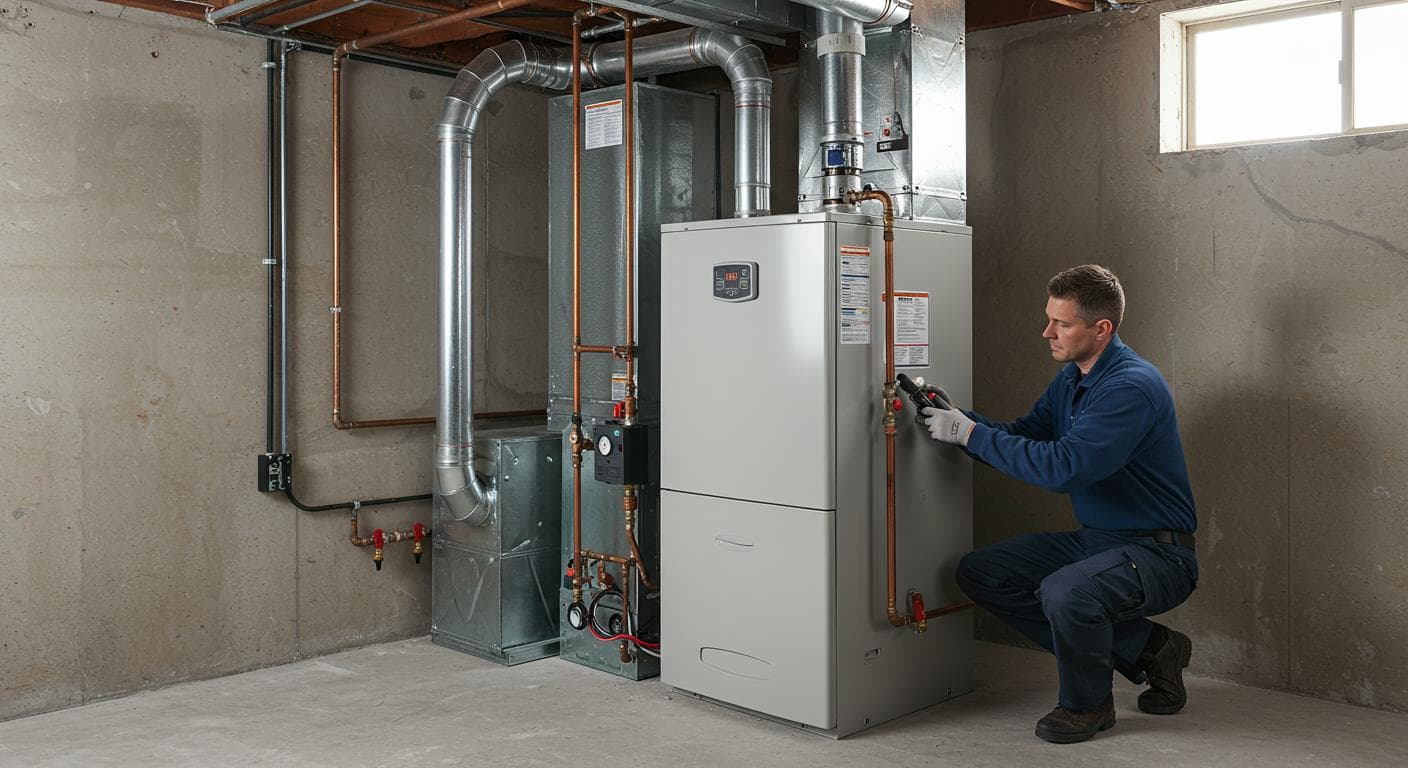
The furnace clicks on, the fan hums, and then nothing. No flame, no heat. On a lot of modern gas furnaces, the ignitor is the part to suspect first.
The good news is that furnace ignitor replacement cost is low next to most heating repairs. This guide covers the typical price range and where it comes from, the signs an ignitor has failed, what makes one job cost more than another and the questions to ask before you pay for the part.
What a Furnace Ignitor Does
Older furnaces kept a small pilot flame burning all the time. Most furnaces built in the last few decades light the gas only when the thermostat calls for heat. On many of them, a hot surface ignitor does that job. It is a small ceramic piece that glows bright orange when power runs through it. Per HVAC.com, these ignitors heat a silicon carbide or silicon nitride surface until it is hot enough to light the gas.
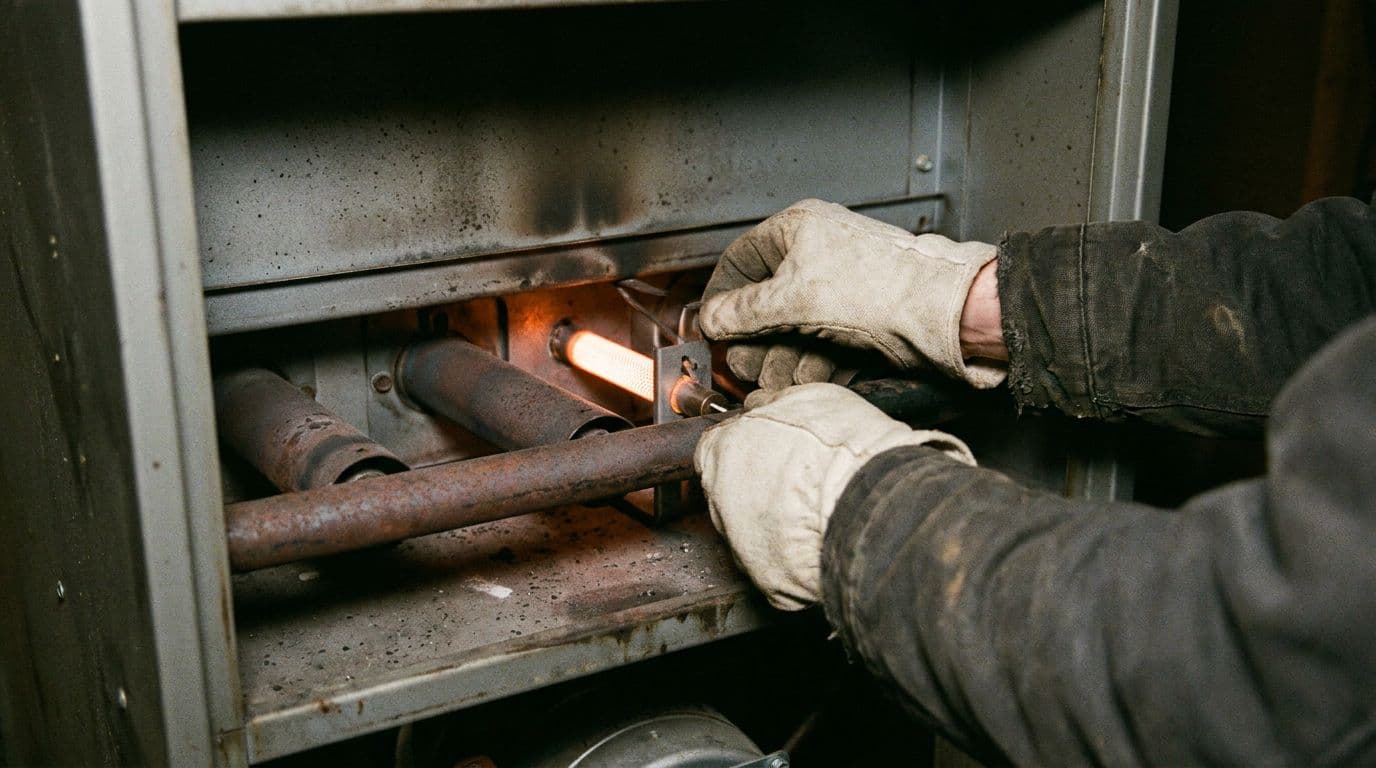
The startup usually runs in this order: the thermostat calls for heat, the small inducer fan starts, the ignitor glows, the gas valve opens and the burners light. If any step fails, the furnace stops and tries again. After a few failed tries, many furnaces lock out for a while and show an error code.
Furnace Ignitor Replacement Cost: Typical Ranges
These are national ranges published by HVAC.com (January 2025). They are typical figures, not quotes. Prices vary by area, by furnace and by the company you call.
Total most homeowners spend: $150 to $300
Part and labor together for a standard replacement.
The ignitor part: $20 to $100
Universal ignitors sit at the low end. Brand specific parts for some furnaces cost more.
Labor: $75 to $150
HVAC.com notes labor varies widely by area. Many companies also charge a trip or diagnostic fee, so ask whether it is included.
For the bigger picture on heating repair and replacement prices, see our HVAC repair and replacement cost guide.
What Moves the Price Up or Down
Universal or brand specific part
Some furnaces take a universal ignitor kit. Others need the exact part from the maker, which costs more and may need to be ordered.
How hard it is to reach
On most furnaces the ignitor sits right by the burners behind one panel. On some high efficiency models the tech has to remove more parts to get to it, which adds time.
When you call
Nights, weekends and the first cold week of the season usually cost more. If the house can stay safe and warm enough with space heaters until morning, a daytime visit is often cheaper.
What else is wrong
An ignitor that keeps failing early can point to another problem, such as voltage issues or a dirty burner area. Fixing the cause costs more today and saves paying for ignitors again.
Diagnostic and trip fees
Some companies roll the visit fee into the repair. Others charge it on top. Ask before the tech arrives.
Signs Your Furnace Ignitor Has Failed
None of these prove the ignitor is the problem on their own, but together they point that way.
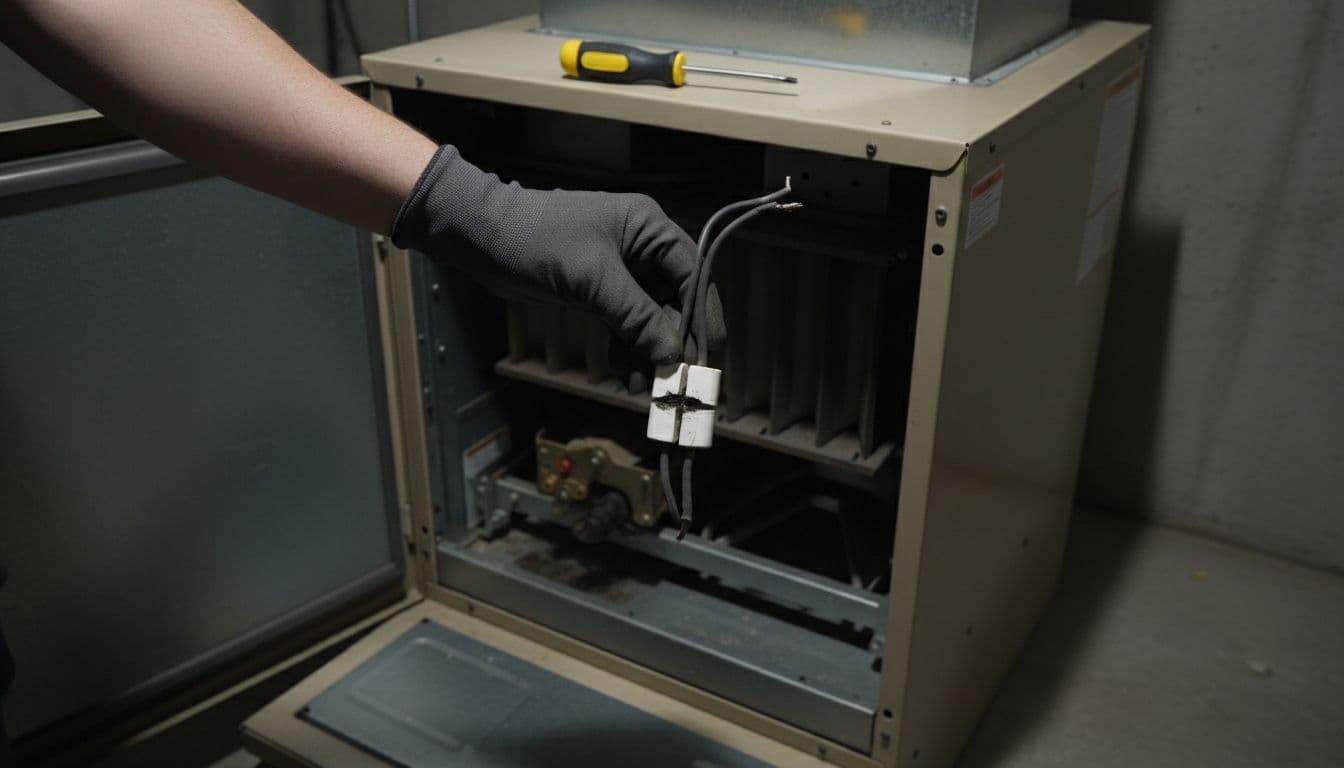
The fan runs but the burners never light
You hear the inducer fan start, then the furnace gives up and the house stays cold.
No orange glow at startup
Through the sight window you never see the ignitor glow when the furnace tries to start.
It glows but the gas does not catch
A weak or cracked ignitor can glow without getting hot enough to light the gas.
The furnace works some days and not others
An ignitor near the end of its life can light on one try and fail on the next.
A blinking error light
Many furnaces flash a code on the control board when ignition fails. The code chart is usually printed inside the furnace door.
The same symptoms can come from a dirty flame sensor, a pressure switch, a clogged filter or a control board fault. That is why a test beats a guess. You can see the heating work local pros take on through our HVAC services page.
The one thing you can check yourself: watch the startup
Find the small window or gap in the furnace door that lets you see the burners. Leave the door on. Turn the thermostat up a few degrees and watch. You should hear the inducer fan, then see an orange glow, then a blue flame. Write down where it stops: no glow, glow with no flame, or flame that goes out after a few seconds. Then look for a blinking light on the board and match the number of blinks to the chart on the door. Telling the tech exactly what you saw can shorten the visit. If you smell gas at any point, stop, do not flip any switches, leave the house and call your gas utility from outside.
Repair the Ignitor or Replace the Furnace?
For a failed ignitor alone, repair almost always wins. According to HVAC.com, ignitors typically last 3 to 7 years, so most furnaces go through more than one. A new ignitor is routine upkeep, not a sign the furnace is failing.
The answer changes when the ignitor is one of several problems at once, when the furnace is near the end of its life or when the tech finds a safety issue such as a cracked heat exchanger. Ask for the furnace's age, every problem they found and a written price for each option. Then you can compare one repair against the cost of the next few years of repairs.
What to Ask Before You Pay for an Ignitor
How did you confirm the ignitor is bad?
A tech can test it with a meter or see a visible crack. A part swapped on a guess may not fix the real problem.
Is the new part universal or from the furnace maker?
Both can work. Ask which one they use and whether it affects any warranty on your furnace.
Why did the old one fail?
If your last ignitor failed quickly, ask whether something else is wearing them out.
What is the total, including the visit fee?
Get the scope and price in writing before work starts.
Can I see your license number and proof of insurance?
HVAC work on gas appliances usually needs a state or local license. Ask the pro for their details and check them with your state or city.
If the furnace dies on the coldest night of the year, start with our emergency HVAC page.
Furnace Ignitor Replacement Cost: Common Questions
How much does furnace ignitor replacement cost?
HVAC.com puts what most homeowners spend at $150 to $300, with the part itself at $20 to $100 and labor at $75 to $150. These are typical national ranges and your price will vary with your furnace, the part it needs and when you call. Ask for the total in writing before the work starts.
How long does a furnace ignitor last?
HVAC.com says ignitors typically last 3 to 7 years. That means many furnaces will need at least one new ignitor in their lifetime, so a failed ignitor on its own is not a sign the whole furnace is done.
Can I replace a furnace ignitor myself?
The part is small and the swap is simple on many furnaces, but it means working near a gas valve and live wiring, and the new ignitor is fragile. HVAC.com notes that touching it with bare hands can make it fail early and that DIY work or non-OEM parts may void your furnace warranty. If you are not comfortable shutting off power and gas and testing the furnace after, book a pro.
How do I know it is the ignitor and not something else?
Watch the startup through the small window in the furnace door. If the inducer fan runs and the ignitor never glows, or it glows and the burners never light, the ignitor is a likely suspect. But a dirty flame sensor, a bad pressure switch or a control board problem can look similar, so let the tech test the ignitor before you pay for one.
Is a furnace ignitor repair an emergency?
It is urgent in a cold snap because the house will not heat, but it is not dangerous by itself. A furnace that fails to light usually shuts down and tries again. If you ever smell gas, do not touch switches. Leave the house and call your gas utility from outside.
Should I replace the furnace instead of the ignitor?
Rarely for this part alone. An ignitor is one of the cheaper furnace repairs. Replacement starts to make sense when the furnace is old and the ignitor is one of several problems, or when repairs keep stacking up. Ask the pro how old the furnace is and what else they found.
Find an HVAC Pro Near You
Book an independent local HVAC pro for a furnace that will not light:
Contractor Palace
Furnace will not light? Get it looked at before the next cold night.
Tell us what you saw at startup and we will match you with an independent local HVAC pro who can test the ignitor and quote the repair.