
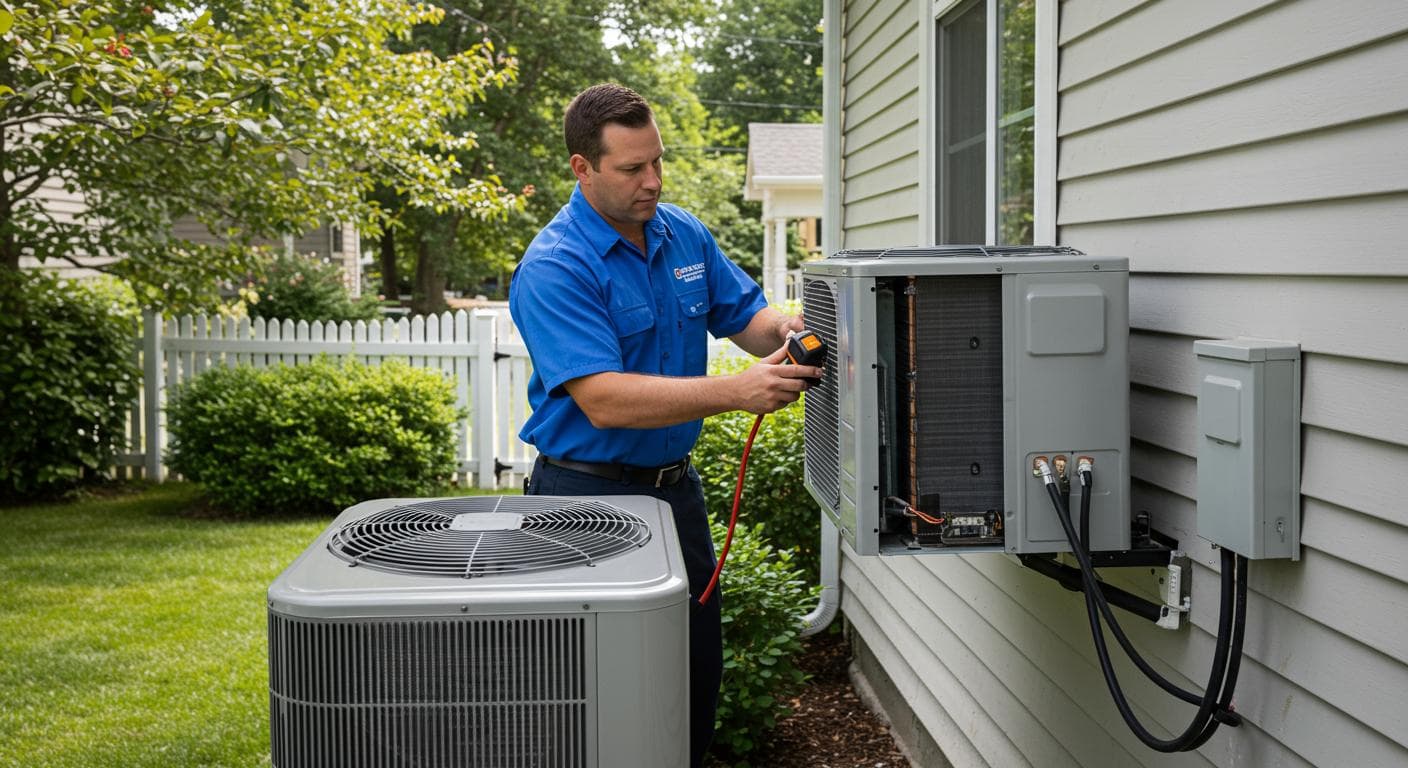
HVAC Colorado Springs: Altitude-Rated Heating and Cooling at 6,035 Feet
Colorado Springs sits at 6,035 feet above sea level, higher than Denver, and the altitude effect on HVAC performance is proportionally greater. The air in Colorado Springs is approximately 20 percent less dense than at sea level. Gas furnaces require altitude de-rating to account for reduced oxygen availability. Air conditioning systems must work harder to move heat through thinner air. An HVAC contractor in Colorado Springs who uses sea-level equipment ratings without altitude adjustment is installing a system that will underperform from the first heating season. Contractor Palace matches Colorado Springs homeowners with HVAC contractors who understand Pikes Peak region conditions and specify systems rated for this elevation.
HVAC at Colorado Springs Altitude: What Homeowners Need to Know
At 6,035 feet, the air in Colorado Springs is thinner than at Denver (5,280 feet) and significantly thinner than at sea level. For gas furnaces, this means the combustion process gets less oxygen per cubic foot of air, requiring altitude-specific burner sizing and adjustments to maintain proper combustion efficiency and prevent incomplete combustion, which produces carbon monoxide. High-efficiency condensing furnaces at 90 to 98 percent AFUE are the standard in Colorado Springs, but they must be installed with altitude-compensated orifices and proper venting configurations to operate safely and efficiently at this elevation.
For air conditioning, the lower air density at 6,035 feet means the condenser fan and evaporator coil must move more air volume to transfer the same amount of heat compared to a sea-level installation. An HVAC contractor who pulls tonnage specifications from a chart calibrated for lower elevations will produce an underpowered AC system. Proper Manual J load calculations at Colorado Springs altitude account for this by correctly factoring the altitude-adjusted airside performance of the selected equipment. When your HVAC system is properly sized and installed for 6,035 feet, the heating and cooling performance is consistent and the system runs within its designed efficiency range without short-cycling or running continuously on extreme weather days.
HVAC companies in Colorado Springs that do quality work provide a multi-year warranty on HVAC installation labor in addition to the manufacturer equipment warranty. The HVAC technician who performs the startup inspection after installation verifies that refrigerant charge, airflow, combustion and thermostat calibration are all within specification before signing off. HVAC repairs in Colorado Springs, whether a failed capacitor on an AC condenser or a cracked heat exchanger in a furnace, should be assessed by a licensed HVAC technician who can differentiate a repair worth making from one where replacement is the smarter investment. Indoor air quality in Colorado Springs homes also benefits from attention during an HVAC service call: the HVAC technician can evaluate filtration, duct condition and humidity levels. Cooling systems in Colorado Springs need a seasonal inspection each spring before the first hot days arrive, and heating and cooling tune-ups twice a year keep HVAC systems performing at rated efficiency.
Colorado Springs Military Housing
HVAC Services and Costs in Colorado Springs
Why Use Contractor Palace for HVAC in Colorado Springs
HVAC contractors who understand 6,035-foot altitude
Altitude de-rating for gas furnaces and Manual J calculations adjusted for Colorado Springs elevation are not optional. Our matched HVAC contractors in Colorado Springs specify and install systems that perform correctly at this elevation.
One matched contractor, not a list
Describe your HVAC project. We match you with a single independent local HVAC contractor in Colorado Springs whose service area and schedule fit the job. No bidding wars, no repeated calls.
Emergency HVAC service
A furnace failure during a January cold snap in Colorado Springs, where temperatures can drop below zero, is a genuine emergency. We connect you with HVAC contractors who offer emergency service calls. HVAC repairs handled promptly by a licensed HVAC technician prevent a minor component failure from becoming a full system replacement. Cooling systems in Colorado Springs also need urgent attention when they fail mid-summer, and our matched contractors prioritize emergency calls for both heating and cooling systems.
Military-timeline scheduling
Ask Colorado Springs HVAC contractors whether they understand PCS timelines and can prioritize scheduling for military homeowners with firm move-out or move-in dates. Whether you need a full HVAC installation before closing or a furnace inspection before listing, our matched HVAC companies in Colorado Springs can accommodate compressed schedules that general market HVAC companies often cannot.
Colorado Springs Climate and HVAC System Demands
Colorado Springs has a continental climate with genuine four seasons. Winter design temperatures for HVAC load calculations in Colorado Springs are colder than Denver due to the higher elevation and the city's position near the base of Pikes Peak, which channels cold air drainage from the mountain into the city during cold snaps. January cold snaps can bring overnight temperatures below minus 10 degrees Fahrenheit in some Colorado Springs neighborhoods.
Summer in Colorado Springs is warm and dry, with afternoon temperatures regularly reaching the upper 80s and occasionally breaking 90. Central air conditioning is standard in most Colorado Springs homes. The city's elevation means summer evenings cool down significantly even on hot days, which reduces overnight cooling loads compared to lower-elevation markets. Many Colorado Springs homeowners use whole-house fans to pull in cool night air during summer, reducing daytime AC runtime. Indoor air quality in Colorado Springs is better than in many Front Range cities due to the lower vehicle density and prevailing winds, but wildfire smoke during dry summers can significantly degrade indoor air quality. An HVAC technician who installs a high-MERV or HEPA filtration upgrade to an existing forced-air system provides a meaningful indoor air quality improvement for Colorado Springs homeowners during smoke events.
Like Denver, Colorado Springs is transitioning away from swamp cooler installations as homes are renovated and central AC becomes the expectation for buyers. Military families rotating in from humid markets expect central air conditioning. A licensed HVAC contractor in Colorado Springs can assess whether adding central AC to an existing forced-air heating system is feasible with the current ductwork or whether duct modifications are needed.
How to Choose an HVAC Contractor in Colorado Springs
Verify Colorado DORA mechanical contractor license
HVAC installation contractors in Colorado must hold a state mechanical contractor license through DORA. Verify the license at dora.colorado.gov before signing a contract with any HVAC contractor in Colorado Springs.
Ask for an altitude-adjusted Manual J
Request to see the Manual J load calculation for your home. It should reference Colorado Springs altitude (6,035 feet) in the equipment selection and BTU sizing, not use generic tables.
Confirm altitude equipment specifications
Ask what furnace brands they recommend and whether those models are certified for high-altitude installation. High-efficiency furnaces at this elevation require specific orifice sizing and venting to operate safely.
Confirm permit pull for replacement
The Pikes Peak Regional Building Department requires permits for HVAC equipment replacement and installation. A contractor who skips permits is leaving you with uninspected equipment.
HVAC Service Across Colorado Springs and El Paso County
Contractor Palace serves the entire 719 area code, matching Colorado Springs homeowners with HVAC contractors who cover Colorado Springs proper as well as the surrounding communities across El Paso County. The 719 service area includes Fountain, Monument, Falcon, Security-Widefield and Black Forest, where many homeowners are on well water and benefit from HVAC contractors who also understand the water quality and plumbing considerations that interact with the HVAC system. Indoor air quality assessments, HVAC repairs and cooling system tune-ups are all available through the HVAC contractors we match you with across the 719.
Frequently Asked Questions
How much does HVAC cost in Colorado Springs?
Furnace replacement in Colorado Springs runs $3,200 to $6,000 for a 96% AFUE high-efficiency unit with installation and permit. Central AC installation runs $4,000 to $7,500 for a 3-ton system. A full HVAC replacement with both furnace and AC runs $6,500 to $12,000 depending on equipment and ductwork condition. Heat pump systems run $5,500 to $13,000 installed.
Why does altitude matter so much for HVAC in Colorado Springs?
At 6,035 feet, air is approximately 20 percent less dense than at sea level. Gas furnaces get less oxygen per cubic foot and require altitude-specific burner sizing to maintain proper combustion. AC systems must move more air volume to transfer the same heat, requiring altitude-adjusted equipment sizing. A furnace or AC sized for sea level will underperform significantly in Colorado Springs.
Should I repair or replace my Colorado Springs furnace?
If the furnace is over 15 years old, a repair costing more than 50 percent of replacement cost, or has a cracked heat exchanger, replacement is typically the right choice. A cracked heat exchanger on a gas furnace is a carbon monoxide risk that cannot be repaired. At Colorado Springs altitude, carbon monoxide risks from incomplete combustion are also higher than at sea level.
How do I know if my Colorado Springs home needs a new AC system?
Signs that a Colorado Springs home needs AC replacement include a system over 15 years old, multiple repair calls in a single season, refrigerant leaks requiring recharge, significantly uneven cooling across rooms and electric bills that have increased noticeably without a change in usage. Your matched HVAC contractor assesses the existing equipment and provides both repair and replacement costs for comparison.
Need an HVAC contractor in Colorado Springs? Get matched free.
Describe your heating or cooling project. We match you with an independent local HVAC contractor in Colorado Springs who knows 6,035-foot altitude and Pikes Peak region conditions.
Get my free Colorado Springs HVAC quotearrow_forward