
What Is Flint Roofing: Genesee County Housing Stock, Michigan LEO Licensing and the Auto-Era Challenge
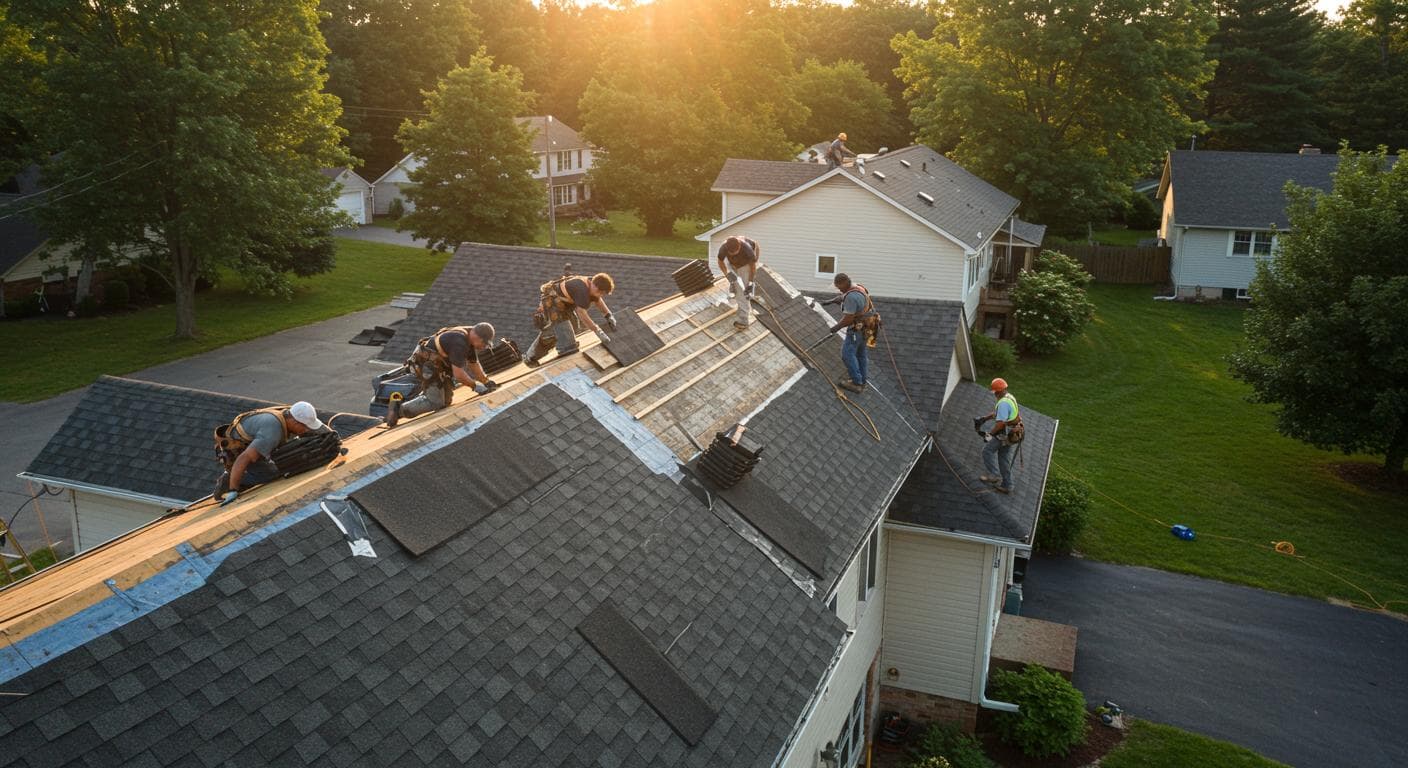
Flint roofing refers to the specialized residential and commercial roofing work performed on the large, aging housing stock of Genesee County, Michigan. Flint was one of the most productive automotive manufacturing cities in the United States from the 1920s through the 1970s. At its peak the city housed hundreds of thousands of workers and their families in neighborhoods of craftsman bungalows, capes, ranches and two-stories built between the 1940s and the early 1980s. Those homes now form the backbone of a housing market where a significant proportion of roofs are 20 to 30 years old and approaching or past the end of their design service life.
Michigan roofing on residential structures requires a Residential Builder License issued by the Michigan Department of Labor and Economic Opportunity, which is commonly called Michigan LEO. The LEO licensing framework requires applicants to pass a state examination, demonstrate relevant experience, carry general liability insurance and maintain workers compensation coverage for any employees. Homeowners who hire an unlicensed roofer in Michigan take on substantial personal liability. If a worker is injured on your property and the contractor lacks workers compensation coverage, you may be named in the claim. Your homeowner insurance may also decline coverage for workmanship-related damage caused by an unlicensed contractor. Contractor Palace verifies current Michigan LEO licensure and active insurance certificates for every Flint roofing contractor in our matched network before you speak with them.
The post-recession and post-water-crisis period in Flint has brought renewed investment into the community. State and federal recovery funds, nonprofit housing initiatives and a stabilizing property market have encouraged homeowners who deferred maintenance for years to move forward with major repairs including roofing. That wave of renovation activity has also brought some contractors into Genesee County who lack the local licensing, insurance and quality standards the market requires. Knowing how to identify a qualified Flint roofing contractor matters more now than it did a decade ago, and the Michigan LEO license check is the non-negotiable first step.
Flint's Auto-Era Housing: Why So Many Roofs Are Overdue
The housing stock built during Flint's manufacturing peak spans the 1940s through the early 1980s. Standard three-tab asphalt shingles installed during that era had a nominal 20-year design life. Architectural shingles introduced later carried 25 to 30-year ratings. A home built in 1965 with original or once-replaced shingles may be on its second or third generation of roofing, with the most recent installation already past its rated service life. Ice dam cycles, freeze-thaw stress and the heavy lake-effect snow loads Genesee County sees every winter accelerate degradation. Many Flint homeowners are surprised to find their roof is failing not because of a single storm event but because of cumulative age and climate stress that has consumed the remaining design life.
Great Lakes Weather and Flint Roofs: Lake Huron Lake-Effect, Ice Dams, Spring Hail and Tornado Risk
Flint sits approximately 60 miles west of Lake Huron, close enough to sit within the lake-effect snow band that forms when cold Arctic air moves across the warmer lake surface in late fall and winter. Unlike the extreme lake-effect totals that hit communities directly on the Lake Huron shoreline, Genesee County receives the moderated but still significant interior snowfall that accumulates over an entire season into a heavy roof load. Heavy snowfall combined with the frequent freeze-thaw temperature cycling Michigan experiences between December and March creates the conditions that make ice dams the dominant recurring roofing problem in the Flint area.
Ice dam formation begins when heat escaping from the living space warms the upper portion of the roof above freezing while the eave overhang, which extends beyond the insulated envelope, stays below freezing. Snow on the warm upper deck melts and runs toward the gutter. At the cold eave it refreezes, building a ridge of ice along the edge. As the ridge grows, subsequent meltwater is blocked and pools behind it. That pooled water sits in contact with shingles and flashings that are designed to shed water moving in one direction, not to hold standing water. It migrates under shingles, through nail holes and along flashings into the decking below. Flint homes built before the 1990s frequently lack adequate attic insulation continuity at the roof-wall junction and have undersized or blocked soffit and ridge ventilation. Those are the homes that accumulate massive ice dams every winter season and see repeated water intrusion damage to ceilings and insulation.
Spring in Genesee County brings a second severe weather threat from the same Great Lakes storm system that drives winter snowfall. The collision of warm Gulf moisture and cold Lake Huron air in the April through July window produces severe thunderstorms capable of generating large hail. Genesee County is within one of the most active hail corridors in Michigan, and individual storms can produce golf ball-sized hail that strips granules, bruises asphalt mat layers and cracks older shingles that have become brittle from UV degradation and thermal cycling. The damage is often not immediately visible from the ground, and many Flint homeowners miss the insurance filing window because they do not recognize the signs of functional hail damage during the period when a claim is still viable.
Tornado watch and warning activity also affects Genesee County with regularity. The same storm dynamics that produce hail events can spin up funnel clouds, and the straight-line wind damage that accompanies tornado-producing thunderstorms is a common source of acute roofing damage across the county. Class 4 impact-resistant shingles, rated under the UL 2218 standard, provide meaningful protection against both hail impact and wind-driven debris. Several Michigan insurance carriers offer premium discounts for homes with Class 4 rated shingles, making the upgrade cost-effective over a full replacement cycle in a high-hail market like Genesee County.
Types of Roofing for Flint Michigan Homes
Architectural shingles
Architectural (laminate) shingles are the standard replacement choice for most Flint homes. They carry a 30-year nominal design life, resist wind speeds up to 110 mph when properly fastened and provide a significant aesthetic upgrade over the three-tab shingles common on older Genesee County housing. On homes where ice dam history has been a problem, architectural shingles provide a better surface for ice and water shield adhesion than older three-tab products. Most Flint roofers specify architectural shingles as the baseline for full replacement projects.
Class 4 impact-resistant shingles
Class 4 impact-resistant shingles meet the UL 2218 impact resistance standard, which tests shingles with two-inch steel balls dropped from 20 feet to simulate large hail impact. In Genesee County, where hail events producing golf ball or larger stones occur with real frequency, Class 4 shingles provide measurably better protection against granule loss and mat bruising. Several Michigan homeowner insurance carriers offer premium reductions of 15 to 30 percent for homes with documented Class 4 shingle installation. The upgrade cost over standard architectural shingles is often recovered within the first few insurance renewal cycles.
Metal roofing
Standing seam metal and metal shingle systems have gained significant market share in Michigan over the past decade because of their performance in lake-effect snow conditions and their 40 to 70-year service life. Metal roofs shed snow more readily than asphalt shingles, reducing the accumulated load that contributes to ice dam formation. They are impact-rated against hail and carry fire ratings that some asphalt products cannot match. The higher upfront cost is offset by a longer replacement cycle and lower maintenance over the life of the structure, which matters particularly for investment properties in the Flint market.
Ice and water shield underlayment
Ice and water shield is a self-adhering rubberized asphalt membrane that creates a waterproof barrier at the eaves, valleys and other high-risk areas where ice dams concentrate water. Michigan building code requires it at eaves in Genesee County's climate zone, extending from the eave edge a minimum distance up the roof slope. Quality Flint roofers install it well beyond the minimum code requirement at eaves and apply it through the full length of every valley where water concentration is highest. It is not an upgrade on a Flint roof replacement. It is a baseline requirement.
Attic insulation and ventilation tie-in
A roof replacement on an older Flint home that does not address attic insulation continuity and soffit-to-ridge ventilation balance misses the root cause of ice dam formation. Heat escaping from the conditioned space through gaps in insulation at the roof-wall junction warms the upper roof and initiates the melt cycle. A qualified Flint roofing contractor assesses the attic insulation depth and continuity during the inspection, identifies ventilation deficiencies and includes these corrections in the project scope. Treating a re-roof as a shingles-only project on an older Genesee County home without addressing the thermal envelope is a short-term fix.
How to Choose a Roofing Contractor in Flint Michigan
Verify Michigan LEO Residential Builder License
Michigan roofing work on residential structures requires a Residential Builder License from the Michigan Department of Labor and Economic Opportunity. Ask every Flint roofer you consider for their Michigan LEO license number before you sign any contract. You can verify active licensure through the Michigan LEO online license lookup. A contractor who cannot provide a current license number or asks you to sign a contract before providing it is not operating within Michigan law. An LEO licensed contractor also carries the general liability and workers compensation coverage Michigan requires, which protects you from liability if a worker is injured on your property.
Confirm Genesee County building permit requirements
Genesee County requires a building permit for full roof replacement projects on residential structures. The permit process requires a licensed contractor, creates an inspection record and ensures the work meets Michigan Residential Code requirements for ice and water shield coverage, fastener patterns and ventilation. A Flint roofer who tells you a permit is not needed for a replacement project or who offers to skip the permit to save time is creating legal exposure for you as the homeowner. Unpermitted roofing work can complicate home sale transactions and may void insurance coverage for subsequent claims.
Ask specifically about ice dam prevention systems
Any Flint roofer quoting a full replacement should walk you through how they address ice dam risk as part of the base project scope. Ask them to describe their ice and water shield installation plan, how far up the eave they run the membrane, whether they cover the full valley length and how they assess the existing attic insulation and ventilation as part of the estimate. A contractor who treats ice and water shield as a line-item add-on or who does not mention attic conditions does not understand the thermal cause of ice dams. In Flint, this is a core competency, not a specialty.
Watch for post-storm chasers in Genesee County
After any significant spring hailstorm in the Flint area, door-to-door roofing solicitors appear quickly. Some are legitimate local Genesee County businesses accelerating outreach. Others are out-of-state storm chasers with no permanent Michigan presence, no Michigan LEO license and no accountability after the project is done. Verify a permanent Flint or Genesee County business address, check whether the contractor's Google Business profile shows a local presence that predates the most recent storm and ask for references from projects completed before the current storm season.
Ice Dams: The Dominant Roofing Problem in Flint MI
Ice dam damage is the single most common roofing complaint Genesee County homeowners report to Michigan contractors. The combination of lake-effect snowfall from Lake Huron and the aging housing stock with inadequate attic insulation creates ideal ice dam conditions on a large share of Flint homes every winter. Water backed up behind an ice dam penetrates decking, damages insulation and stains interior ceilings. The fix is not just ice removal. A qualified Flint roofer addresses the root cause: heat loss from the conditioned space through insulation gaps at the roof-wall junction. With proper insulation continuity, balanced soffit and ridge ventilation and continuous ice and water shield at all eaves, ice dam formation is eliminated rather than managed season by season.
How It Works: Get Matched with a Verified Flint Roofing Contractor
1. Tell us about your project
Describe your roofing situation, whether it is a full replacement, ice dam damage, hail inspection or storm repair. Include the property address in Flint or Genesee County, the approximate age of the current roof and any urgency factors such as active leaks or an upcoming home sale. The more detail you provide, the more precisely we can match you with the right contractor for your scope.
2. We match you with a verified Flint roofer
Contractor Palace matches your project with a Michigan LEO licensed roofing contractor in our Genesee County network. We verify current licensure, general liability insurance, workers compensation coverage and local project history before making any match. You receive contact information for a verified contractor, not a lead aggregator list. The roofer we connect you with is qualified for your specific project type.
3. Get your quote and book the inspection
Your matched Flint roofer contacts you to schedule an on-site inspection and estimate. For hail damage situations, the inspection includes damage documentation suitable for a Michigan insurance claim. For replacement projects, the estimate covers materials, ice and water shield specifications, ventilation assessment and any attic insulation corrections needed. You review the scope, ask questions and book when you are ready.
Roofing Costs in Flint MI: What to Budget for a Genesee County Project
Flint roofing costs reflect the mid-Michigan labor market and the material specifications required for a Lake Huron snow belt climate. Ice and water shield, high-wind fastening and premium underlayment are standard inclusions rather than optional upgrades in Genesee County, which moves the floor of most replacement projects above what is quoted in lower-snow markets. Homeowners evaluating estimates should request detailed material specifications on every line item so they can compare products and not just total price. The lowest bid for a Flint roof replacement that omits ice and water shield full coverage or skips the ventilation assessment is not a bargain.
Frequently Asked Questions
How do ice dams damage my Flint roof?
Ice dams form when heat escaping from the conditioned living space warms the upper portion of the roof above freezing. Accumulated snow melts on the warm deck and runs toward the eave. At the cold eave overhang, which sits outside the insulated envelope, the meltwater refreezes and builds a ridge of ice. As the ridge grows, subsequent meltwater is blocked and pools behind it. That pooled water sits in contact with shingles and flashings that are designed to shed moving water, not hold standing water. It migrates under shingles through capillary action, through nail holes and along flashings into the roof decking. From the decking it moves into attic insulation and eventually into ceiling assemblies below. Older Flint homes with inadequate attic insulation and blocked or undersized ventilation are the most vulnerable. The correct fix addresses the thermal root cause, not just the surface ice.
What Michigan license does a roofer need in Flint?
Michigan roofing work on residential structures requires a Residential Builder License from the Michigan Department of Labor and Economic Opportunity, known as Michigan LEO. The license requires passing a state examination, demonstrating relevant construction experience and carrying general liability and workers compensation insurance. Michigan does not maintain a separate roofing specialty license. The Residential Builder License covers the full scope of residential roofing replacement and repair work in Genesee County. You can verify a contractor's active license status through the Michigan LEO online license verification system. Contractor Palace confirms current licensure for every Flint roofer in our matched network before you connect with them.
Should I get Class 4 impact-resistant shingles in Flint MI?
Class 4 impact-resistant shingles are a strong choice for most Flint homeowners replacing a roof. Genesee County falls within one of Michigan's more active hail corridors, and individual storms can produce large hail that causes functional damage to standard shingles. Class 4 shingles, rated under the UL 2218 standard, resist that impact meaningfully better than standard architectural products. Several Michigan insurance carriers offer premium discounts of 15 to 30 percent for homes with documented Class 4 shingle installation, which can offset the upgrade cost within a few renewal cycles. Ask your Contractor Palace matched roofer to include both standard and Class 4 options in the estimate so you can evaluate the cost difference against your insurance discount.
Do I need a permit for a roof replacement in Flint?
Yes. Genesee County requires a building permit for full roof replacement on residential structures. The permit process requires a licensed contractor and involves an inspection that verifies code compliance with Michigan Residential Code requirements for ice and water shield coverage, fastener patterns and ventilation. A roofer who offers to skip the permit process to save time or money is creating legal exposure for you as the homeowner. Unpermitted work can complicate a home sale and may void insurance coverage for subsequent claims related to the roofing work.
How much does a roof replacement cost in Flint Michigan?
A full roof replacement for a typical 1,500 square foot Flint home runs $8,000 to $16,000 for architectural shingles, including ice and water shield, premium underlayment, high-wind fastening and disposal. Three-tab shingle replacements run $6,000 to $12,000 for the same size home. Metal roofing systems run $13,000 to $26,000 and carry significantly longer service lives. These ranges reflect Genesee County material and labor costs and include the climate-appropriate specifications that are standard rather than optional in the Flint market. Collect at least three itemized estimates that show material specifications, not just a per-square-foot rate, so you can evaluate what you are actually comparing.
Need a roofing contractor in Flint MI? Get matched free.
Describe your roofing project, ice dam situation or storm damage. We match you with a Michigan LEO licensed Flint roofer who understands Genesee County conditions and handles permits, documentation and insurance claims from inspection through completion.
Get my free Flint MI roofing quotearrow_forward