
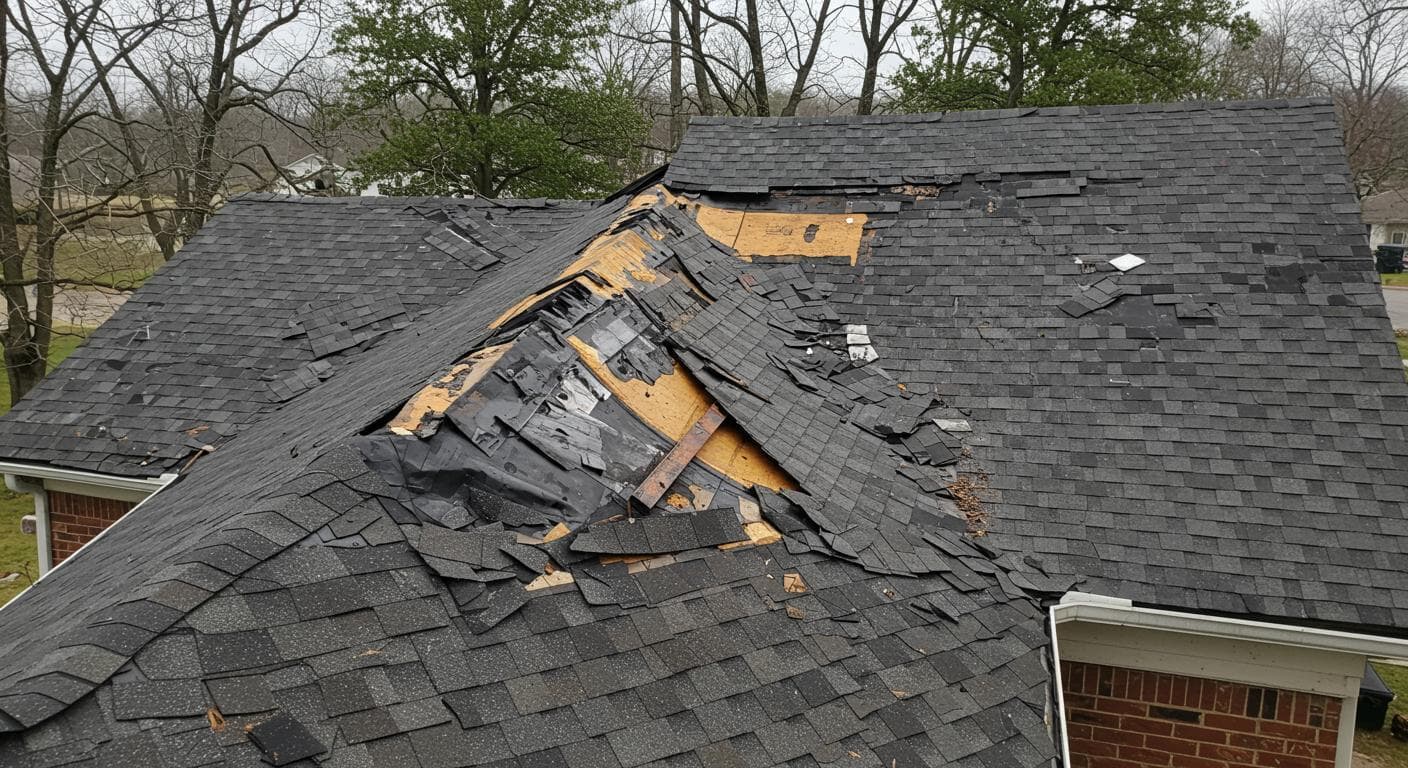
Grand Rapids Roofing: Where Lake Michigan Creates the Midwest's Most Demanding Ice Dam Conditions
Grand Rapids sits 30 miles east of Lake Michigan, which puts it squarely inside the lake-effect snow belt that makes Kent County one of the snowiest major metro areas in the Midwest. When cold Arctic air moves across the relatively warm lake surface in late fall and winter, it picks up heat and moisture and dumps that load on West Michigan as snow. Grand Rapids averages more than 70 inches of snowfall annually, with individual lake-effect events capable of dropping 12 to 20 inches within 24 hours. This is not the dry, light powder of the Great Plains. West Michigan lake-effect snow is dense and wet, and it accumulates fast enough that roofs routinely carry loads that challenge design limits on older homes.
The freeze-thaw cycle that follows each snow event is where real roofing damage originates. As daytime temperatures rise above freezing, snow at the roof surface melts and runs toward the eaves, where it refreezes on the colder overhang that sits outside the building envelope. Ice dams form when this cycle repeats, building a ridge of ice along the eave that blocks subsequent meltwater from draining. That trapped water backs up under shingles, penetrating into the decking and eventually into the attic and interior ceiling. Kent County roofers see water staining, damaged insulation and mold growth from ice dams every spring. Homes built before modern ice and water shield requirements are particularly vulnerable, and the Dutch immigrant-era craftsman homes that characterize older Grand Rapids neighborhoods near Heritage Hill, Eastown and Midtown are right in that risk zone.
Spring in West Michigan adds a second roofing threat that many homeowners focus on less than ice. The same storm track that carries lake moisture inland in winter produces strong hailstorms between April and July. Kent County sees multiple significant hail events most years, and the granule loss, bruising and cracking these storms cause to asphalt shingles often goes undetected until the roof starts leaking internally. Grand Rapids' growing population of younger professional homeowners, drawn by the ArtPrize scene, the medical device corridor anchored by Amway and Sparton, and Calvin University and Grand Valley State University, often face their first significant roofing situation without a baseline understanding of what hail damage looks like or how Michigan insurance claims work. Contractor Palace bridges that gap with matched roofers who inspect and document damage before the window to file a claim closes.
Lake-Effect Snow and the Worst Ice Dam Conditions in the Midwest
Grand Rapids receives more than 70 inches of lake-effect snow annually, and the wet, dense character of West Michigan snow creates ice dam conditions that surpass most other Midwest markets outside the immediate Great Lakes shoreline communities. Ice dams form when heat from the interior melts snow on the upper roof, and that meltwater refreezes on the cold eave overhang. The resulting ice ridge traps subsequent meltwater, which backs up under shingles and penetrates into decking and ceiling assemblies. A Grand Rapids roofer who installs ice and water shield at all eaves and valleys, improves attic insulation continuity to reduce heat loss, and addresses soffit and ridge ventilation eliminates the thermal conditions that create ice dams in the first place rather than just clearing them after they form.
What Is an Ice Dam and How Does Proper Roofing Prevent Them in Grand Rapids?
An ice dam is a ridge of ice that forms at the eave of a roof when heat escaping from the interior warms the upper roof surface, melts accumulated snow and then allows that meltwater to refreeze on the colder overhang beyond the building envelope. The ice ridge blocks subsequent meltwater from reaching the gutter, so water pools behind the dam and sits in contact with roofing materials that are not designed for prolonged ponding. In Grand Rapids, where lake-effect events can drop a foot of dense snow in a single day and temperatures fluctuate dramatically from day to night, this cycle repeats many times each winter season.
The solution to ice dams is not just clearing ice after it forms. A roofing system designed for West Michigan conditions addresses three interrelated factors. First, continuous ice and water shield membrane at the eaves and valleys creates a waterproof barrier that prevents infiltration even when meltwater backs up. Michigan code requires this protection in Kent County's climate zone, and a roofer who installs it everywhere code requires rather than just where an inspector will look provides meaningfully better protection. Second, attic insulation continuity eliminates the heat loss at the roof-wall junction that creates the temperature differential responsible for melting. Third, balanced soffit and ridge ventilation keeps the entire roof surface at a uniform temperature close to the outside air, eliminating the warm upper deck that initiates the melt cycle in the first place. A qualified Grand Rapids roofing contractor evaluates all three systems together and does not treat a re-roof as a shingles-only project.
Spring hail damage in West Michigan operates differently from ice dam damage in that it is typically sudden and visible rather than gradual and hidden. A hailstorm impact on asphalt shingles displaces granules, creates impact marks and bruises the mat layer beneath the granule surface. This bruising accelerates the breakdown of the shingle mat and reduces the remaining service life of the roof, even when the surface looks nearly intact to a casual eye. A Grand Rapids roofer experienced with Kent County hail events knows how to identify functional damage that qualifies for an insurance claim versus cosmetic surface variation that does not, and documents it in a way that supports the full scope of the claim before the insurance adjuster visits.
Roofing Costs in Grand Rapids MI: What to Budget for a West Michigan Project
Grand Rapids roofing costs reflect the West Michigan labor market and material costs specific to a climate that demands premium components. Ice and water shield, high-wind fastening and premium underlayments are standard specifications in Kent County rather than upgrades, which shifts the floor of most replacement projects above what you might see quoted in lower-snow markets. Cost-conscious West Michigan homeowners who want quality without overpaying should collect at least three detailed estimates that show line-item material specifications rather than a single square footage rate so they can compare products as well as price.
Why Use Contractor Palace for Roofing in Grand Rapids MI
Lake-effect snow and ice dam specialists
Not every roofing contractor understands the specific mechanics of lake-effect ice dam formation in Kent County. Contractor Palace verifies that our matched Grand Rapids roofers have hands-on experience with ice and water shield installation, attic insulation assessment, ventilation balancing and the full range of winter storm damage documentation that West Michigan homeowners encounter. They treat ice dam prevention as a systems problem, not a shingles swap.
Spring hail damage documentation and insurance support
West Michigan sees multiple significant hail events most years. A matched Grand Rapids roofer knows how to inspect for functional bruising and granule displacement that qualifies for a Kent County insurance claim, documents damage in the way Michigan insurance adjusters expect to receive it and supports your claim through the adjuster process before the window to file closes. They do not guess at the scope.
Experience across Grand Rapids housing eras
The Kent County housing market spans Dutch immigrant-era craftsman homes in Heritage Hill and Eastown, mid-century housing in established neighborhoods and newer suburban construction in Byron Township, Rockford and Caledonia. Each era presents distinct roofing challenges. Our matched contractors have verifiable project history across the full housing spectrum and know how to handle the structural realities of older decking, original ventilation systems and non-standard framing common in pre-1980 Grand Rapids homes.
Michigan Occupational Code registered contractors only
Michigan's Occupational Code requires contractor registration for residential construction projects meeting applicable thresholds. Contractor Palace verifies that every Grand Rapids roofing contractor in our network carries current state registration, general liability insurance and workers compensation coverage before you connect with them. An unregistered roofer in Michigan leaves you liable for injuries on your property and may void your homeowner insurance for workmanship-related claims.
How to Choose a Roofing Contractor in Grand Rapids Michigan
Verify Michigan Occupational Code registration
Michigan requires residential contractors to register under the Occupational Code for projects above the applicable threshold and to carry both general liability and workers compensation insurance. Ask any Grand Rapids roofer you are considering for their Michigan contractor registration number and a current certificate of insurance showing both coverage types before you sign a contract. A roofer without active workers compensation leaves you personally liable if a laborer is injured on your roof.
Ask specifically about ice and water shield coverage
Michigan building code requires ice and water shield at eaves and valleys in Kent County's climate zone. A quality Grand Rapids roofer installs it everywhere the code requires as a standard inclusion, not as an add-on line item. Ask every contractor you quote to describe how far up the eave they run the membrane, whether they include valley coverage and whether they assess the existing attic insulation and ventilation as part of the project scope. The answers tell you whether they understand lake-effect conditions or are just replacing shingles.
Watch for storm chaser indicators after hail events
After any significant spring hailstorm in the Grand Rapids metro, door-to-door roofing solicitors appear quickly. Some are legitimate local companies accelerating their outreach. Others are out-of-state storm chasers with no permanent West Michigan presence. Verify a permanent Kent County business address, check how long their Google Business profile shows a Grand Rapids location and ask for references from projects completed before the most recent storm event.
Understand Michigan homeowner insurance before filing
Michigan homeowner insurance policies vary on how they handle roof damage claims, particularly regarding actual cash value versus replacement cost coverage. Some older policies pay the depreciated value of your existing roof rather than the full replacement cost, which creates a gap the homeowner must cover. Review your policy declarations with your agent before your roofer submits a claim scope so there are no surprises when the settlement arrives.
Roofing Contractors Serving the Grand Rapids Michigan Area
Contractor Palace matches Grand Rapids homeowners and property managers with verified roofing contractors who serve Kent County and the broader West Michigan region. Our matched roofers are permanent West Michigan businesses with verifiable local project history across the full range of communities that make up the greater Grand Rapids metro. Whether you need ice dam damage repair in an older Heritage Hill craftsman home, a full replacement in a newer Caledonia subdivision or hail documentation support in Wyoming or Kentwood, our network covers the geography. For homeowners in Holland, Hudsonville or Muskegon who face comparable lake-effect conditions west of Grand Rapids, our matched contractors understand the full lakeshore snow belt and its distinct roofing demands.
Many West Michigan homeowners ask about financing options after a roofing event where the insurance payout does not cover the full replacement scope, particularly on older homes where actual cash value policies create a gap. Several contractors in our network offer third-party financing that allows qualified homeowners to spread the remaining cost over time. Ask your matched roofer about financing options when you receive the estimate so you can compare total cost of ownership across your payment choices.
Frequently Asked Questions
How much does a new roof cost in Grand Rapids MI?
A standard asphalt shingle roof replacement for a 1,500 square foot Grand Rapids home typically runs $8,000 to $15,000, including materials, labor, ice and water shield, premium underlayment and disposal. The West Michigan climate demands components that add cost over what you might see quoted in southern markets where ice protection and high-wind fastening are optional upgrades rather than standard specifications. Metal roofing is increasingly popular in Kent County because of its performance in lake-effect snow conditions and runs $16,000 to $36,000 for a typical home. Flat roof membrane replacement runs $6,500 to $15,000 depending on size and membrane type.
Does homeowner's insurance cover ice dam damage in Michigan?
Most standard Michigan homeowner insurance policies cover water damage caused by ice dams as a sudden and accidental event. The distinction insurers make is between damage caused by an ice dam, which is typically covered, and damage caused by inadequate maintenance or gradual deterioration, which is typically excluded. Proper documentation of when the ice dam formed and what interior damage occurred matters significantly. A Grand Rapids roofing contractor who understands the insurance claim process can help you create the documentation an adjuster needs before you file and before any remediation work obscures the evidence.
What causes ice dams and how do I prevent them on my Grand Rapids home?
Ice dams form when heat from the interior warms the upper roof surface above freezing, melting accumulated snow. That meltwater runs toward the eave and refreezes on the colder overhang, building a ridge of ice that blocks subsequent drainage. Water pools behind the dam and backs up under shingles into the decking and ceiling. Prevention requires addressing three things together: continuous ice and water shield membrane at eaves and valleys, improved attic insulation continuity at the roof-wall junction to reduce heat loss, and balanced soffit and ridge ventilation to keep the roof surface at uniform temperature. Clearing ice dams after they form treats the symptom. A properly specified roofing system eliminates the thermal conditions that create them.
What Michigan contractor registration is required for roofing in Grand Rapids?
Michigan's Occupational Code requires residential contractor registration for projects meeting applicable thresholds and mandates both general liability and workers compensation insurance for all contractors performing residential construction work. Unlike some states, Michigan does not maintain a roofing-specific specialty license, but the registration and insurance requirements apply broadly to residential roofing replacement and repair work in Kent County. Contractor Palace verifies current Michigan registration and active insurance certificates for every Grand Rapids roofer in our matched network before you connect with them.
Need a roofing contractor in Grand Rapids MI? Get matched free.
Describe your roofing project, ice dam situation or storm damage. We match you with a verified Grand Rapids roofer who knows West Michigan lake-effect conditions and handles the Kent County insurance process from inspection through settlement.
Get my free Grand Rapids MI roofing quotearrow_forward