
What Is Fort Wayne Roofing: Allen County Context and Indiana Licensing Rules
Fort Wayne is Indiana's second largest city with over 270,000 residents and the seat of Allen County in the northeast corner of the state. The Fort Wayne roofing market is one of the most active in Indiana because the city sits at the convergence of three rivers: the St. Marys, the St. Joseph and the Maumee. That confluence creates a persistently humid microclimate that accelerates the breakdown of roofing materials at a rate faster than most Indiana markets to the south. High humidity softens asphalt shingles over time, promotes moss and algae growth on north-facing slopes and accelerates wood decking deterioration beneath the roofing assembly. Fort Wayne homeowners face a combination of moisture stress from below and severe weather events from above that few Midwest cities match.
Indiana does not require a state-issued contractor license for roofing work, which is an important distinction for Allen County homeowners to understand. Any person or company can legally perform roofing work in Indiana without state credentialing. What Allen County and the City of Fort Wayne do require is a building permit for roofing replacements, and the permit process creates a layer of oversight that protects homeowners by requiring inspections at defined stages of the project. Pulling an Allen County building permit means the city reviews the scope of work, verifies setbacks where applicable and schedules an inspection so that decking, underlayment and shingles are installed correctly before the finished surface is completed. A roofing contractor who refuses to pull permits in Fort Wayne is not just cutting a bureaucratic corner: they are bypassing the inspection process that protects your warranty, your homeowner insurance coverage and your home's resale value.
Beyond the permit requirement, the most meaningful credentials to verify in the Fort Wayne roofing market are active general liability insurance and workers compensation coverage. Because Indiana does not require state licensing, insurance coverage is the primary protection a homeowner has against contractor negligence and worker injuries. Contractor Palace pre-verifies these credentials for every Fort Wayne roofer in our network.
Allen County Building Permits: Why They Matter for Your Roof
Indiana does not issue a state roofing license, but Allen County requires a building permit for roof replacements. The permit process triggers inspections at the decking and underlayment stage before the finished shingles are installed. This protects you in three ways: it ensures the work meets code before being covered up, it preserves your homeowner insurance coverage for workmanship-related claims and it protects the home's resale value. A roofing contractor who skips the Allen County permit process is asking you to accept all the risk they are avoiding.
Great Lakes Weather and Fort Wayne Roofs: Ice Dams, Hail Season and the Storm Corridor
Fort Wayne sits at the southeastern edge of the Great Lakes snow belt periphery, which means the city receives meaningful lake-effect snow influence from Lake Michigan during cold weather events. When Arctic air sweeps across the lake from the northwest, it picks up moisture and dumps snow on northwest Indiana and northeast Indiana communities including Fort Wayne. These lake-effect events produce dense, wet snow that accumulates faster and heavier than the light powder typical of Great Plains winter storms. A roofing system that handles dry light snow adequately may struggle under the wet load that lake-effect events drop across Allen County in a matter of hours.
Ice dams are the most costly winter roofing problem for Fort Wayne homeowners. The ice dam cycle begins when interior heat escapes through the attic and warms the upper roof surface above freezing. Snow accumulation at the ridge and mid-roof melts, and that meltwater flows toward the eave where it exits the building envelope and contacts the cold overhang. There it refreezes, building a ridge of ice at the eave that grows with each melt cycle. Once the ice dam is established, subsequent meltwater pools behind it and backs up under the shingles, finding its way through the underlayment and into the decking, attic insulation and interior ceiling assemblies. Allen County homeowners often do not discover ice dam water infiltration until weeks after the original event, when the interior damage has already progressed significantly. Older Fort Wayne homes built in the 1940s through 1970s are particularly vulnerable because they were constructed without the continuous ice and water shield membrane at eaves and valleys that modern Indiana building code requires.
Spring and early summer bring a different and equally serious roofing threat to Allen County. Fort Wayne sits within a severe storm corridor that tracks northeast from the Great Plains through Indiana, producing tornado watches, large hail events and straight-line wind damage on a regular annual basis. Allen County sees significant hail events most years, with hailstones capable of displacing granules from asphalt shingles, bruising the mat layer beneath the surface and denting metal flashing components. A single hail event that drops golf ball-sized stones can create functional damage to every shingle on a Fort Wayne roof while leaving the surface looking nearly intact to a casual eye. This hidden functional damage reduces the remaining service life of the roofing system even when it does not immediately cause active leaking.
Types of Roofing for Fort Wayne Homes and Commercial Properties
Architectural asphalt shingles
Dimensional architectural shingles are the most common roofing product in the Fort Wayne market. They offer a 30-year manufacturer warranty, significantly better wind resistance than older 3-tab products and a textured appearance preferred in most residential neighborhoods. GAF and CertainTeed are the preferred brands among Fort Wayne roofing contractors because of their wide distributor networks in northeast Indiana and the strength of their manufacturer warranty programs. Standard architectural shingles are the correct baseline product for Fort Wayne homes not in the most hail-exposed conditions.
Class 4 impact-resistant shingles
Class 4 impact-resistant shingles are the top upgrade recommendation for Fort Wayne homeowners given Allen County's position in the Indiana severe storm corridor. These products carry UL 2218 Class 4 certification, meaning they withstand simulated two-inch hail impact at terminal velocity. Some Indiana insurance carriers offer premium discounts for Class 4 roofing installations. The upgrade cost over standard architectural shingles is typically $1,500 to $3,500 on an average Fort Wayne home and is a sound investment in a market that sees significant hail events most years.
Metal roofing, standing seam
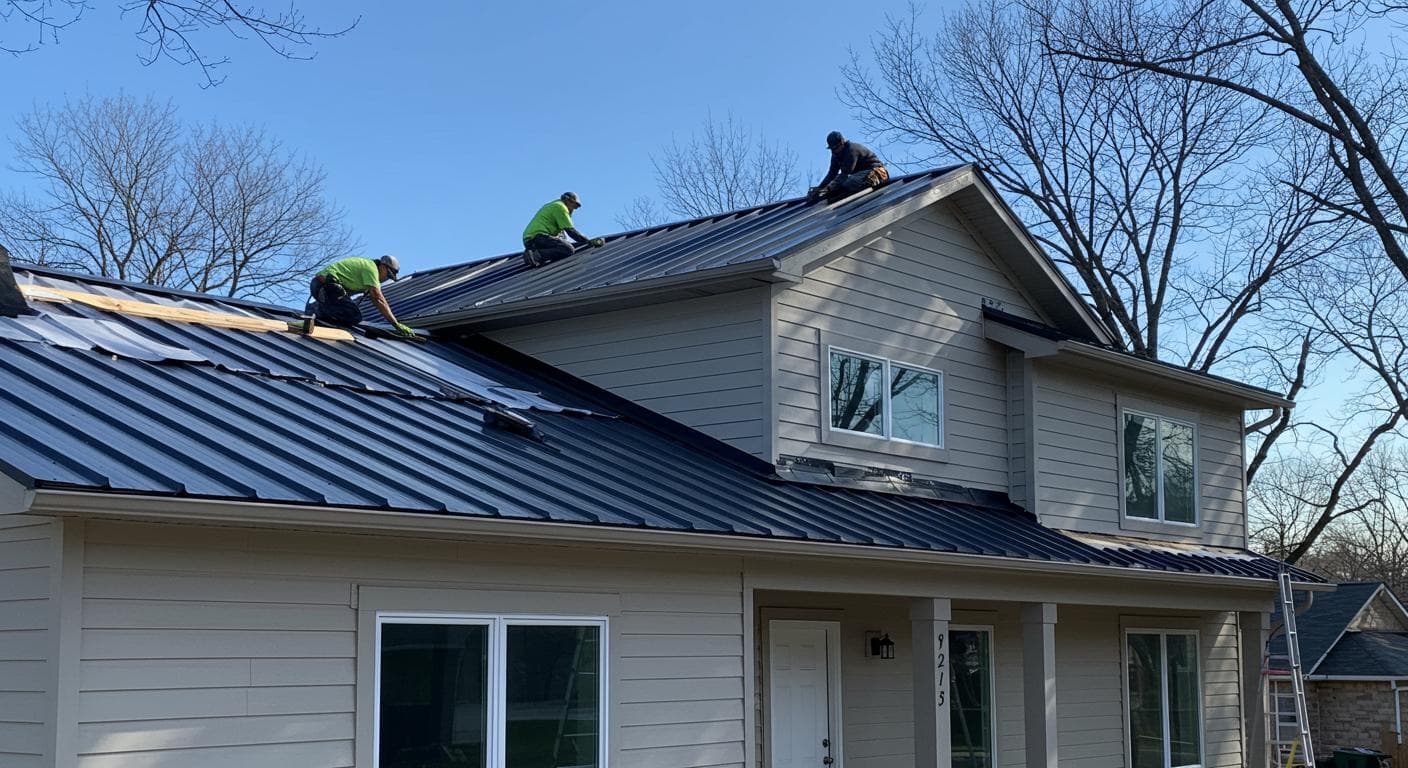
Standing seam metal roofing is the highest-performing system for Fort Wayne homes facing repeated hail, ice dam and wind events. Metal carries inherent Class 4 impact resistance on most products, a service life of 40 to 70 years and eliminates the shingle replacement cycles that recurring storm damage creates in northeast Indiana. Standing seam panels interlock without exposed fasteners, which eliminates the primary infiltration point that wind-driven rain exploits in traditional screw-down metal or shingle systems.
TPO flat membrane for commercial roofing
Thermoplastic polyolefin membrane is the standard flat roofing product for Fort Wayne commercial buildings, churches and homes with low-slope addition roofs. TPO provides seamless waterproofing that resists wind-driven rain on shallow pitches, is fully compatible with rooftop mechanical equipment curbs and drains and carries strong resistance to UV degradation. Fort Wayne's commercial district and industrial base on the south and west sides of the city generate consistent demand for TPO installation and replacement.
Ice and water shield underlayment
Ice and water shield is a self-adhering rubberized asphalt membrane installed at eaves, valleys and penetrations before the finish roofing material is applied. In Fort Wayne's climate, this membrane is not optional: Indiana building code and responsible installation practice both require it at all eaves and valleys in Allen County's climate zone. Ice and water shield creates a redundant waterproof layer that prevents infiltration when meltwater backs up behind ice dams or when wind-driven rain works its way under shingle edges during severe storm events. A Fort Wayne roofing contractor who installs ice and water shield only where an inspector will check is delivering incomplete protection.
How to Choose a Roofing Contractor in Fort Wayne Indiana
Confirm the Allen County permit will be pulled
Ask every Fort Wayne roofing contractor you consider to confirm in writing that they will pull the required Allen County building permit before starting work. A contractor who says permits are not necessary for roofing in Indiana is either misinformed about Allen County requirements or is telling you what you want to hear to close the sale. An unpermitted re-roof voids your homeowner insurance coverage for workmanship claims, can complicate a future home sale and leaves you with no code inspection backstop if the work is done incorrectly.
Verify general liability and workers compensation insurance
Indiana does not require a state roofing license, which means active insurance coverage is the primary credential that separates a professional roofing contractor from an unqualified operator. Ask for a certificate of insurance showing both general liability coverage and workers compensation before signing any contract. Workers compensation is particularly critical in roofing because falls are the leading cause of serious injuries on construction sites. An uninsured roofer leaves you personally liable for any injury that occurs on your Allen County property.
Prioritize Class 4 shingles in Fort Wayne storm conditions
Given Allen County's exposure to the Indiana severe storm corridor, Class 4 impact-resistant shingles should be a standard recommendation from any knowledgeable Fort Wayne roofer. If a contractor quotes only standard architectural shingles without discussing the Class 4 option, ask them specifically why Class 4 is not appropriate for your home. Check with your Indiana homeowner insurance carrier before signing the contract to confirm whether they offer a premium discount for Class 4 certified products, as the savings can offset a significant portion of the upgrade cost.
Watch for storm-chaser indicators after severe weather events
Fort Wayne and Allen County attract out-of-state roofing contractors following major hail and wind events each spring. These storm chasers canvas neighborhoods offering free inspections and quick starts. Some are legitimate businesses expanding into the market temporarily. Others lack permanent Allen County presence and have no warranty fulfillment capability once they leave. Verify that any contractor you consider maintains a permanent Fort Wayne business address, has a Google Business profile that predates the most recent storm event and can provide references from Allen County projects completed in non-storm years.
How Contractor Palace Matches You with a Fort Wayne Roofer
Contractor Palace connects Fort Wayne homeowners with verified roofing contractors through a structured matching process that removes the guesswork from hiring. You describe your roofing project or storm damage through our booking form. Our platform matches you with a verified Fort Wayne roofing contractor from our screened Allen County network based on your location, the type of work required and contractor availability. Your matched roofer contacts you directly to schedule the inspection and written estimate.
Step 1: Describe your project
Tell us whether you have storm damage, an aging roof approaching end of life, a leak repair or a commercial flat roof situation. The more detail you provide about your Allen County property, the more precisely we can match you with the right Fort Wayne roofing contractor for your specific situation and budget.
Step 2: Get matched with a verified roofer
Our platform assigns you a Fort Wayne roofing contractor from our verified network. All matched contractors have passed credential verification including insurance confirmation, local project history review and customer feedback screening. No contractor information is visible to you until your job details are confirmed, ensuring our network roofers work only with committed homeowners.
Step 3: Inspect, document and book
Your matched Fort Wayne roofer schedules an on-site inspection, documents all damage or replacement conditions with photographs and a written scope and provides a firm estimate. For storm damage situations, the contractor can be present during the insurance adjuster inspection to advocate for the full replacement scope when the documentation supports it.
Roofing Costs in Fort Wayne IN: What to Budget for an Allen County Project
Fort Wayne roofing costs reflect northeast Indiana labor market rates and the material specifications that Allen County's climate demands. Ice and water shield at eaves and valleys, synthetic underlayment and proper high-wind fastening patterns are standard inclusions in a correctly specified Fort Wayne roofing project, not optional upgrades. Homeowners who receive quotes significantly below the ranges below should ask specifically what underlayment is being used and whether an Allen County building permit is included in the scope.
Frequently Asked Questions
Does Fort Wayne require a roofing permit for a roof replacement?
Yes. Allen County and the City of Fort Wayne require a building permit for roofing replacements. Indiana does not issue a state roofing license, so the permit and inspection process is one of the primary quality controls available to homeowners. The permit triggers an inspection at the decking and underlayment stage, before the finished surface is applied, so any underlying issues are identified before they are covered up. A roofing contractor who refuses to pull an Allen County building permit is bypassing that inspection backstop. An unpermitted re-roof can also void your homeowner insurance coverage for workmanship claims and create disclosure obligations at the time of resale.
Are Class 4 impact-resistant shingles worth it in Fort Wayne?
For most Fort Wayne homeowners, Class 4 shingles are a sound investment. Allen County sits within the Indiana severe storm corridor and sees significant hail events most years. Class 4 impact-resistant shingles carry UL 2218 certification, meaning they withstand simulated two-inch hail impact testing that standard architectural shingles fail. Some Indiana insurance carriers offer premium discounts for Class 4 roofing products. Check with your carrier before signing the roofing contract, because the discount can offset a meaningful portion of the upgrade cost. Ask your Fort Wayne roofing contractor to specify the exact product by manufacturer and model number and confirm UL 2218 Class 4 certification before committing.
How do ice dams form and how do I prevent them on my Fort Wayne home?
Ice dams form when interior heat escapes through the attic and warms the upper roof surface above freezing. Snow at the ridge and mid-roof melts, meltwater flows toward the eave and refreezes on the cold overhang where it exits the building envelope. The resulting ice ridge traps subsequent meltwater, which backs up under the shingles and penetrates into the decking and ceiling. Prevention requires three systems working together: continuous ice and water shield membrane at all eaves and valleys, improved attic insulation continuity to reduce heat loss at the roof-wall junction and balanced soffit-to-ridge ventilation to keep the roof surface at a uniform temperature close to outdoor air. Clearing ice dams after they form treats the symptom. A Fort Wayne roofer who evaluates all three systems and addresses the root cause eliminates the thermal conditions that create dams in the first place.
What roofing brands are preferred in Fort Wayne IN?
GAF and CertainTeed are the preferred roofing brands among established Fort Wayne roofing contractors. Both manufacturers have strong distributor networks in northeast Indiana that support warranty claims and product availability throughout the project. GAF's Weathered Wood and Pewter Gray architectural shingles are particularly common in Allen County residential neighborhoods. Both manufacturers offer Class 4 impact-resistant product lines that qualify for Indiana insurance program discounts. Ask your Fort Wayne roofer about their manufacturer certification status, because certified contractors can offer extended manufacturer warranty coverage that non-certified installers cannot.
How much does a roof replacement cost in Fort Wayne IN?
A standard architectural asphalt shingle roof replacement for a 1,500 square foot Fort Wayne home typically runs $9,000 to $18,000 including materials, labor, ice and water shield, synthetic underlayment, an Allen County building permit and disposal. Upgrading to Class 4 impact-resistant shingles adds $2,000 to $4,000. Standing seam metal roofing for a Fort Wayne home runs $15,000 to $30,000 and is a strong long-term choice for northeast Indiana's ice dam and hail exposure. Flat TPO membrane replacement for a commercial property or low-slope home addition runs $6,000 to $14,000 depending on size and existing deck condition.
Need a roofing contractor in Fort Wayne? Get matched free.
Describe your roofing project or storm damage. We match you with a verified Fort Wayne roofer who handles the Allen County permit process, documents hail and ice dam damage for your insurance claim and knows northeast Indiana weather inside out.
Get my free Fort Wayne roofing quotearrow_forward