
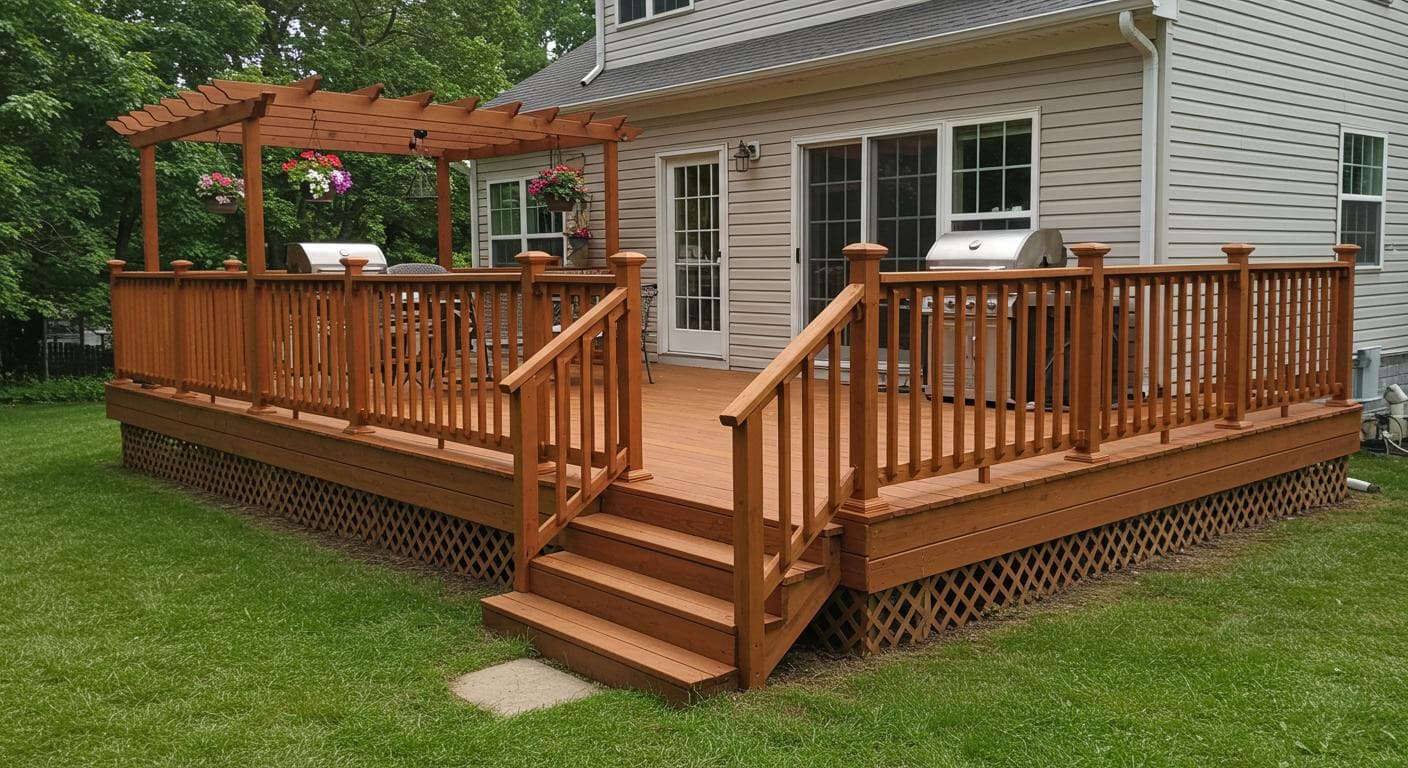
Deck Building in Colorado Springs: The Finish Schedule Is the Job
Colorado Springs sits at 6,035 feet, and ultraviolet light gets stronger the higher you climb. A deck here takes far more punishment from the sun than the same deck near sea level, so what it is made of and how often it gets recoated decides how long you enjoy it.
Strong high altitude UV shortens the recoat cycle on every surface that faces the sun. How much shorter depends on the product you put down, how much pigment is in it and which way your boards point, so no national number covers it. Material choice and recoat interval are the whole conversation with a deck builder here. The building part is the easy half.
At 6,035 Feet the Sun Writes Your Maintenance Schedule
Building the deck is not the hard part. Plenty of competent carpenters in Colorado Springs can frame something square that stands up for thirty years.
What separates a deck you enjoy from a deck you resent is the finish, and up here the sun sets the timetable.
Ultraviolet intensity climbs with elevation. A coating that behaves itself for years down near sea level gives up early on sun facing boards at this elevation, and that is not a bad batch of stain. It is thinner air between the sun and your wood. How early it happens comes down to the product and the pigment in it, which is exactly why the interval printed on the tin is the wrong thing to plan around.
Orientation matters more than most quotes admit. A south or west facing deck fades, grays and begins to check years ahead of a shaded deck on the same house, built from the same wood on the same day. Angle counts too. Flat surfaces take the sun square on, so the deck floor, the railing tops and the stair treads give up first while the risers and the skirting underneath still look close to new.
You can read where your own deck sits in that cycle in about a minute, no meter needed. Run a dry palm along the top of the railing on the sunny side. A chalky gray film on your hand means the pigment is gone and the wood is taking the sun bare. Do the same on the shaded side of the same rail and the finish is usually still there, which is the whole argument for quoting each side of a house separately.
So the first question worth asking a deck builder is not which stain they use. It is how often this deck will need recoating, given which way it faces.
Pigment is the part that blocks UV. A clear or lightly tinted finish looks lovely for one summer and then quits, because there is almost nothing in it standing between the sun and the grain. More pigment buys you time and hides a little more of the wood, and that is the trade.
Film forming finishes are the other trap up here. Solid stains and varnishes sit on top of the boards, and when strong sun finally beats them they peel instead of fading. Peeling means stripping, and stripping is where a modest maintenance job turns into a job that costs more than a thousand dollars.
A penetrating finish that fades is easier to live with, because a recoat is a wash and a coat instead of a rescue operation. The habit worth building here is going again slightly before the finish gives out. Once bare wood is showing through on the sunny side, you have added a day of prep to every coat that comes after it.
One Deck, Two Different Moisture Problems
Colorado Springs air is dry enough that decking shrinks across its width after it is installed. Gaps widen, and screws that sat flush in June can stand proud by the next spring.
That makes two build decisions matter more here than they do in a damp climate: how the boards are gapped at install and how they are fastened.
Wet pressure treated lumber arrives on site full of water and will move as it dries out. Kiln dried decking arrives much closer to where it will settle. A builder should tell you which one they are ordering and gap the boards to match, tighter for wet stock and spaced for dry. Ask before the lumber is delivered, because that one answer is the difference between gaps you never think about and gaps you lose a key down.
Hidden fastener systems clip into a groove in the edge of each board and let it move a little without fighting a screw head. Face screwing is not wrong and it costs less, but on a dry site the heads are what you end up chasing every spring.
Winter splits one deck into two climates. Snow sits for weeks on the shaded north side while the sunny side is bone dry two days after the same storm.
So a single deck can carry two problems at once: sun damage on one half and long damp on the other. The shaded side is where soft spots, dark staining and grit packed into the gaps turn up, and packed gaps stop meltwater draining where it should.
Clearing those gaps every autumn takes ten minutes and saves board replacement later. When you shovel, use a plastic blade and push along the boards, not across them.
Composite and capped composite take the refinish cycle out of your life completely, which at this elevation is a real argument for spending the extra up front. Two things to check before you sign: the fade rating and whether the color warranty is written separately from the structural one, because it usually is. Ask how the surface handles hail as well, since hail is a genuine risk in this part of Colorado. And remember the frame under composite is still wood, so the ledger where the deck bolts to the house and the flashing above it are still the parts that decide whether the deck is safe in fifteen years.
Which brings up the paperwork. An attached deck needs a building permit here, pulled through Pikes Peak Regional Building Department, the office that covers Colorado Springs and El Paso County together. Ask a builder who is pulling it and whether the footings and the ledger connection get inspected before the framing is closed in. That question tells you far more about a crew than any badge on a truck door does. If someone offers to save you the permit, walk.
Deck Building Costs in Colorado Springs CO
These are the Colorado Springs ranges, put here so a bid you already have has something to sit next to. The real number comes from someone standing on your joists with a tape. Note the last two rows while you are here: a sun facing deck costs the same to build as a shaded one and more to keep, because the recoat comes round sooner.
Choosing a Deck Builder in Colorado Springs
The afternoon sun side sets the whole maintenance schedule. If the same recoat interval comes out for every deck in the city, you are being quoted a label instead of a house.
Chalky gray finish and hairline splits show up there before anywhere else. That is how long the last coat really lasted on your house, which no tin can tell you.
Packed with leaves and grit means meltwater sits there for weeks each winter. Dark soft boards on that half and bleached ones on the other is the two climate deck showing itself.
The interval for your orientation and your product, plus the name of whoever is pulling the building permit. On an attached deck somebody has to, and it should be them.
Common Questions About Deck Building in Colorado Springs CO
What does a deck cost in Colorado Springs?
Most new decks here land between $30 and $95 a square foot installed, and the material is what moves you across that spread. Pressure treated sits at the bottom, cedar in the middle, capped composite at the top. A 300 square foot deck is the size most people have in their head, so the arithmetic is quick.
Two things push a bid above the range. A deck sitting well off the ground needs bigger footings and more structure underneath, and tearing out an old deck is its own line item. If a number comes in far below the range, ask what is holding the thing up before you sign anything.
How often will I actually have to refinish a deck here?
More often than the tin says, and the sun facing surfaces come due long before the shaded ones. Strong high altitude UV is hard on any coating, so a pigmented penetrating stain on a south or west facing deck will be asking for another coat while the north side still looks fine.
The label interval is written for the whole country and does not know you live at 6,035 feet. Ask your builder what they expect for your orientation and the exact product they are putting down, then get that answer onto the quote.
If the deck is brand new, ask when the first coat goes on. Freshly milled decking often needs a few weeks of weathering before it will take a penetrating finish properly, and up here that first coat is the one doing most of the work.
Is composite worth the extra money at this elevation?
Often yes, and the reason is the recoating, not the boards. Capped composite takes the refinish cycle off your calendar completely, and at this elevation that cycle is the expensive part of owning a wood deck.
Before you sign, look at the fade rating and read the color warranty separately from the structural one. Ask how that product handles hail as well, because hail is a real risk here and the answer varies by brand.
Why did gaps open up and screws pop on my new deck?
Dry Colorado Springs air pulls water out of the boards and they shrink across the width. Gaps widen, and as the wood moves around the fastener the head works its way back out.
It is worse when wet pressure treated stock was installed tight. Hidden fastener systems handle that movement better, and on an existing deck the fix is usually longer structural screws, not driving the old ones back down.
Do you build the deck yourselves?
No. Contractor Palace is the matching service. We put you in front of independent Colorado Springs deck builders, and the pro you pick builds and finishes the deck. Getting matched costs you nothing.
Need a deck builder in Colorado Springs? Tell us which way it faces.
Give us the size, the material you are weighing up and the direction the deck looks. We match you with an independent local deck builder who quotes the finish schedule alongside the build and pulls the permit. You pay us nothing, ever.
Get my free Colorado Springs deck quotearrow_forward