
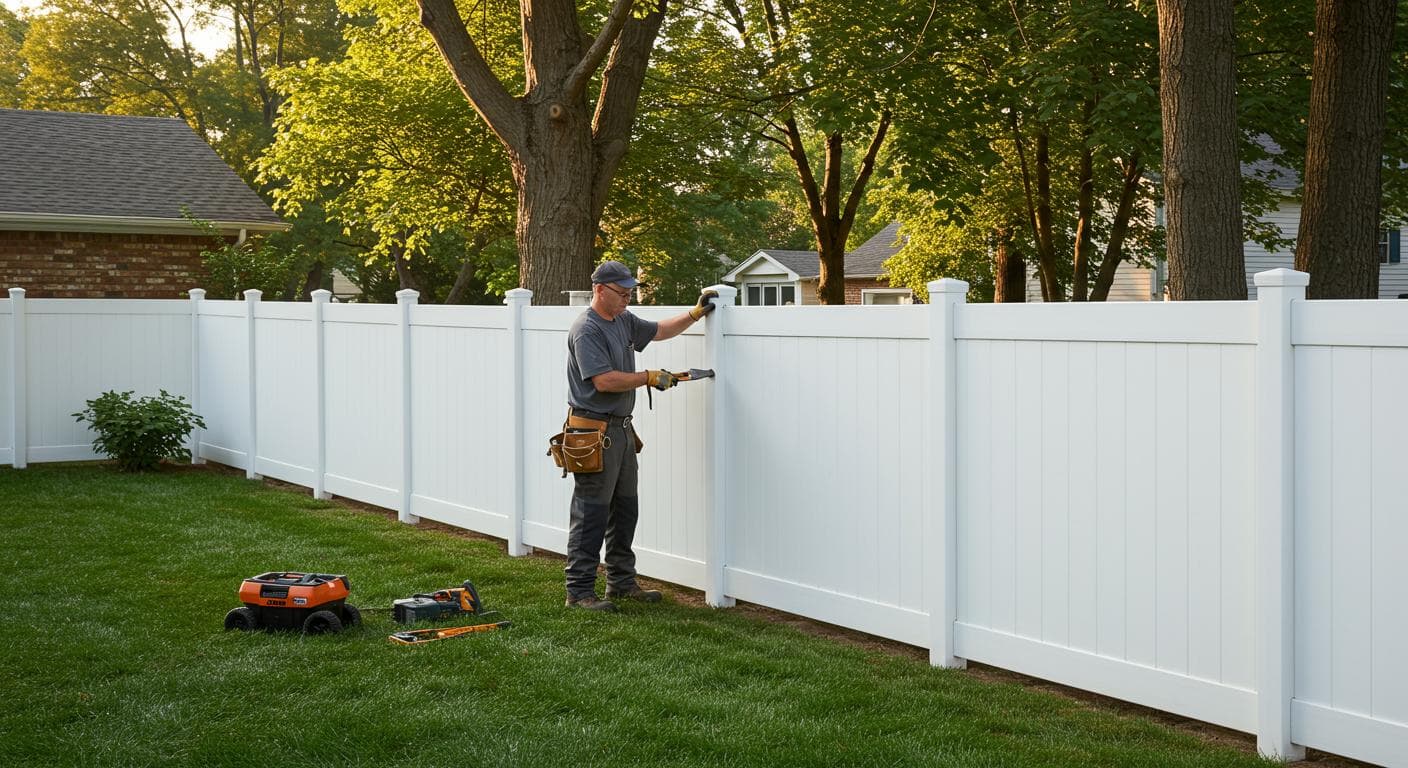
Fence Installation in Colorado Springs: Wind Decides It
A fence in Colorado Springs is a wind problem before it is a privacy problem. Downslope winds pour off the Front Range on clear cold days, and the lots nearest the foothills and up on the higher ground take the worst of them, where a gust can pass highway speed. Farther east across the city those same events land softer. Either way, a solid privacy panel is a sail bolted to the ground.
Three lines on the quote decide whether it is still standing in March: how deep the posts go, how far apart they are and how big the concrete footing is. Style is the fourth, because shadowbox, spaced picket and louvered panels let air through and survive where solid panels come down.
A Solid Privacy Panel Is a Sail
The wind that matters here does not arrive as a storm. It comes down off the Front Range on a clear cold day, and along the foothills and the higher west side of town it can gust past highway speed more than once in a winter. Down on the plains side of the city the same event lands gentler. How exposed your particular lot is should be the first thing a quote reacts to, and plenty of quotes never mention it.
Six feet of tight cedar with no gaps catches all of that and hands the load straight to the posts. The posts either hold or they lever out of the ground, and the moment one lets go the next one takes double. That is why fences here come down in long runs, not one panel at a time.
So the first real decision is not cedar against vinyl. It is whether the fence lets air through.
Shadowbox is where most people here land. Boards alternate from one side of the rail to the other and overlap, so you cannot see straight through from a normal angle, but air moves between them. You keep the privacy you actually stand in the yard for and you lose most of the sail. Spaced picket and louvered designs do the same job with a different look.
Drive your own block after a windy stretch and the pattern is sitting right there. The runs that went over are almost always solid panel on an exposed line, and the ones still square are the ones air can move through. It is the cheapest research you will do on this project.
Digging is where the money quietly goes. Ground here is rocky and decomposed granite chews through augers, so a post hole is genuinely slow and expensive, which is exactly why a crew squeezed on price stops short of the depth it quoted. Once the concrete is poured and the dirt is raked back over the top, no homeowner can tell how deep that hole went.
Shallow costs you twice. A post that does not clear frost depth heaves as the ground freezes and thaws, the footing works loose over a winter or two, and a loose post is the one the next downslope gust takes out. Heave and blowdown are the same shortcut showing up in two different months.
Post spacing is the other quiet number. Eight feet on center is the default because rails and panels are sold that way, not because it suits an exposed lot. On the run that faces the mountains, six feet on center puts a third more posts in the ground and changes how the whole line behaves in a gust.
Footing size finishes the job. A sound rule of thumb is a hole around three times the width of the post, with the concrete crowned above grade so water sheds instead of sitting against the wood. Ask for the depth and the diameter as numbers. If the answer is the word standard, you have not been told anything.
Gates, Hillside Lots and What the Snow Adds
Gates go first. A gate is the only hinged part of the fence, and one left unlatched in a gust becomes a lever that pulls the hinge screws out of the post. Gate posts should be visibly fatter and set deeper than the line posts, and a wide drive gate wants a post closer to what you would put under a deck.
Lots here are rarely flat, and a fence on a slope gets built one of two ways. Stepped means every panel sits level and the fence walks down the hill in squares, leaving triangular gaps along the bottom. Racked means the panel follows the grade and stays tight to the ground. Racked costs more, and it matters if you have a dog.
Snow is a wind problem as well. A solid fence catches drifting snow on its downwind side, and that drift then leans on the panel in the same direction the wind has been pushing all winter. A fence that passes air passes most of the drifting snow too, which is a second reason the open styles last longer here.
Sun at this elevation is harder on wood than people expect. Cedar dries, cups and checks, boards pull against their fasteners and the whole fence goes slightly loose. Loose is what the wind is looking for. A coat of stain every few years is not cosmetic here, it keeps the fence tight, and tight is strong.
That makes fasteners worth one question. Ring shank nails back out over years of seasonal movement in dry air. Structural screws stay put. Ask what the boards and rails are attached with, and ask whether the rails are screwed into the post or hung on brackets.
Vinyl gets oversold here, so here is the straight version. Vinyl panels sit in routed channels in the posts, and in a hard gust a panel can pop out of the channel or crack while it is cold. Vinyl works here, but it needs the same deep posts and tight spacing as wood, and a vinyl quote priced like a flat calm job is the wrong kind of cheap.
Chain link and ornamental steel pass wind almost completely, which is why they keep standing. Weave privacy slats into chain link, or add a solid top to an open fence, and you have quietly built a sail on posts that were never sized to hold one.
Two pieces of paper come before anyone puts an auger in the ground. If your subdivision has covenants, read the fence section first, because a covenant that demands a solid privacy panel is demanding a sail and the structure underneath has to carry it, and you want that written approval in hand. Then the city side: Colorado Springs requires a permit for a fence past a set height, and again for anything doing retaining wall duty. Have your installer confirm the trigger with the city and pull the permit in their own name, since the crew doing the work is the one who should be answering to the inspector.
Fence Installation Costs in Colorado Springs CO
Typical Colorado Springs ranges. Read them as a way to spot a number that is out of step, and let the crew who walks your lot set the real one.
Two things move that number more than the material you pick. The first is what is under the post line, because rock and decomposed granite turn a fifteen minute hole into an hour of work and every post on the run pays it. The second is how many posts there are: pull the spacing in from eight feet to six on the exposed side and you have added a third more holes, a third more concrete and a third more labor before a single board goes up. Two bids can sit a long way apart and both be honest for exactly those reasons, so ask what the extra buys before you call it padding.
Choosing a Fence Installer in Colorado Springs
Colorado does not license fence installers as a state trade, so the word licensed on the side of a truck proves very little. A current liability certificate does, and so does a crew that pulls the city permit when the height or a retaining wall calls for one.
Not the word standard. Ask straight out whether that depth clears frost depth for this part of Colorado, and get the answer on the page you sign.
Eight feet apart is the default because panels come that way. On the run facing the mountains, six feet on center is the upgrade worth paying for.
A drive gate swings real weight and a gust turns it into a lever. If the same post goes in everywhere, the gate is the part that fails first.
Common Questions About Fence Installation in Colorado Springs CO
Will a solid privacy fence survive the wind here?
It can, but only if it was built for it. That means posts set well below frost depth, six feet on center instead of eight on the exposed runs and a bigger concrete footing under every one of them. All of that costs more than the same fence would on a flat calm lot.
The cheaper route to the same result is shadowbox or louvered. You keep the privacy, the wind goes through instead of pushing, and you are not paying to over build a sail.
Why does digging cost extra in Colorado Springs?
Rock and decomposed granite. An auger that walks through soil elsewhere stalls here, and a post hole can turn into a jackhammer job nobody could see coming from the driveway. Honest crews price that as a per post adder.
A quote that never mentions rock is the one to ask about. Either the adder is coming later, or the plan is to stop digging when the ground gets hard.
The wind took my fence down. Do I replace all of it or just the posts that failed?
Look at what came out of the ground. If the post snapped off at grade the footing did its job. If the post lifted out with a small plug of concrete still stuck to the bottom, the footing was undersized, and every other post on that line was set the same way.
That concrete plug is the most useful thing in your yard right now. Measure it, photograph it and show it to whoever quotes the repair.
Do you build the fence yourselves?
No. Contractor Palace matches you with independent local Colorado Springs fence crews, and the pro you book is the one who digs the holes and hangs the panels. You pay them for the fence and you pay us nothing for the introduction.
Fencing a lot in Colorado Springs? We will find the crew.
Tell us how long the run is, whether it faces the mountains and how much privacy you want. We match you with an independent local Colorado Springs fence installer who puts post depth, spacing and footing size in writing. The matching side is on us. The only bill you ever see comes from the crew that builds the fence.
Get my free Colorado Springs fence installation quotearrow_forward