
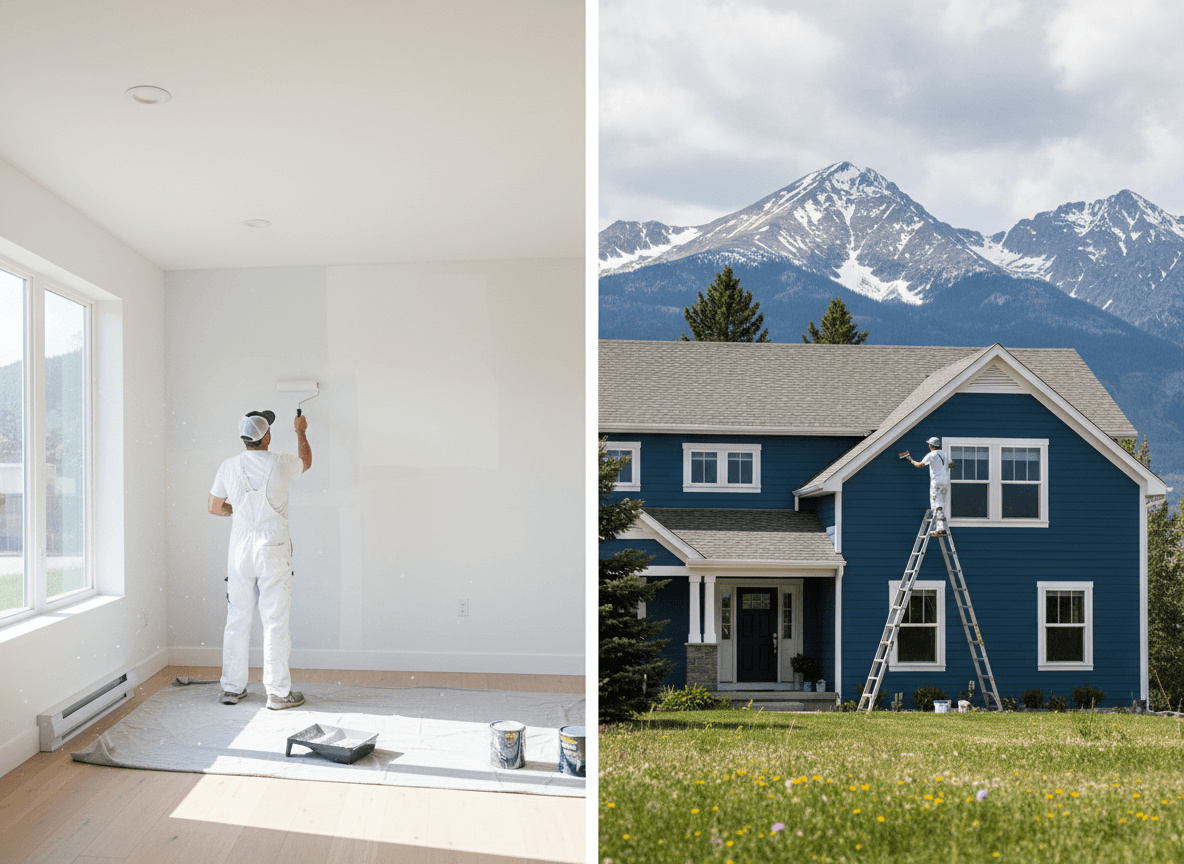
Colorado is one of the toughest climates in the country for exterior paint. More than 300 sunny days a year sounds great until you realize that UV radiation at 5,280 feet is about 25 percent more intense than at sea level.
Add freeze-thaw cycles, low humidity and big temperature swings between day and night, and you have conditions that age exterior paint faster than most homeowners expect. Interior painting in Colorado is a different story. This guide covers both.
Interior Painting in Colorado: The Good News
Colorado is actually one of the best states in the country for interior painting. The dry climate means paint dries fast, adhesion is strong and you rarely deal with humidity-related bubbling or peeling.
Most two-coat interior jobs can be completed in a single day in Colorado, whereas the same job in a humid state like Florida or Ohio might require more drying time between coats. That is good news for scheduling and cost.
Year-round scheduling
Colorado interior painting can happen any time of year. There is no season where humidity or temperature makes it impractical. Winter and early spring are often the easiest times to book painters because demand for exterior work drops.
Fast dry times
At typical Front Range humidity levels (20 to 40 percent), latex paint can be touch-dry in under an hour. Recoat times are often shorter than the label suggests, which is why experienced Colorado painters can move faster than you might expect.
Flat sheen is forgiving
Colorado homes often run with drier air year-round. Flat and matte paints, which show fewer lap marks and brush lines, hold up well in interior spaces without the moisture issues you'd see in wetter climates.
Exterior Painting in Colorado: The Real Challenge
South and west-facing walls take the full force of Colorado sun. On a typical Denver home, those surfaces can absorb enough heat on a sunny winter day to cause paint to expand and contract significantly before nighttime drops the temperature back below freezing.
Repeated thermal cycling breaks down the paint film. Cheaper paints fail in two to three years on south-facing Colorado walls. A quality 100 percent acrylic latex, applied correctly in the right season, should last seven to ten years.
UV at altitude
Colorado receives about 25 percent more UV radiation than coastal states at sea level. UV breaks down the binders in paint that hold the pigment and protect the substrate. A paint rated for 10 years in Minnesota may last 6 to 7 years on a south-facing Colorado wall.
Freeze-thaw stress
Denver averages around 170 days per year with a freeze-thaw cycle. Any moisture that gets behind paint through a crack or gap will expand when it freezes and push the paint off the surface from the inside.
Hail impact
Colorado is one of the most hail-prone states in the US. Hail dents and chips exterior paint and can drive moisture into wood siding. If you are painting after hail, the underlying surface condition matters as much as the paint choice.
Low humidity peeling
Paradoxically, very dry conditions can cause paint to dry too fast on a hot surface, which leads to poor adhesion and early peeling. Painting in direct sun on a 90-degree day is a setup for a poor result even with good materials.
Best Exterior Paints for Colorado Homes
Not all paints are the same in Colorado conditions. Here is what to ask your painter about when evaluating a quote:
100% acrylic latex formulation (not vinyl acrylic, not oil-based for exterior siding)
Minimum 50 LRV (light reflectance value) on south and west-facing walls to reduce heat absorption
Mildew-resistant formula for north-facing walls and areas under overhangs where moisture lingers
Self-priming paints require a separate primer coat on bare wood and patched surfaces
Two coats minimum on any repaint, three on bare or heavily faded surfaces
On Dark Colors in Colorado
Deep exterior colors absorb more heat, which accelerates thermal cycling and paint breakdown. A navy or charcoal house in Colorado may need repainting a year or two sooner than the same house in a lighter shade. If you want a dark color, ask your painter to use a product specifically formulated for high-temperature applications and consider the south and west wall exposure when making the call.
When to Paint Exterior in Colorado
The exterior painting season in Colorado runs from roughly May through September. Paint should not be applied below 50 degrees Fahrenheit, and most latex products need overnight temperatures above 35 degrees to cure properly.
That rules out early spring and late fall in most Front Range locations. It also rules out early morning painting on cold days even in summer, since surfaces take time to warm up after cold nights.
What Painting Costs in Colorado
Painting costs depend on square footage, number of stories, surface condition and paint quality. These are typical Denver and Front Range ranges for 2026.
Denver metro estimates. Prices vary by surface condition and paint grade selected.
Painting Services
Ready to book a painter? Find an independent local pro through Contractor Palace:
Contractor Palace
Get matched with a local Colorado painter, free.
Post your painting job and get matched with an independent local pro on the Front Range.