
What Is Durham NC Roofing: Durham County Context and NC Licensing Rules
Durham is one of the fastest-growing cities in North Carolina, home to Duke University Medical Center and positioned at the heart of Research Triangle Park, the largest research park in the United States. The Durham roofing market serves a high-income homeowner base that expects quality materials and licensed professional work on every project. Durham County properties range from century-old bungalows near downtown to new construction in suburban neighborhoods like Southpoint and Briar Chapel, and each roofing segment presents its own material compatibility and code compliance challenges for roofing contractors operating in the market.
North Carolina requires all roofing contractors to hold a state-issued license, which makes the NC licensing credential a genuinely meaningful threshold that separates qualified professionals from unlicensed operators. The NC Licensing Board for General Contractors issues a Class I Unlimited license for contractors who can take any size residential or commercial roofing project, and a Class II Limited license for contractors capped at smaller project values. Any person performing roofing work in Durham County without a valid NC license is operating illegally, not just informally. Durham homeowners should verify the NC license number of any roofing contractor they consider hiring and confirm it is active on the NC Licensing Board website before signing a contract. The state license also requires bonding and insurance documentation at the time of licensure, which provides an additional layer of consumer protection beyond what many other states require.
Beyond the NC state license, Durham County and the City of Durham require a building permit for roofing replacement and major repair work. The permit process is not a formality: inspections at the decking and underlayment stage catch hidden rot, inadequate fastening and improper flashing before those deficiencies are covered by the finished shingle surface. A roofing contractor operating in Durham who discourages permit pulling is asking you to accept legal and warranty risk they prefer not to manage. Contractor Palace pre-verifies NC license status, general liability insurance and workers compensation coverage for every Durham County roofer in our network.
NC State Roofing License: Why It Matters More Than You Think
North Carolina requires a state contractor license to perform roofing work legally. The Class I Unlimited or Class II Limited license issued by the NC Licensing Board requires bonding and insurance documentation at licensure. Unlike Indiana or many other states, an unlicensed roofer in Durham County is not just uncredentialed, they are operating in violation of state law. Verify the NC license number on the NC Licensing Board website before signing any roofing contract in Durham.
Durham NC Climate and Your Roof: Heat, Humidity, Algae and Hurricane Remnants
Durham sits in a hot humid subtropical climate zone that creates roofing challenges distinctly different from the Midwest or Northeast markets. Summer in the Piedmont arrives with sustained heat above 90 degrees Fahrenheit and relative humidity that rarely drops below 60 percent even at night. This combination of high UV radiation and persistent moisture creates a degradation environment that shortens the effective service life of standard asphalt shingles faster than most roofing material warranties account for. Shingle manufacturers rate their products under median temperature and UV assumptions. Durham's summer heat load accelerates the oxidation of asphalt oils in the shingle mat, making the surface brittle and granule-shedding years ahead of the nominal warranty schedule. A 30-year architectural shingle in Durham under full summer sun exposure often reaches functional end of life in 20 to 22 years.
Algae and moss growth is a major and underappreciated roofing problem across the North Carolina Piedmont. Durham's humidity creates ideal growth conditions for Gloeocapsa magma, the black-staining algae that appears as dark streaks running down the shingle surface from ridge to eave. These streaks are more than cosmetic: algae growth feeds on the limestone filler in asphalt shingles and accelerates surface degradation. On north-facing and shaded slopes, true moss growth follows the algae colonization and creates a thick mat that traps moisture against the shingle surface and lifts shingle edges, opening pathways for water infiltration. Durham homeowners in wooded neighborhoods near Eno River or Duke Forest see this problem most severely. Copper granule shingles, which leach trace copper ions that inhibit algae colonization, are the preferred material upgrade for Durham properties with algae history. Zinc strips installed at the ridge provide a lower-cost alternative for existing roofs.
The most acute weather threat to Durham roofs comes from Atlantic hurricane and tropical storm remnants that track inland through the Piedmont corridor after making landfall on the NC coast. Hurricanes Floyd, Fran, Matthew, Dorian and Ida all delivered significant wind and rain events to Durham County as they weakened inland. These systems produce sustained winds of 50 to 80 mph with gusts above that range, which exceeds the wind resistance rating of standard architectural shingles when installation fastening patterns are not followed correctly. Durham County is also within reach of spring supercell storms that track northeast through the Piedmont, bringing tornado risk and large hail events in March through June. A roofing contractor who specifies only the minimum fastening pattern on a Durham roof is delivering a product calibrated for average conditions, not the above-average wind events that coastal storm remnants regularly produce in this market.
Types of Roofing for Durham NC Homes and Commercial Properties
Algae-resistant architectural asphalt shingles
Algae-resistant shingles with copper granule technology are the standard baseline recommendation for Durham NC residential roofing. Standard architectural dimensional shingles perform adequately in dry climates, but Durham's persistent humidity makes algae colonization a near-certainty on any shingle surface without copper inhibitor. GAF Timberline HDZ and CertainTeed Landmark both offer algae-resistant variants that carry a 10-year algae warranty and a 30-year total warranty. For Durham County homeowners replacing a roof that has experienced algae staining, upgrading to the copper granule product is the correct specification, not an optional add-on.
Class 4 impact-resistant shingles
Class 4 impact-resistant shingles carrying UL 2218 certification are the correct upgrade for Durham homeowners concerned about spring hail and tornado-adjacent storm events in the Piedmont corridor. These products withstand simulated two-inch hail impact at terminal velocity, the most demanding standard in the residential shingle market. North Carolina homeowner insurance carriers increasingly recognize Class 4 certification for premium discount programs. Confirm with your NC carrier before signing a roofing contract, as the discount can offset $1,500 to $3,000 of the upgrade cost on an average Durham home.
Metal roofing, standing seam
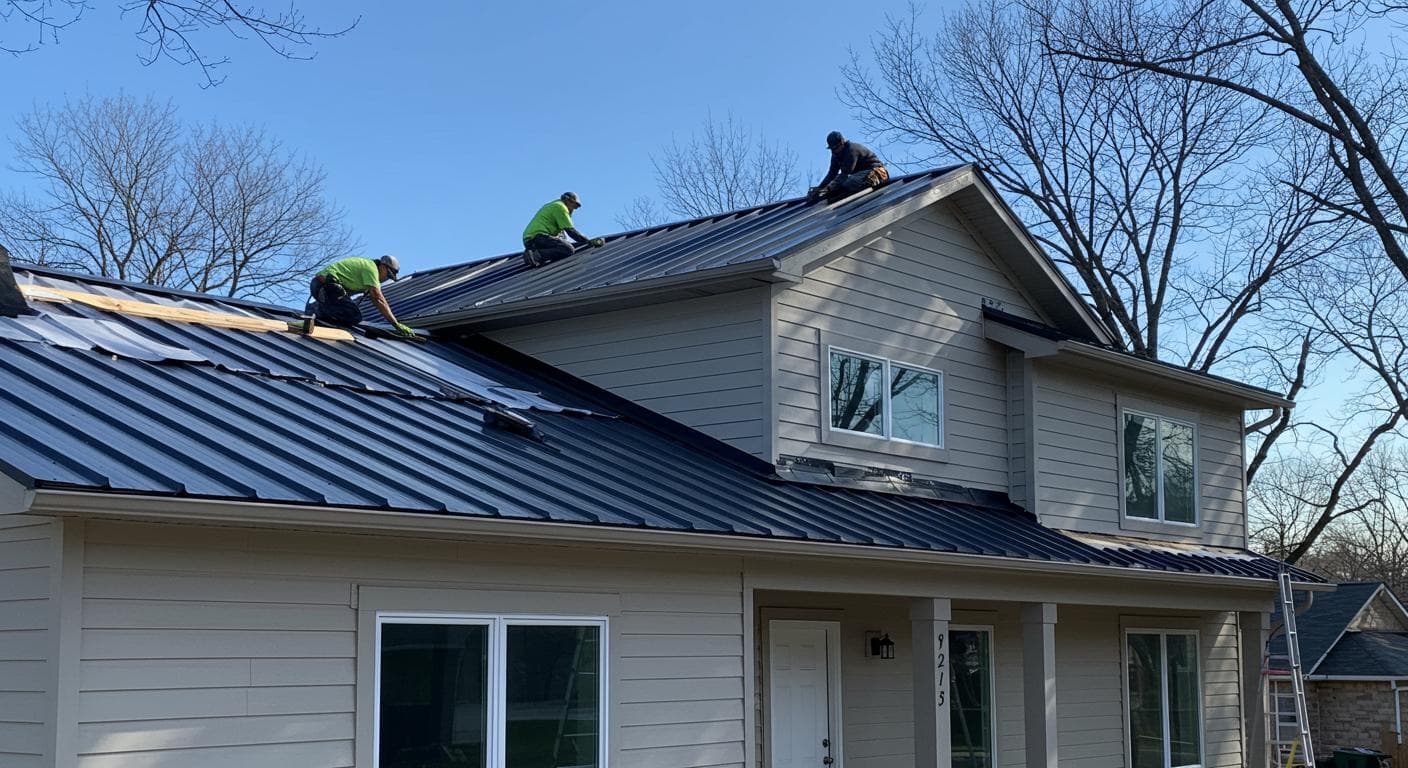
Standing seam metal roofing is the highest-performing system for Durham NC homes that face recurring hurricane wind events and the accelerated UV degradation of the Piedmont summer climate. Metal carries inherent Class 4 impact resistance, reflects solar heat rather than absorbing it, and delivers a service life of 40 to 70 years that eliminates the replacement cycles that a humid subtropical climate forces on asphalt shingles. Standing seam panels interlock at concealed clips without exposed fasteners, which removes the primary wind uplift failure point. Durham homeowners in Research Triangle Park-area neighborhoods and newer construction zones are increasingly choosing metal for its combined performance and longevity profile.
TPO flat membrane for commercial roofing
Thermoplastic polyolefin membrane is the standard flat and low-slope roofing product for Durham NC commercial buildings, medical office facilities, retail properties and homes with flat-roof additions. TPO resists UV degradation better than EPDM rubber on Durham's high-sun-angle Piedmont exposures, is heat-welded at seams for a continuous waterproof barrier and handles rooftop mechanical equipment curb penetrations cleanly. Durham's strong commercial and medical real estate base generates consistent demand for TPO installation, replacement and repair.
Copper granule and zinc-treated shingles
Copper granule shingles are specifically designed for markets like Durham where algae and moss growth are persistent problems. The copper ions that leach from the granule surface in rainfall inhibit Gloeocapsa magma colonization and moss germination, extending the clean surface appearance and functional service life of the roofing system. For Durham homeowners replacing a heavily stained roof or living in wooded neighborhoods near Eno River, Jordan Lake or Duke Forest, copper granule shingles are not a cosmetic upgrade, they are the technically correct product choice for the climate.
How to Choose a Roofing Contractor in Durham NC
Verify the NC state roofing license
North Carolina requires a state contractor license for legal roofing work. Ask every Durham NC roofing contractor for their NC license number and confirm it is active on the NC Licensing Board for General Contractors website before signing any contract. A Class I Unlimited license has no project-size ceiling. A Class II Limited license caps the contractor at smaller project values. An unlicensed roofer in Durham County is not just uncredentialed, they are in violation of state law. If a roofer says NC does not require licensing for roofing, they are wrong and you should end the conversation.
Confirm Durham County building permit will be pulled
Durham County and the City of Durham require a building permit for roofing replacements. The permit triggers an inspection at the decking and underlayment stage before the finished surface is applied. That inspection catches hidden rot, inadequate fastening and improper valley flashing before those deficiencies are covered by shingles. A Durham roofing contractor who skips the permit process is bypassing the inspection backstop that protects your warranty, your homeowner insurance coverage and your home's resale disclosure obligations.
Specify algae-resistant shingles for Durham's climate
Any knowledgeable Durham NC roofing contractor should recommend algae-resistant shingles with copper granule technology as the baseline product for this market without being asked. If a contractor quotes standard architectural shingles without discussing the algae-resistance option, ask specifically why copper granule shingles are not appropriate for your Durham County property. Given Durham's humidity and tree canopy, the upgrade is not cosmetic, it is the technically correct product for the climate.
Watch for out-of-state contractors after hurricane events
Durham County attracts out-of-area roofing contractors following significant hurricane and tropical storm wind events. Some are legitimate businesses expanding temporarily. Others have no permanent NC presence, no NC state license and no warranty fulfillment capability after they leave. Following a major storm event, verify that any contractor you consider maintains a permanent Durham County business address, holds an active NC license number and can provide references from Durham projects completed before the storm that brought them to the area.
How Contractor Palace Matches You with a Durham Roofer
Contractor Palace connects Durham NC homeowners with verified roofing contractors through a structured matching process that removes the guesswork from hiring. You describe your roofing project or storm damage through our booking form. Our platform matches you with a verified Durham roofing contractor from our screened Durham County network based on your location, the type of work required and contractor availability. Your matched roofer contacts you directly to schedule the inspection and provide a written estimate.
Step 1: Describe your project
Tell us whether you have hurricane wind damage, storm damage, an aging roof approaching end of life, an algae or moss problem, a leak repair or a commercial flat roof situation. The more detail you provide about your Durham County property, the more precisely we can match you with the right licensed roofing contractor for your specific situation and budget.
Step 2: Get matched with a verified roofer
Our platform assigns you a Durham NC roofing contractor from our verified network. All matched contractors have passed credential verification including NC state license confirmation, insurance verification, local project history review and customer feedback screening. No contractor information is visible to you until your job details are confirmed, ensuring our network roofers work only with committed homeowners.
Step 3: Inspect, document and book
Your matched Durham roofer schedules an on-site inspection, documents all damage or replacement conditions with photographs and a written scope and provides a firm estimate. For hurricane and storm damage situations, the contractor can be present during the insurance adjuster inspection to advocate for the full replacement scope when the documentation supports your insurance claim.
Roofing Costs in Durham NC: What to Budget for a Durham County Project
Durham roofing costs reflect North Carolina Piedmont labor market rates and the material specifications that Durham County's humid subtropical climate demands. Algae-resistant shingles, synthetic underlayment and proper high-wind fastening patterns calibrated for hurricane remnant events are standard inclusions in a correctly specified Durham roofing project, not optional upgrades. Homeowners who receive quotes significantly below the ranges below should ask specifically what shingle product is being installed and whether a Durham County building permit is included in the scope.
Frequently Asked Questions
Does North Carolina require a roofing license for Durham contractors?
Yes. North Carolina requires a state contractor license to perform roofing work legally. The NC Licensing Board for General Contractors issues a Class I Unlimited license with no project-size ceiling and a Class II Limited license for smaller project scopes. An unlicensed roofer operating in Durham County is not just uncredentialed, they are in violation of state law. You can verify any NC license number on the NC Licensing Board website. Confirm the license is active and in the correct class for your project before signing any roofing contract in Durham.
Why is algae such a problem on Durham NC roofs?
Durham's hot humid subtropical climate creates ideal conditions for Gloeocapsa magma, the black-staining algae that produces dark streaks on shingle surfaces. The algae feeds on the limestone filler in standard asphalt shingles and accelerates surface degradation over time. In Durham County's wooded neighborhoods near Eno River and Duke Forest, north-facing and shaded slopes see true moss growth following algae colonization. Copper granule shingles, which leach trace copper ions inhibiting algae growth, are the correct product specification for Durham properties with algae history. Zinc strips at the ridge provide a lower-cost retrofit solution for existing roofs.
How does hurricane damage affect Durham NC roofs?
Durham County receives significant wind and rain events from Atlantic hurricane and tropical storm remnants that weaken as they track inland through the Piedmont. Hurricanes Dorian, Matthew, Floyd and Ida all delivered 50 to 80 mph wind events to the Durham area. These winds exceed the rated wind resistance of standard architectural shingles when they are not fastened with an enhanced pattern. Damage is often invisible from street level: shingles that appear intact may have broken seals and lifted edges that allow wind-driven rain infiltration. Following any named storm event, have a licensed Durham County roofing contractor perform a documented inspection before submitting an insurance claim, as proper documentation is the foundation of a successful storm damage insurance claim.
Are Class 4 impact-resistant shingles worth it in Durham NC?
For many Durham homeowners, Class 4 shingles are a sound investment. The Piedmont spring storm season brings tornado-adjacent supercell storms with hail risk, and hurricane remnants deliver the wind events that Class 4 products are engineered to resist. North Carolina homeowner insurance carriers increasingly recognize UL 2218 Class 4 certification for premium discount programs. Check with your NC carrier before signing the roofing contract, as the discount can offset a meaningful portion of the upgrade cost. Ask your Durham roofing contractor to specify the exact product by manufacturer and model number and confirm UL 2218 Class 4 certification before committing.
How much does a roof replacement cost in Durham NC?
A standard algae-resistant architectural asphalt shingle roof replacement for a typical Durham NC home runs $9,500 to $20,000 including materials, labor, synthetic underlayment, a Durham County building permit and disposal. The range reflects the significant variation in home size and complexity across Durham County. Upgrading to Class 4 impact-resistant shingles typically adds $2,500 to $4,000. Standing seam metal roofing runs $16,000 to $32,000 and is the strongest long-term choice for Durham's UV and hurricane wind exposure. Flat TPO membrane replacement for a commercial property or low-slope home addition runs $6,500 to $15,000 depending on size and existing deck condition.
Need a roofing contractor in Durham NC? Get matched free.
Describe your roofing project or storm damage. We match you with a verified licensed Durham County roofer who handles the NC permit process, documents hurricane wind and storm damage for your insurance claim and knows Piedmont climate roofing inside out.
Get my free Durham roofing quotearrow_forward