
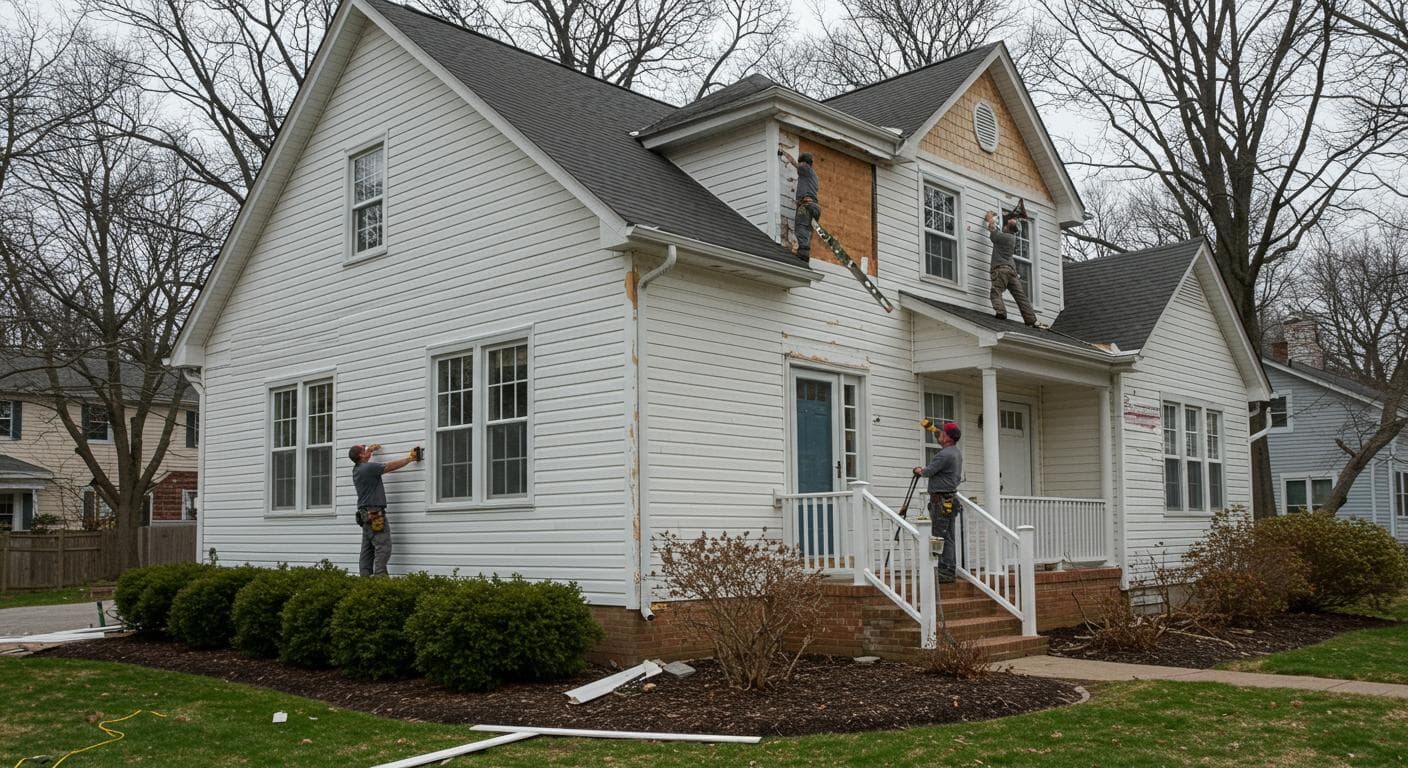
Siding in Colorado Springs: Hail Hits the Walls Too
Colorado Springs sits in one of the worst hail corridors in the country, and that one fact decides most siding work here. Stones come in on the wind at an angle instead of dropping straight down, so they hit walls as well as the roof. The damage lands hardest on whichever elevation the storm came from.
That is also the elevation nobody checks.
You can settle the first half of that yourself in about five minutes. Walk to the corner of the wall the storm came at, drop your eye down close to the plane of the siding and sight along the length of it. Chips on the bottom lip of each course and shallow dents in the flat of a panel jump out in that angled light and vanish the second you step back and face the wall square on.
Hail Comes In Sideways and the Walls Take It
Hail does not fall politely straight down here. It comes in on the leading edge of a storm with wind behind it, so it strikes the walls at an angle at the same time it strikes the roof.
Damage therefore concentrates on one or two elevations, the ones facing the direction the storm came from. The other walls can look untouched, and usually are.
That is exactly where the money gets lost. Nobody walks the wall that actually took the hits.
Siding damage is also quieter than roof damage. A punched hole in vinyl can be the size of a dime and sit two courses above eye level. Cracks run along the panel and disappear the moment you look at the wall straight on.
Check the soft metal before you check the siding. Gutters, downspouts, window and door wraps, metal vent hoods and the fins on the outdoor air conditioning unit all dent before vinyl cracks. Dents there mean the stones were big enough to matter and the wall has earned a proper inspection.
There is a second reason to get the storm side scoped properly. Hail that cracks a panel also gives water a way past it, and what sits behind siding is house wrap and sheathing. A hairline crack you shrug at in September is a damp wall cavity by spring, and at that point it is a bigger repair.
If you take one thing from this page, take the question. Which direction did that storm come from, and has anybody actually looked at that wall.
Impact Rating, Fade Warranties and Who Is Still Here in Three Years
Ask for the elevations to be included in the scope while the ladder is still on the truck.
On materials it comes down to four choices. Vinyl is the cheapest and the most likely to crack or punch through, and it gets more brittle as the temperature drops. Aluminum does not crack. It dents instead, and the dent stays. Fiber cement and steel take impact better than either.
The trade off is cost and how the product is fastened. Fiber cement is heavier and slower to hang. Steel costs more up front, and both push a whole house job well past a vinyl number.
Fastening matters more on vinyl than people expect. It is built to hang loose and move as the temperature changes, and this city can swing a long way between morning and evening. A crew that nails it tight leaves you with waves down the wall by the following summer, and that is a workmanship problem, not a product fault. It is also the sort of thing you can see for yourself from the street on a sunny afternoon, so it is worth walking past a job the crew finished last year before you hire them.
Sun is the second thing this altitude does to a wall. UV is more intense up here and color fades faster than the sample board suggests, most obviously on deep reds, dark browns and anything near black.
So read the fade warranty instead of the headline number on the front of the brochure. What counts as fade, how long the cover really runs, whether it reduces year by year and whether labor is included are four separate questions, and the answers are usually less generous than the number implies. It matters most if you are replacing a whole house in a dark color, because that is where the difference between the brochure and the wall shows up first.
Last thing. After a serious hail event, crews arrive here in force, some of them good and some of them working the season. A long warranty from a company with no local address is worth roughly the paper it is printed on. Ask for an address in the Pikes Peak region you could drive to and check the name on the quote matches the name on the contract. Ask who is pulling the permit too, because permits here run through Pikes Peak Regional Building, which covers Colorado Springs and El Paso County, and a crew that works this city every week will not have to look that up.
Siding Costs in Colorado Springs CO
These are the ranges quotes around Colorado Springs tend to land in. They are here so you can read the number on your own quote with some idea of where it sits, not so you can hand a contractor a price.
Two things move that number more than anything else on this job in this city. The first is how many elevations end up in the scope. Storm work prices wall by wall, so a whole house figure after hail that only hit the south side deserves a question before it deserves a signature. The second is matching the color of what is already up there. Siding that has been baking at six thousand feet for ten years has lost some of its shade, so a repair in the original color can still read as a patch, and the two ways out are pulling panels from a hidden elevation to blend the visible wall or doing the whole elevation in one go, which is a different price altogether.
Choosing a Siding Contractor in Colorado Springs
Knowing roughly when the hail came through and which side of the house it came at tells you which elevation somebody's ladder should be leaning against, and it keeps the visit from becoming a roof visit by default.
Gutters, downspouts, window wraps and the air conditioner fins dent before siding cracks. Dents there mean the stones were big enough to have hurt the walls, and they are the easiest evidence to photograph before anyone arrives.
If the whole visit happens on a ladder, the walls never got looked at, and the walls are the half of the damage that gets missed. You can see that happen from where you are standing.
Premium siding is not a specification. The product, its impact rating and the fade warranty terms should be written on the page you were handed, along with a local address and a straight answer on who pulls the permit if the scope needs one.
Common Questions About Siding in Colorado Springs CO
The hail hit my roof. Does the siding need looking at as well?
Yes, and the elevation facing the storm is the one to look at. Wind driven stones hit walls at an angle, so siding damage concentrates on one or two sides while the rest of the house looks fine.
Ask for the walls to be inspected during the same visit as the roof.
Which siding actually stands up to hail here?
Fiber cement and steel handle impact better than the alternatives. Vinyl is the cheapest and the most likely to crack or punch through, and aluminum survives without cracking but keeps every dent.
Price and fastening are the trade off. Also read the fade warranty before you sign, because UV at this altitude takes the color out of dark shades faster than most people expect.
A crew knocked on the door after the storm. Should I use them?
Be careful. Big hail events pull crews into Colorado Springs from out of state, and a warranty only means something if the company is still reachable when you need it.
Ask for a local address you could drive to. Check that the business on the quote is the same one on the contract you sign, then ask how they handle the permit if the job calls for one.
Do you do the siding work yourselves?
No. Contractor Palace matches you with independent local Colorado Springs siding crews, and the pro you book handles the job from inspection through to the final panel. The match itself is not billed to you.
Need a siding contractor in Colorado Springs? The match is on us.
Tell us what the last storm did and which way it came from. We line you up with a Colorado Springs siding contractor who checks every elevation, not only the one facing the street. Nothing is billed to you for the introduction and asking commits you to nothing.
Get my free Colorado Springs siding quotearrow_forward