
Pressure Washing in Colorado Springs: The Staining Here Is Mineral
Most of what discolors a Colorado Springs house came off the ground, not out of the air. The red band along the bottom of the walls is ground up rock, Fountain Formation arkose and decomposed granite grit off the foothills, thrown up by rain and by sprinklers. Add the chalky hard water streaks under the hose bibs and the road sand pressed into the concrete over winter, and you have three deposits that a bigger machine does nothing to.
Soft washing is what moves them. Low pressure, a cleaning solution matched to the surface and enough dwell time for the chemistry to break the deposit down before the rinse. On stucco and on sun dried cedar it is also the only approach that gets the surface clean without leaving a permanent mark on it.
Granite Grit and Hard Water Do Not Rinse Off
The bottom two feet of a house here often carries a rust colored band, and the material in it is not clay. It is Fountain Formation arkose, the red rock Garden of the Gods is cut from, mixed with decomposed granite grit weathered off the range above town. Rain and sprinkler spray throw it at the wall and it settles into the pores of the surface.
The height of that band is worth reading before anybody quotes you. An even line all the way around the house is plain splash, and how high it sits tells you how hard the water is landing. One elevation running noticeably higher means something above it is shedding water onto that spot, usually a downspout outlet or a sprinkler head aimed at the siding.
Pressure throws water at that deposit. It does not dissolve it. The crew with the bigger machine ends up parked in one place, driving water into the wall, and the band is still faintly there once everything dries.
The pale chalky streaks work the same way. They run down from hose bibs, from downspout outlets and from anywhere overspray keeps hitting the house, and they are hard water minerals left sitting on the surface after the water evaporated. Breaking that deposit apart is a chemical job, not a mechanical one.
Winter adds the third mark. This city puts a lot of sand and traction grit on the roads between November and March, and by April it is worked into the driveway and the front walk with a season of high altitude sun baking on top of it.
All three answer to the same method. Low pressure, the correct solution for that surface and enough dwell time for it to work before anything gets rinsed off. Dwell time is the line nobody writes into a quote and the one that decides your result. Spray and rinse in a single motion and the wall gets wet, nothing more.
So ask what goes on the surface and how long it stays there. Somebody who lifts mineral staining for a living answers that in one sentence and does not get vague about it.
There is organic growth here too, on the shaded north wall, under a big spruce, along the run of fence that never sees sun. It is real, and it is a smaller slice of the problem than it would be in a wetter state. A pitch built entirely around mold and algae is describing somebody else's climate.
The Surfaces That High Pressure Quietly Destroys
Stucco covers a great deal of the newer building around Colorado Springs, and it is the surface that punishes high pressure hardest. The finish coat is thin, and a tight nozzle held too close chips it off in a pattern you can read from the street for years afterward. The worse problem sits behind it. Stucco is built to shed water off the face, never to take water pushed at a seam or a control joint, and what gets driven in behind a wall does not come back out the day it went in.
On stucco the whole job is chemistry and a gentle rinse. If a crew turns up and the answer to every surface on your house is a big machine and a narrow tip, that is the wrong crew for this house.
Cedar and redwood fences carry a second problem. Between the altitude, the sun and the dry air, the wood here is open and thirsty years before the fence looks old, and the soft summer growth in the grain has nothing holding it in. Run a thumbnail down a board with the grain. If it lifts a whisker of fiber under almost no force, a narrow tip at full pressure is going to take that surface apart.
A high pressure pass tears the grain straight out. You get a furry board with visible wand stripes down every one of them, and stain afterward does not hide any of it. The fence ends up looking worse cleaned than it did dirty. Deck boards behave exactly the same way, which is what makes this the most common piece of self inflicted damage a homeowner does with a rented machine on a Saturday morning.
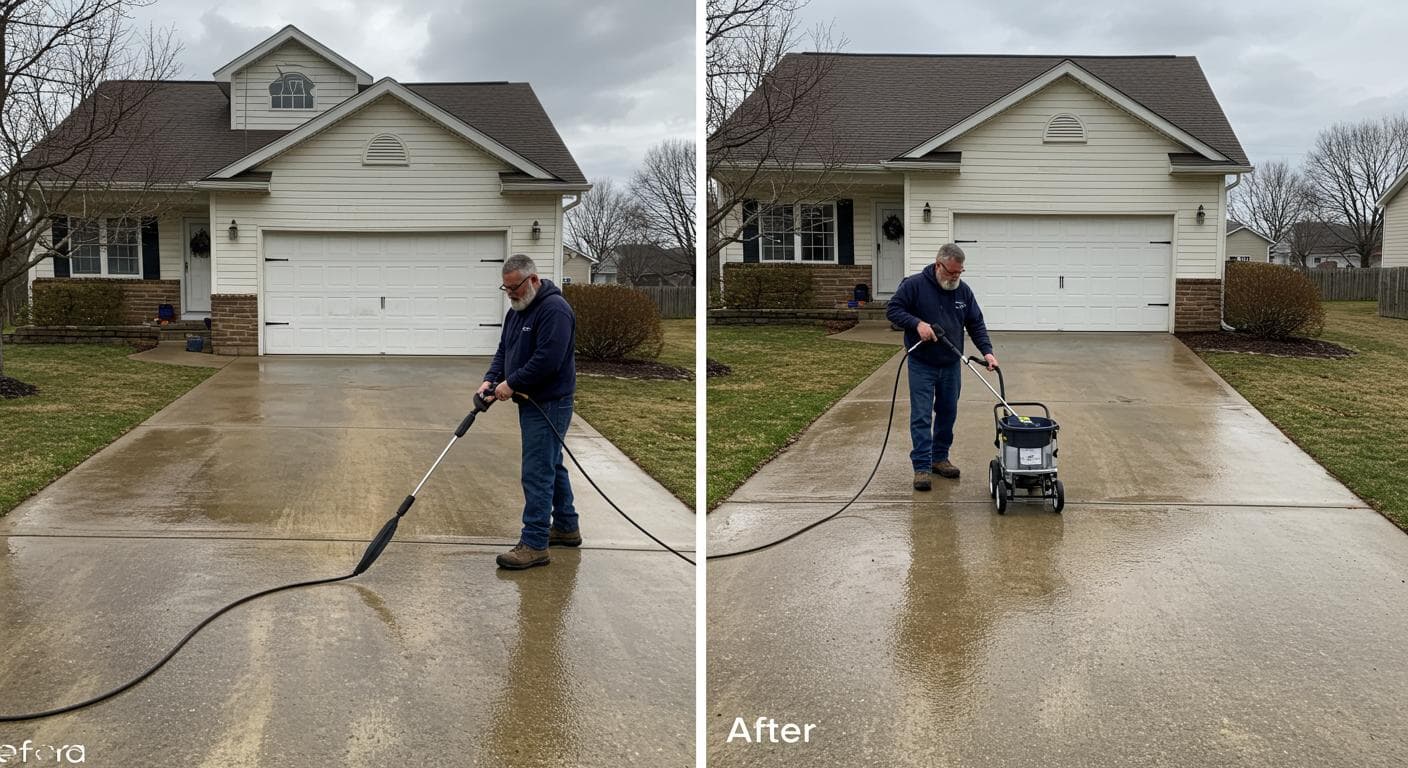
Concrete is the one place real pressure belongs, and even there a flat surface cleaner beats a wand. A wand leaves arcs across a driveway. They show up the first time the slab dries out, and once those stripes are in the concrete they stay.
Where the rinse water ends up
Storm drains do not run to a treatment plant. A crew that lets a driveway full of degreaser sheet straight into the gutter has made it somebody else's problem, so ask how they contain and direct the runoff before they start.
It is also your tap they are working from, and water restrictions can apply here. Somebody working efficiently, with the right solution and one controlled rinse, gets through a fraction of what somebody uses trying to beat a mineral stain off a wall for an hour.
Season matters as well, and the window is shorter at this elevation than people expect. Cleaning solutions need a temperature to work at, rinse water sitting on a north wall in late fall can freeze before it drains, and a hard overnight freeze on a wall somebody soaked that afternoon is a bad combination. Spring through early fall is the sensible window, and a local crew will tell you that instead of booking you in November.
None of it comes back to the size of the machine on the trailer. What you are actually hiring is a judgment about which solution belongs on your particular surface and how long it should sit there before the rinse.
Pressure Washing Costs in Colorado Springs CO
These are the ranges Colorado Springs quotes tend to land in. Useful for telling a fair number from a strange one, and no substitute for somebody standing at your wall. A heavy grit band and long hard water runs usually push a house wash toward the top of its range, because the solution has to go on more than once and every pass needs its dwell time before the rinse.
Choosing a Pressure Washing Pro in Colorado Springs
Mineral staining comes off with chemistry. If the whole answer is a pressure number, they are selling you a machine and not a result.
Ask them to do the lap with you. Stucco, siding and dried out cedar each take a different approach, and a price called out from the driveway without touching the house is a script.
Granite grit splash, hard water streaks and shaded organic growth are three different jobs. A pro tells them apart on sight and says which one you have.
Colorado does not license pressure washing crews as a trade, so the certificate is the real check. Water forced behind stucco or a blown window seal is a genuine repair bill, and you want to see the coverage before anyone unrolls a hose in your driveway.
Wash water carrying degreaser belongs out of the storm drain. A crew that has thought about where the water ends up has usually thought the rest of the job through too.
Common Questions About Pressure Washing in Colorado Springs CO
How much does pressure washing cost in Colorado Springs?
A single story house soft wash usually runs $250 to $450 and a two story lands between $400 and $750. A driveway with the front walk sits around $150 to $350, and a cedar fence cleaned gently is $200 to $500. Most homes come in somewhere in the middle of those.
What pushes you to the top of a range is a heavy grit band, long hard water runs off the downspouts, or upper walls that have to be worked off a ladder. What keeps you at the bottom is a small footprint and light staining. Anyone quoting a firm price over the phone without seeing the surface is guessing.
Why is there still a red band on my wall after a wash?
That band is ground rock, arkose and decomposed granite grit, and it is sitting in the surface instead of on it. Pressure moves water at it without dissolving anything, so a wash that was all machine and no solution leaves a faint ghost of the band once the wall dries out.
What clears it is a cleaning product matched to the wall, left on long enough to break the deposit down, then a low pressure rinse. If the band came back within a season, look at where your sprinklers are throwing. Turning one head away from the house is cheaper than washing it twice a year.
Can you pressure wash stucco?
Not at real pressure, no. The finish coat is thin enough that a narrow tip held close will chip it, and pressure at a seam or a control joint pushes water behind a wall that was only ever designed to shed it off the face.
Stucco gets soft washed instead. Low pressure, a solution suited to the finish, dwell time, then a rinse. Anyone quoting your stucco by quoting a pressure number has already told you which sort of crew they are.
Will washing my cedar fence ruin it?
It can, and around Colorado Springs it often does. The sun and the dry air open the grain up long before the fence looks old, so a high pressure pass tears the soft wood out and leaves a fuzzed, striped surface that no stain will cover.
Cleaned gently, with a proper wood cleaner and a wide low pressure rinse, the same fence comes back evenly and takes stain the way it should. Of every job on this page, it is the one most worth handing to somebody with the right gear instead of renting a machine for the weekend.
Does a pressure washing company need a license in Colorado?
Not as a trade. Colorado licenses electricians and plumbers at state level and does not license pressure washing crews, and no permit is pulled to wash a house in Colorado Springs. So the word licensed on the side of a truck is not telling you much here.
What is worth checking is general liability insurance in the company name, and how they plan to protect windows, light fixtures and planting beds. Contractor Palace is the matching service, not the crew. We put you in front of independent local pros and the one you book brings the equipment and does the work on your property. Getting matched and taking a quote costs you nothing.
Need pressure washing in Colorado Springs? We line up the crew.
Tell us which surface it is and what the staining looks like. Stucco, siding, concrete and cedar each want a different approach. We match you with an independent local Colorado Springs pressure washing crew that soft washes where it should and saves the pressure for the concrete. Matching costs you nothing, and the only money that changes hands is what you pay the crew you decide to hire.
Get my free Colorado Springs pressure washing quotearrow_forward