
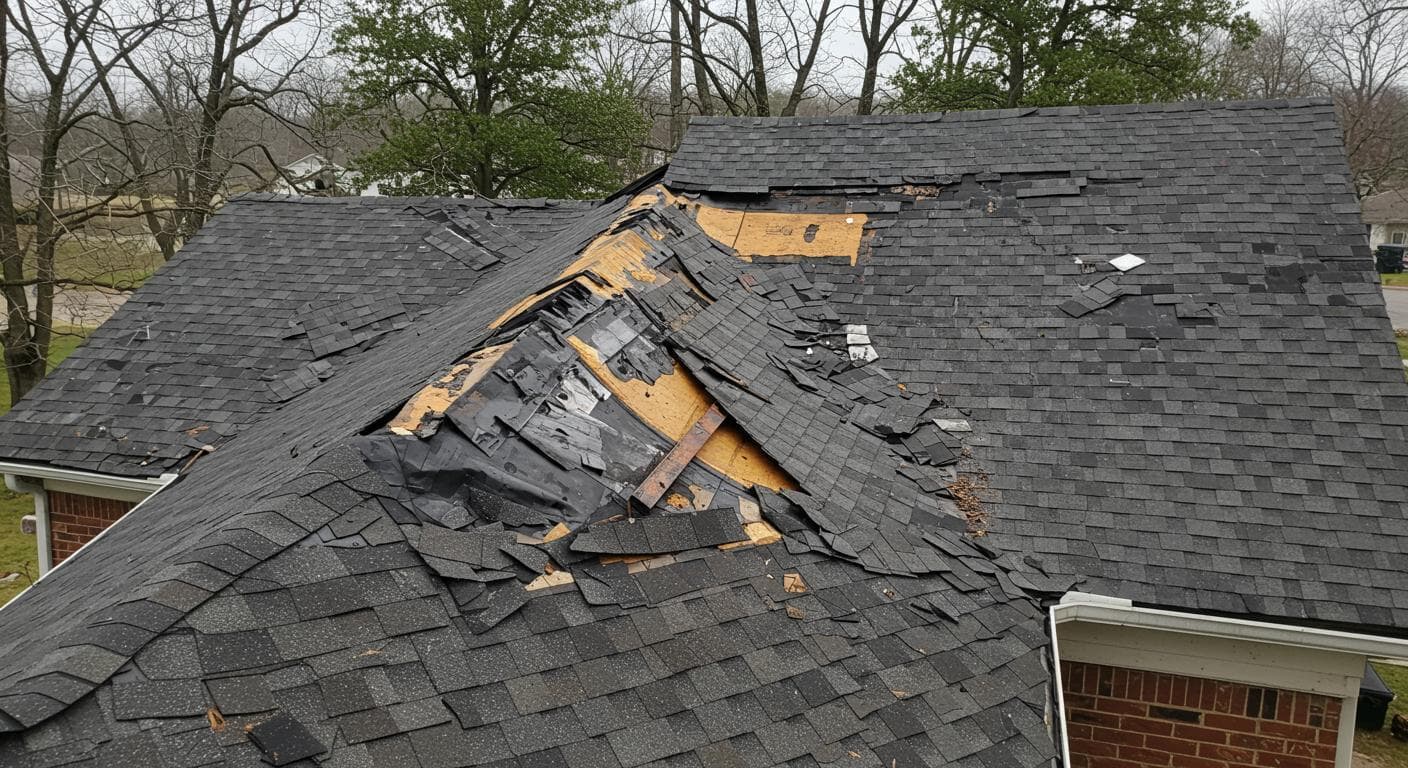
Do these four things in the next ten minutes.
In order. The photos go first because you cannot undo not taking them.
Photograph everything first
Before you move anything, take photos. Your insurer compares the roof's state at claim time against what a repair crew later sees. Photos from the first hour are the strongest evidence you have.
Move what is under the leak
Furniture, electronics, rugs. Put a container under any active drip. Water follows the path of least resistance, so the wet spot on your ceiling may be several feet from where the roof is actually open.
Punch a small hole in a bulging ceiling
Counter-intuitive but correct. A ceiling that is bulging is holding collected water. Left alone it comes down all at once, in one go, onto everything underneath. A small relief hole with a screwdriver lets it drain in a controlled stream.
Cut power to the affected room
At the breaker. Water and electricity are the combination that turns a roof leak into an emergency room visit. Do this before you start moving things, not after.
Is this actually an emergency?
Several of these answers are "this can wait until morning and you will pay less." A 2am after-hours rate is 1.5 to 2 times a daytime rate. Knowing which is which saves real money.
| Situation | Verdict | Why |
|---|---|---|
| Slow drip into a bucket, no electrical nearby | Can wait until morning | A slow drip is not nothing, but it is not a structural emergency. A morning call gets you a regular rate instead of an after-hours premium. |
| Water near or above a light fitting, outlet or panel | Emergency now | Cut power to that room and get a roofer out. This is the combination that causes fires and electrocution. |
| Ceiling sagging or bulging | Emergency now | Punch a relief hole first. A sagging ceiling is holding collected water and can come down without warning. |
| Section of roof visibly open after a storm | Emergency now | Every hour of rain that follows gets inside. A tarp goes on tonight. |
| Multiple drips, spreading water stain | Urgent, same day | Not always a 2am call, but do not leave it until next week. Multiple entry points often mean a larger opening than a single drip suggests. |
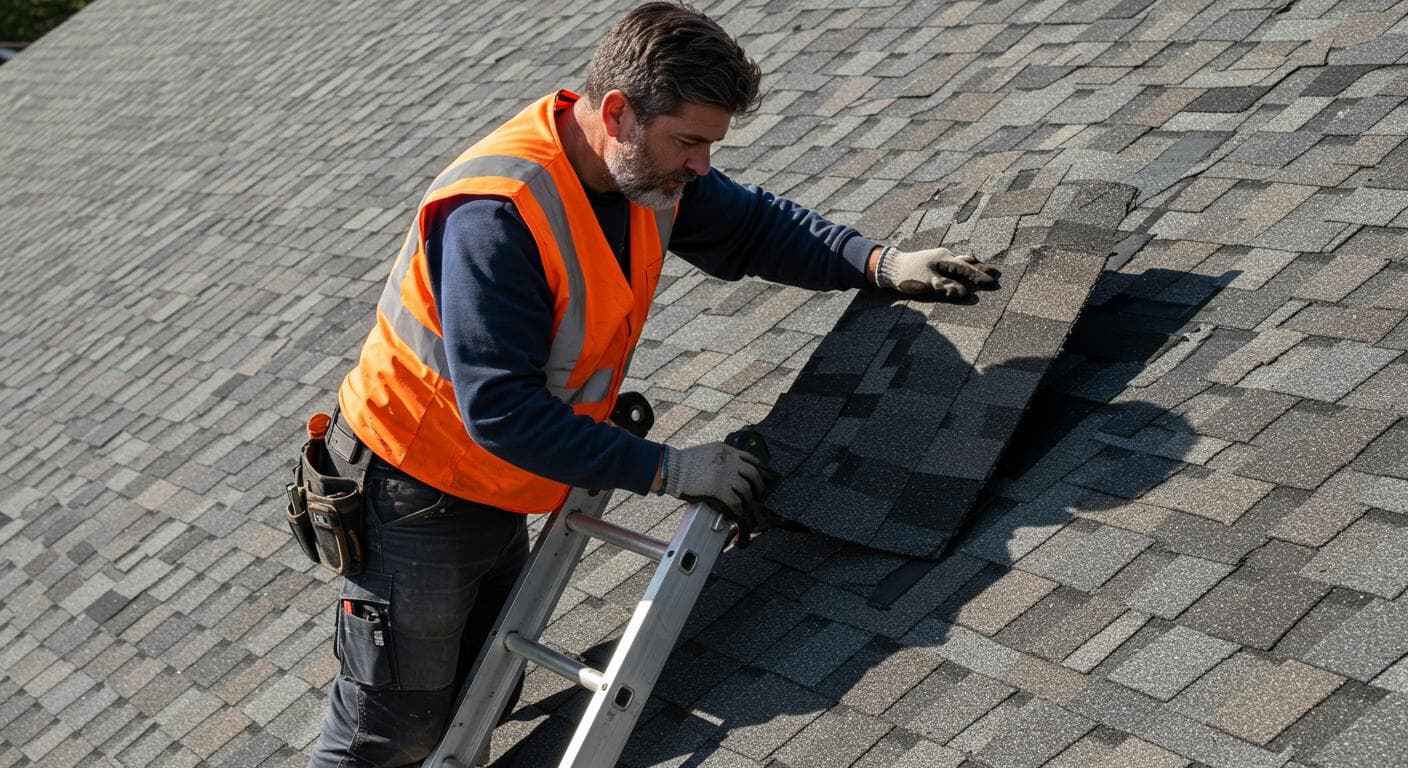
What emergency roof repair actually costs.
These are real market ranges, not invented precision. Roof pitch, material, time of night and where you are all move the number. A free quote gives you a real figure for your job.
Emergency tarp
$400 to $1,200
Covers the opening until a permanent repair can be done. Size of the roof section and height of the pitch moves the price.
Temporary patch
$300 to $1,500
Seals a small, localized opening. Not a permanent fix but buys time without leaving a tarp flapping in the wind.
After-hours premium
1.5x to 2x the daytime rate
Unavoidable at 2am. If the situation can wait until morning, a morning call saves real money.
Permanent repair (small area)
$500 to $3,000
A few damaged shingles, a flashing failure, a small hole. Once the water stops and the deck dries, a proper fix rather than a patch.
What to tell a roofer when you reach them.
A roofer who has these five facts before they leave the house arrives with the right materials instead of making a second trip.
- How the damage happened and roughly when
- Whether water is currently coming in, or whether it stopped
- What the ceiling looks like directly under the wet area
- Roof material if you know it (shingle, metal, tile, flat)
- Whether the area has power or whether you have cut the breaker
Tell us what happened.
We match you with one verified roofer. Free to ask, no account needed, and you pay your roofer directly. We call you back once we have a match.
Get matched nowarrow_forwardWe take requests from Ohio, Colorado, Texas, Arizona, Nevada and California. Coverage depends on your area.
Does homeowner's insurance cover this?
Most homeowner's policies cover sudden damage from storms, wind and impact. Damage caused by wear, age or neglect is typically excluded. The two are usually easy to tell apart: a tree branch through your roof after last night's storm is sudden damage. Shingles that have been curling for three seasons are not.
Emergency mitigation (a tarp over the opening, a temporary patch to stop active water entry) is typically reimbursable because stopping further damage is also in the insurer's interest. The photos you take in the first hour matter here. Insurers compare the roof's condition at claim time against what a repair crew later sees, and photos taken before any work starts are the strongest evidence you have.
We do not assist with insurance claims, interpret policy terms or advise on coverage decisions. We take no referral fee on insurance-funded roofing work in Florida. If your damage involves a claim, the right people to talk to are your insurer and, if you need one, a licensed public adjuster.
The things people actually ask.
What is the fastest way to stop an active leak right now?
Get a tarp over the damaged section if it is safe to get onto the roof. If it is not safe, put containers under every drip, punch a relief hole in any bulging ceiling to let collected water drain in a controlled stream, and cut power to the affected rooms. A roofer with a tarp is the real fix. Everything else is buying time until they arrive.
How much does emergency roof repair cost?
A tarp to cover an open section runs $400 to $1,200 depending on the size. A temporary patch on a small opening is $300 to $1,500. After-hours calls carry a premium of roughly 1.5 to 2 times the daytime rate. If the situation can safely wait until morning, a morning call removes that premium and gives you a more accurate quote for permanent work.
Can I tarp my own roof?
You can, and sometimes it is the right call at 2am when you cannot reach anyone. A wet pitched roof after a storm is also one of the more dangerous surfaces to walk on. If you are not confident, wait for a pro rather than risk a fall. Most emergency roofers carry tarps and can have one on in under an hour.
Will my homeowner's insurance cover this?
Sudden storm or impact damage is usually covered. Damage caused by age, wear or neglect is usually not. Emergency mitigation (tarping, a temporary patch to stop active water entry) is typically reimbursable because stopping further damage is in the insurer's interest. Your photos from the first hour are the key piece of evidence. We do not assist with insurance claims; that is between you and your insurer.
How do I know the roofer is legitimate?
Ask for their licence number and insurance certificate before any work starts. In Ohio, Colorado, Texas, Arizona, Nevada and California, residential roofing requires a state contractor licence. Any legitimate roofer hands these over without hesitation. Do not pay a large deposit before work begins, and be cautious of anyone who appears at your door unsolicited after a storm.
How are you different from a roofing company?
We are a matching service, not a roofing company. You tell us what happened and where you are, and we match you with one verified local roofer rather than handing your number to a pool of companies. The roofer is the one doing the work. You pay them directly, never us.