
Electrical Companies
Find licensed electrical companies near you
Panel upgrades, EV chargers, outlet repairs or a full rewire. We match you to a licensed electrician who is available in your area, pulls the permits and does the work to code.
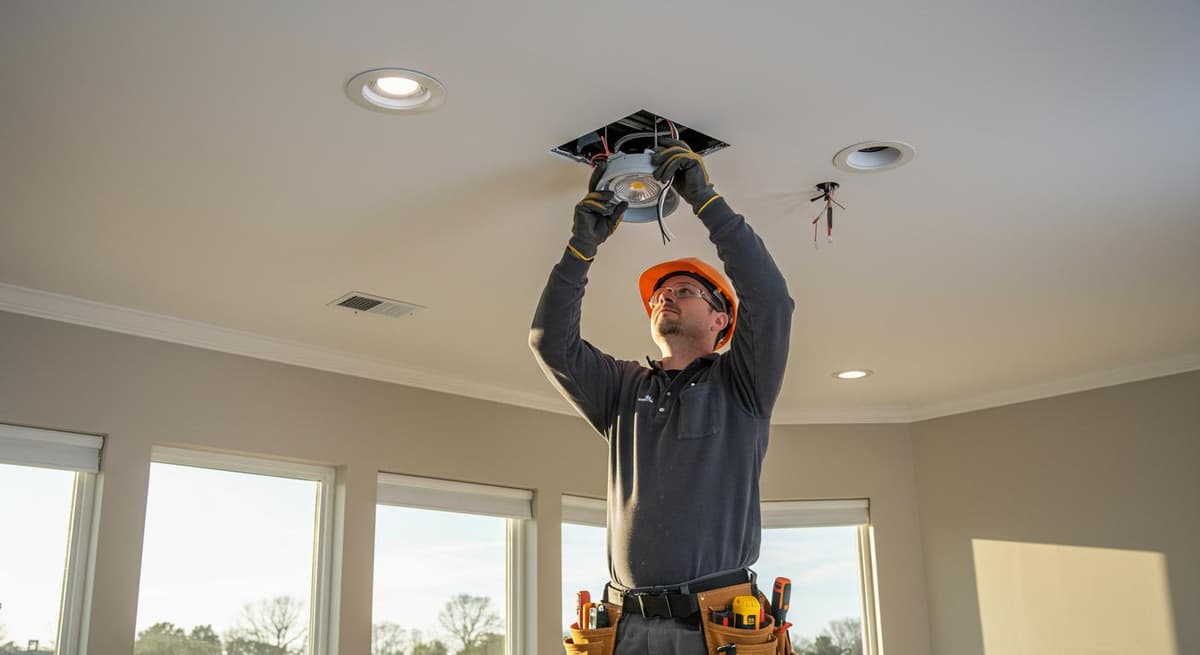
What electrical companies handle
Licensed electricians work on everything from a single outlet to a full-house rewire. Here are the most common jobs homeowners book.
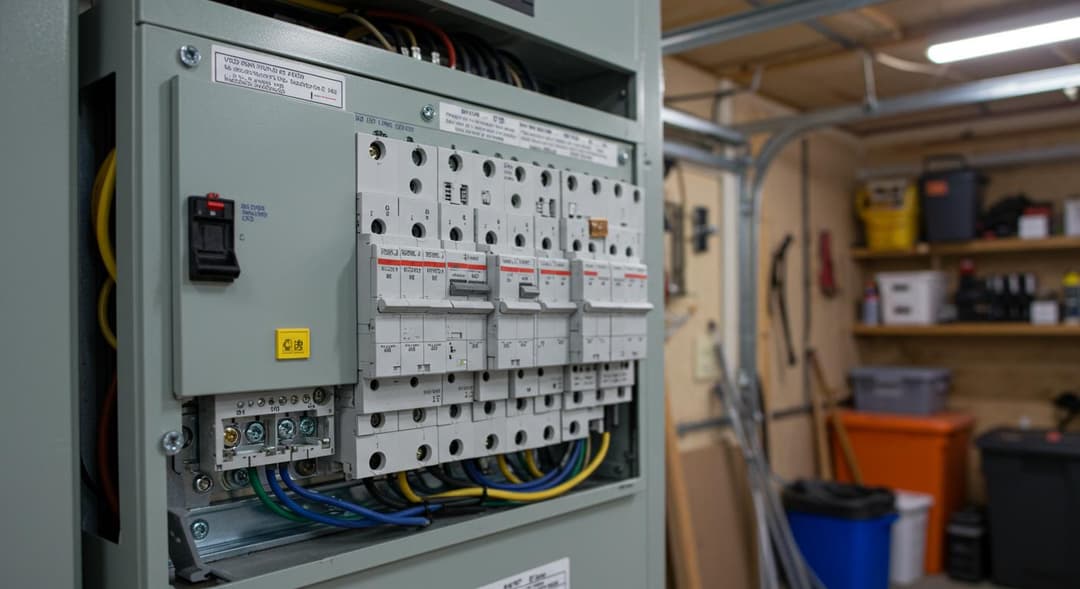
Panel upgrades and replacements
Older homes with 100-amp panels struggle to power modern appliances, EV chargers and HVAC systems. A licensed electrician can assess your load and upgrade to 200-amp or 400-amp service without disrupting the rest of the house.
Outlet and switch repair
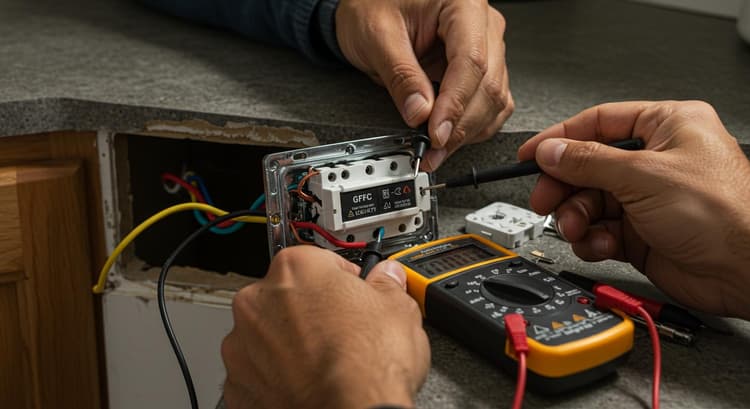
Dead outlets, sparking switches, outlets that feel warm or have burn marks are all reasons to call an electrician, not a handyman. GFCI and AFCI outlets also have a test sequence that many homeowners skip, leaving their protection disabled.
EV charger installation
A Level 2 home charger (240V) adds 20-30 miles of range per hour and requires a dedicated circuit. An electrician pulls the permit, sizes the wire correctly and installs the outlet to code, which matters when you sell the house.
Ceiling fans and lighting
A ceiling fan box must be rated for fan weight, not just light fixtures. An electrician can replace a standard box, run the correct switch leg for separate fan and light control, and tie everything into the existing circuit safely.
Rewiring and code upgrades
Homes built before 1985 may have aluminum wiring, knob-and-tube, or ungrounded outlets. All three create insurance and safety issues. A licensed electrician can assess what is there and bring the wiring to current code.
Smoke, CO and smart home devices
Hardwired smoke detectors must interconnect so all alarms trigger together. Smart switches and dimmers often need a neutral wire that older wiring does not have. An electrician ties it in correctly so the device works and does not trip the breaker.
Warning signs your home needs an electrician
Electrical problems rarely announce themselves until they become emergencies. These are the signs that mean call an electrician soon, not eventually.
- Breakers that trip repeatedly on the same circuit
- Lights that flicker or dim when an appliance runs
- Outlets or switches that feel warm or have a burning smell
- A buzzing or humming noise from the electrical panel
- Outlets with only two prongs in a house with modern appliances
- No GFCI outlets in bathrooms, kitchens or near water
What does electrical work cost?
Prices vary by location, scope and whether permits are required. Your electrician gives you a written quote before work starts.
| Job type | Typical cost range |
|---|---|
| Service call + diagnostic | $75 to $150 |
| Outlet or switch replacement | $100 to $250 |
| GFCI outlet installation (per outlet) | $130 to $300 |
| Ceiling fan installation | $150 to $400 |
| EV charger installation (Level 2) | $400 to $1,200 |
| Panel upgrade (100A to 200A) | $1,500 to $4,000 |
| Whole-home rewire | $8,000 to $20,000 |
How we verify electrical contractors
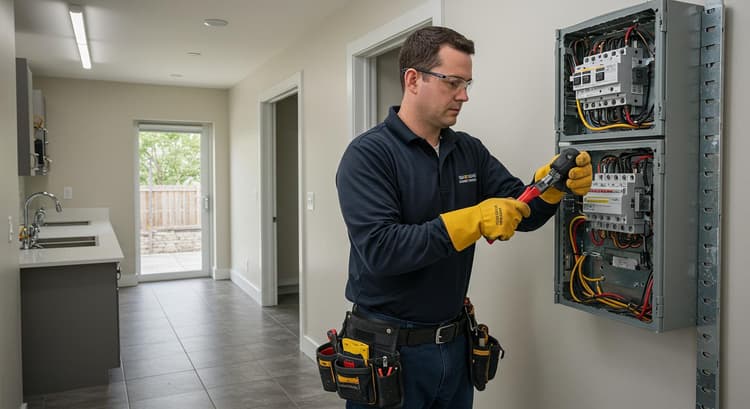
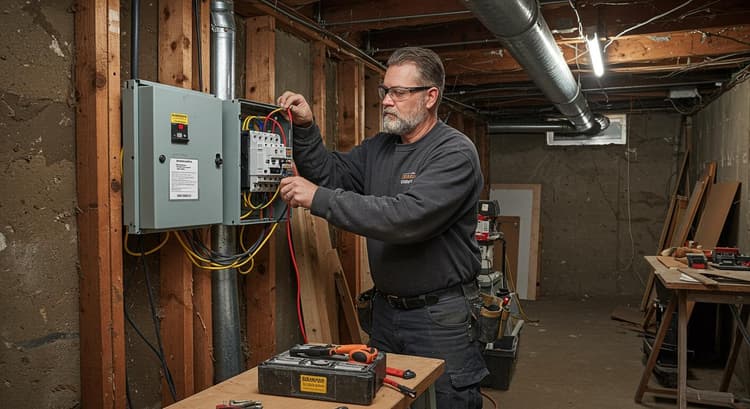
Not every company that shows up in a search is a licensed electrical contractor. Knowing what to check gives customers confidence before anyone opens the panel.
Licence board verification
Every state has a contractor licence board that publishes a public lookup tool. You can search any electrical company by name or licence number and confirm that the licence is active, not expired or suspended. This takes about two minutes and is the same check the Better Business Bureau uses as part of its accreditation review. A company that cannot give you a licence number when asked is a company worth walking away from.
What we check before matching
Every electrical company we match holds a current state contractor licence and active general liability insurance. We verify both before they join our network and remove any company whose licence lapses. Customers should still ask to see the licence card and insurance certificate on the day of the visit, especially for larger jobs like panel upgrades or rewires.
Questions to ask any electrical company before work starts
- What is your contractor licence number, and which state issued it?
- Do you carry general liability and workers compensation insurance?
- Will you pull the permit for this job, and does the price include it?
- Who does the actual work: your employees or subcontractors?
- What is your warranty on parts and labor?
A licensed company will answer all five without hesitation. Contractors who avoid the permit question or cannot name a specific licence number are a risk not worth taking on electrical work.
Common questions
Do I need a permit for electrical work?
Most electrical work beyond replacing a fixture or outlet requires a permit in most states. Panel upgrades, new circuits, EV charger installations and rewiring almost always require one. A licensed electrician pulls the permit as part of the job, and the work gets inspected. Unpermitted electrical work can void your homeowners insurance and create problems when you sell.
How do I know if an electrician is licensed?
Every electrician in our network is verified for a current state licence before they appear in results. In most states, you can also look up an electrician's licence number on the state contractor board website. Ask to see the licence card before work begins.
Can a handyman do electrical work?
Minor repairs like replacing a light switch or outlet are sometimes allowed under handyman exemptions, but the rules vary by state and by the scope of work. Anything involving the panel, new circuits, or work that requires a permit must be done by a licensed electrician. Using an unlicensed person for permitted work can also void your homeowners insurance.
How long does a panel upgrade take?
Most 100-amp to 200-amp upgrades take four to eight hours on the day of the install, plus any time required for permit approval and inspection scheduling. The power is off to the house during the swap, which usually runs two to four hours.
What should I do if a breaker keeps tripping?
Do not just reset it and ignore it. A breaker trips because the circuit is drawing more current than it is rated for. That can mean a faulty appliance, an overloaded circuit, a loose connection, or a short. An electrician can diagnose the cause in one visit.
Are your electricians available for same-day service?
Many electricians in our network offer same-day appointments for urgent issues like no power to part of the house, a burning smell, or a sparking outlet. For non-urgent work, most can schedule within a few days.
Get matched with an electrician today
Tell us what you need and we call you back once we have a match. Licensed electricians serving Ohio, Colorado, Texas, Arizona, Nevada, California and Florida.
Find an electrician near me